Rubio in Munich, the Olympics, and an interview with Bishop Brendan Cahill
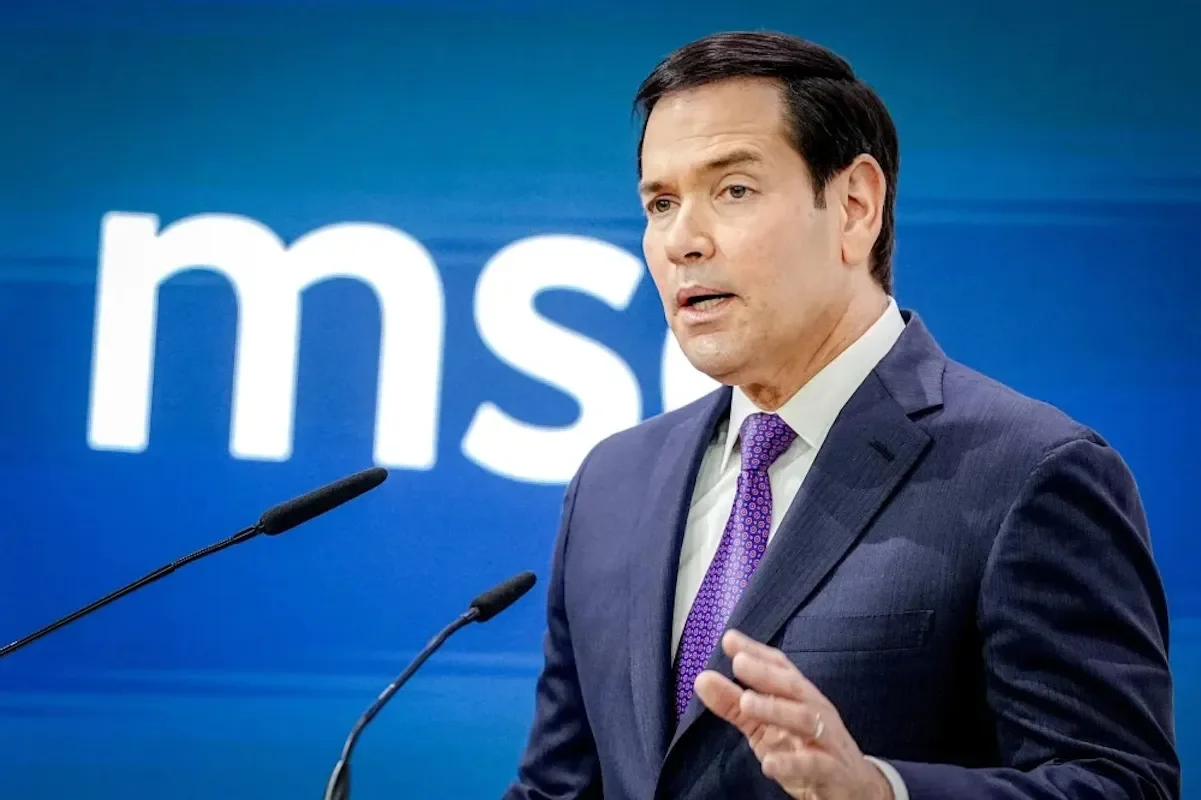
Heidi, Daniel, and David examine the recent speech by Secretary of State Marco Rubio in Munich, and they geek out about their favorite Winter Olympic sports. Then Heidi interviews Bishop Brendan Cahill of the diocese of Victoria, Texas, and Chair-Elect for the USCCB Committee for Migration.
INTRO
SEGMENT 1 - Secretary Rubio in Munich
SEGMENT 2 - 2026 Winter Olympics
SEGMENT 3 - Heidi interviews Bishop Brendan Cahill
TRANSCRIPT
INTRO
DAULT: Hello and welcome to the Francis Effect Podcast. My name is David Dult. I host a radio show called Things Not Seen about Culture and Faith, and I'm an assistant professor of Christian Spirituality at the Institute of Pastoral Studies at Loyola University Chicago. I'm here with my dear friends, Heidi Schlump and Dan Horan.
Heidi is senior correspondent at Common Wheel Magazine. She's also an award-winning journalist and part-time faculty member at Loyola University Chicago. Dan is professor of Philosophy, religious studies and Theology at St. Mary's College in Notre Dame, Indiana.
He's also a regular columnist at National Catholic Reporter. Every couple of weeks we get together to discuss news and events through a lens of our shared Catholic faith. Dan and Heidi, welcome to you both. Heidi. How have you been?
SCHLUMPF: I'm doing well. It's so great to see both of you again and feeling very busy. So as you. All know I changed jobs earlier this past fall and the pace has been a little slower, but right now it's picking up a little bit. So I have a couple long-term projects I've been working on longer writing pieces that have been really fun to do.
But the news keeps happening, so there's stuff to say about the news. And also I have a talk coming up that I'm very excited about. I'll be flying to New Jersey. Next week. So next week, Friday. This will be the day after the show drops on the 28th or 27th, excuse me. February 27th, I'll be at Caldwell University in Caldwell, New Jersey, speaking about reclaiming truth, which is a topic close to my heart as a journalist, but also as a Catholic.
So. Busy. And then on top of it, you know, there have been a lot of holidays lately, so our family did a lot of Valentine's celebrating. We also celebrate Lunar New Year in our family, which was, we're in the middle of, but was on Tuesday. And then of course Lent has begun. So, I have not shared publicly much that what I'm doing for Lent this year.
And I always struggle with Lent when there's a lot of lot of sacrifice already going on in my life. So I've been struggling with a health issue. Just minor, some shoulder pain and would appreciate listeners' prayers for that. But so yeah, so trying to go deeper spiritually with some issues around chronic pain, which I know you know about David.
Anyway, Dan, good to see you. How are you?
HORAN: Good to see you too, Heidi. David. Heidi, sorry about the pain. Yeah, I'll add my prayers to our listeners as well. That's never fun. Glad it's minor though. Hopefully it'll clear up soon. You talked about being busy. I can relate. I think a lot of our listeners can too. My busyness over the last two and a half weeks has been centered on.
Two faculty searches we have ongoing here at St. Mary's. There are actually quite a number of searches across the university, which is great. Given the state of higher education that when schools are hiring tenure track faculty, that's always a good sign. So it says something good about where we are, but the two departments that I and appointed in philosophy and religious studies and theology, we both have tenure track searches, and I'm on both committees and we've had seven finalists come to campus over the course of two and a half weeks.
And so. Those familiar with academic hiring, which is itself very strange. It's not like the corporate world or, you know, pretty much any other field. It's a long process that begins. It's, it takes almost a year where you know, as a committee draft job description and you field applications in our case, you know, hundreds of applications and then you.
Meet as a committee to narrow it down to 10 candidates who, who most align with the job description and the needs of the department and the school and so forth. And you interview them and then you narrow that list down to three or four, and then you extend those invitations and bring those folks to campus for usually a day and a half to two days of meetings.
All of this, it's exhausting even recounting this. But the good news is hopefully we're on the other side of that. The candidates have all been wonderful. And it's been nice, but it's been very exhausting. Very long days, very early mornings. So, I'm hoping and praying for successful completions of both of those searches.
Heidi, you talked about your talk forthcoming. I wanna give a shout out to all the amazing folks in Iowa and Dubuque, Iowa, who hosted me exactly two weeks ago, the same day that this last episode dropped where I gave a public lecture on hope in challenging times. And the attendance was really extraordinary.
Really a great number of people, both in person and then many people online. I was honored to hear from folks after the fact who tuned in and watched live. So, the hospitality was great. There were a number of Francis Effect listeners who were present, so shout out to all of those. Sister Beth in particular, I know is a fan of the show and a fan of both of yours as many others are as well.
So, yep, we keep on. Plugging along. The next stop in site is our spring break, our midterm break, and I'm very much looking forward to that. David Busyness break travel. You're joining us from another part of the world. What's up with that?
DAULT: So currently I'm in Tucson, Arizona for the Association of Graduate Programs in Ministry Conference. And I, like you am sort of having the chance to interact with some, fans of the podcast. And so I want to give a shout out, especially to m O'Connell who's here leading us at the conference this time around.
But just said some very kind things about the work that we've all been doing, so I'm grateful for that. I love coming to this part of the country. The Southwest is amazing, particularly when it's February and cold in Chicago. But also just as you both are saying, it's a really. stressful thing when you're already very, very busy to try and uproot and come to a place and rearrange your life for several days and then fly back and, and do all that.
So I'm enjoying it, but also. I am, I'm out of my element. And, and, and as, as we've said trying to manage things like a chronic illness and other things like that in the midst of travel is always a little bit interesting. Heidi, I will definitely be lifting up your shoulder pain in prayers, and I know that our listeners are doing that as well.
You all mentioned some wonderful things that you are doing. I wanna make sure that I keep on the map that on March 21st, here in Chicago, if you're in the area. Dan and I will be having a conversation at the seminary co-op bookstore in Hyde Park on Woodlawn Avenue. We'll be talking about my book, the Accessorized Bible, and I'm really looking forward to that.
Dan. I cannot wait to see you in person and have that conversation. Also for those that are interested in a remote online option, every Monday in March, I will be delivering one of four lectures on Queer Theology and Spirituality through the Institute of Pastoral Studies Office of Continuing Education.
I've been putting information about that in the show notes. I'll make sure to do that again this time around. But if you want to join, that's $50 for all four of the lectures. Each one is gonna be about 90 minutes, and that's gonna be two sort of. 25 minute sub lectures, and then about half an hour or 45 minutes of discussion in each case.
And so. I'm looking forward to that. I'm hoping that folks will get good things out of it, and I'm hoping that I make the right people upset. And so, you know, it's, it's always about making good trouble, isn't it? Speaking of good trouble, let's take a look at what's coming up today here on the show.
We're gonna start in segment one, looking at the recent remarks at the. Munich Conference by Secretary of State, Marco Rubio. In the second segment, we're gonna keep our focus on the international realm, but this time we're gonna be looking at the Olympic winter games. And then in our third segment, and I'm really looking forward to this heidi is interviewing Bishop Brendan Cahill from the Diocese of Victoria, Texas. He's the new chair of the CB's Committee on Migration, and I'm sure that we're gonna learn a lot from that conversation. So all that's coming up here on the Francis Effect. Please stay with us.
SEGMENT 1
HORAN: Welcome back to The Francis Effect. I'm Dan Harran, and I'm here with Heidi Schlump and David Dahl. Every couple of weeks we get together to discuss a variety of topics from a perspective informed by our shared Catholic faith On Valentine's Day this year, secretary of State, Marco Rubio went to Munich, Germany in attempt to woo Europe into a new kind of relationship with the United States.
His remarks at the annual Munich Security Conference have elicited a mixture of responses from European leaders,
This comes in the context of last year's event where Vice President JD Vance delivered remarks, which were described as, quote, a speech of unprecedented hostility toward European governments, unquote by the French publication Limon, in contrast to the ranker of Vance, Rubio offered a narrative of shared cultures and shared histories between America and Europe.
The message seems to have landed with some leaders writing for National Public Radio. Rob Schmitz noted that quote with the bar set about as low as it can be. Rubio cleared it barely unquote.
Rubio laid out a path that would encourage American and European cooperation while rejecting 20th century commitments to globalism. Not all were swayed. For example, European Union Foreign Policy Chief Kaja KA, pushed back on the last day of the conference saying that quote, contrary to what some may say, woke decadent Europe is not facing civilizational, erasure unquote.
David, there are a lot of moving parts here. What are your takeaways from Rubio's Munich speech?
DAULT: Well, first of all, the thing that I think is important is even though there was a change in tone between JD Vance and. Marco Rubio. I don't really think that there was a change in the overall messaging. There was a condemnation of the notion of the co-mingling of cultures. There was a condemnation on the notion of human related climate change.
There was a condemnation on the notion that somehow. America should not be the kind of dictator, and I'm using that in all senses of the word, not just of their own national and foreign policies, but also of global, national and foreign policies. Some of the language that Rubio used in the speech was, we are going in this direction, and whether or not you choose to follow us, we would love for you to join us, but either way, we're not listening to you or what you need.
We have defined what our needs are, and you either get in line with that regime or you suffer the consequences. So there was a lot more carrot here in this particular version of Rubio versus Vance last year, but there was an equal amount of stick and so. I'm frustrated by our current foreign policy adventures, but I've been critical of American foreign policy for a long time.
What is giving me some heart right now is first of all, the pushback that was received by a great many leaders and administrators. From the stage and in response to what all is going on, but also the pushback that has been happening with Pope Leo in some senses. And so I think Pope Leo has been paying attention to this as well.
Where I have been most disappointed has been with American media. And American media has kind of fallen in line to characterize Rubio's speech as a kind of triumph or a kind of reset or something like that. It's just more of the same.
HORAN: I would agree with that, David. I was kind of surprised to stick, to hear, to read, to see the kind of enthusiasm and I think what Rob Schmitz wrote in NPR is exactly right as we talked about it at the top of this segment, that the bar was very low and he cleared it, but barely, and people are hailing this as some sort of significant advancement.
And when I went back and looked at the speech itself, what I saw was a kind of white Euro-American chauvinism, right. Notice that it's like the things we share in common, you know, it's, it could have been something we've heard in 1930s Germany about whiteness, about kind of Greek and Roman foundations and what I saw caste was certainly a more respectful and I would say cordial articulation is certainly when compared to somebody like JD Vance last year or.
Basically anything that comes out of President Trump's mouth. But that he was getting a lot of applause and credits and points for just not screaming and yelling and saying things incomprehensible. But I think underneath it all there, there's a really sort of dark. Global perspective.
One that, as you rightly say, David, I saw as well, which is like, you can join us or you cannot. Now it's our way or the highway. And we've seen, you know, people like Mark Carney, the prime minister of Canada and others who have offered sort of an alternative reality check for the rest of the global powers, which is if America is gonna go its own way, then we need to work together.
And two additional things that come to mind. One is from a Catholic perspective. There are two things that are deeply disturbing about this kind of general outlook. Outlook on the world, and if there is a sort of policy latent in this, or what was it that Trump said in that debate? You know, if he has, you know, the idea of a policy or something like this the nascent workings of a policy, then it flies in the face of the common good, which is really at the heart of Catholic social teaching.
It's at the heart of what government is about. We say that. Basically every episode in one segment or another of this podcast as a clear reminder. But the other thing too is and Dave, David, you mentioned Pope Leo's response. I'm thinking of his predecessor too, and the very important and cyclical Fratelli Tutti, where Pope Francis lays out a Catholic vision for global cooperation where migration and immigration care for the climate, care for the most vulnerable, all these things are prioritized.
And what, when it comes to decision making, when it comes to sort of, interstate. Cooperation. It is again, this common good that holds center. So, yeah, as Catholics and Rubio identifies as Catholics, so it's worth noting this right. As is JD Vance who spoke the year before. I think we need to be critical and need to be very careful not to kind of be swept up and, well, he didn't swear and threaten tariffs and, you know, use racial slurs.
And so then I guess it was good.
SCHLUMPF: Well, I'm gonna be in agreement with both of you as well. You know, I can appreciate that he was sent there to make nice with the Europeans. I also get very nervous when there's talk of Western Christian civilization as our shared, shared thing. I mean, believe me, I'm very proud of all the accomplishments of, you know, Western civilization.
But in this day and age, that phrase is code for being against the, you know, some, something that is broader than just you know, white European men from certain centuries. So, I found it ironic that he. Is saying all this at the same time that the administration is undermining, Any sort of unity, you know, threatening to invade Greenland and you know, undermining the United Nations with this Board of Peace, which the Vatican, by the way, has declined to join.
So I mean words, you know, words and tone. I guess only go so far. And if I could just add the Catholic response that I saw was. A certain bishop from Minnesota, so Bishop Robert Baron went online to praise the speech, but also more so than to. I mean he did, you know, praise Rubio and for what he said and all the good things about white Christian or White Western, but also white Christian civilization.
But he also then used it more as a chance to slam a OC, because of her response to the speech, because she didn't like it. So then now we have Bishop Baron once again, warning of the dangers of Marxism from from the left in talking about Ocasio-Cortez. So yeah same old, in my opinion.
DAULT: Well, another piece of this. Is that one of the things that Rubio was saying again and again throughout his speech, he's spending a narrative not just of white Christian civilization, but also a narrative that somehow both the United States and the European states had kind of ultra porous borders over this past period, and now suddenly we're returning to a place where borders are gonna be rigidly maintained.
But the, this narrative that somehow. Forgive me for this phrasing, but that there's a kind of mong moralization of that white culture and a Mong moralization of that Christian culture. And one of the things that I'm reminded of is that Pope Francis' first sort of act as. Pope was to travel to places where migrants were dying because they were not being given the aid and care on the Mediterranean that they needed in order to make journeys safely.
And so this notion, this narrative that somehow there were porous borders or that somehow there was this great overrunning of people across geographies that never happened. We've always been indifferent to migrants. We have always been violent towards migrants, and that's not something for us to be proud of.
We've always closed our borders, and if we, not just in recent history, but if we think of, you know, Jewish and other refugees in World War II looking for safe harbor from the Third Reich and all of the nations that closed their borders and their doors to them and turned them away, this is not something for us to be proud of.
This is to our eternal shame and possible damnation that we have these. Kinds of stern policies. And so I think that one of the things that we as Catholics can be doing is to try and push back against these sweeping narratives that really mischaracterize history, but also demonize or dehumanize very vulnerable populations.
HORAN: Well, you know, there's this kind of longstanding, relativistic sort of thinking, which is, or compartmentalizing thinking maybe is a better way to put it. That you hear sometimes when particular partisan folks do not like something that Pope Francis or Pope Leo or that Jesus Christ has said then they say, well, you know, don't mix religion with politics.
Right? Don't be political about this. And yet, as we know. Religion is inherently political. Christianity is political. Jesus was executed by a state, right, by an imp, by an empire, and as an enemy of that state, right? Though he was innocent, he was wrongly accused. And what was his crime? His crime was speaking an inclusive worldview and a vision that echoed the Hebrew prophets that came before him in his own Jewish tradition.
Right? And so I, this is just prelude to say that, you know. Especially for these people who identify as Roman Catholic who are in political office. I realize, you know, kind of ironically given the skepticism of somebody like JFK or the kind of abuse that Joe Biden took in this kind of criticism for being Catholic, but not like enacting every little aspect of Catholic moral teaching as some people would have it.
So I realized that this might be playing, you know, the same thing, but nevertheless, I do have to. Say that like this position, David, as you put it, like as Catholics, right? As Catholics, we are called to walk in the footprints of Jesus. We are called to live the gospel. We are called to, as I like to say, make God's story our story.
And I think it's also interesting to see what scripture. Is concerned with and what it isn't right as we have this historical medium of divine revelation is the people who our ancestors have experienced, God in particular ways, have recounted this and passed the on generation after generation. And there is one theme that comes up more often than anything else, which is the weak, the vulnerable, the stranger are the ones to be prioritized.
So like. I, before we even talk about how porous a border is or isn't, or how strict one's kind of admission policy to a given sovereign state is or isn't, or what quotas should be and this, that and the other. I think there's a fundamental human issue here, a fundamental kind of religious issue that should inform our politics, that should be nonpartisan.
And especially for those who dare to identify themselves as Christians in these contexts. And as we see. People like Vance and Rubio are very quick to do that. Then I think you need to kind of, in order to avoid the hypocrisy, Jesus himself radically condemns. Then we need to begin with the humanity of those who are most vulnerable and start with that.
So, I guess I'm just saying I'm a little bit impatient with some of this kind of hand wring about some of the kind of minutia or the policies which have their place right and deserve. Thoughtful consideration. But in the meantime we act in a dehumanizing way, kind of writ large and that is anti-Christian.
It is dehumanizing. It is certainly not Catholic.
SCHLUMPF: thank you for that, Dan. And I guess I would just add that I, while the media cut. Ridge maybe didn't delve into these issues in the same way that we are as Catholics. I don't think people are gonna be fooled just because the actions of the Trump administration, despite, even if you thought that Rubio speech was nice talk are just not matching that.
So you we're not cooperating with other countries? We're, I mean, this morning the news is that we're. Going, we might be bombing Iran. I mean, we're recording this on Friday, so I just think the continued actions domestically and internationally of this administration are telling the truth about what the real values are.
So, but I appreciate the, you sort of going into what as Catholics, we should be thinking about.
DAULT: Well, Listeners, this is not the last time we'll be commenting on a foreign policy issue like this, but for now, I think one of the things that I really appreciate about this chance to talk to you, Heidi, and to you Dan, is to really think about this grounded in my Catholic faith, and I hope that is useful to our listeners as well.
We're gonna turn from this issue to another international issue, where in our next segment we'll be looking at something that I am much more happy about the Olympic winter games. And so that's coming up here in just a moment on the Francis Effect. We'll be back in just a second. Please stay with us.
SEGMENT 2
DAULT: Welcome back to The Francis Effect. I'm David Dolt and I'm here with Heidi Schlump and Dan Harran. Every couple of weeks we get together to discuss a variety of topics from a perspective informed by our Catholic faith. It's that time again when millions of people around the world find themselves obsessed with the competitive sport that involves sliding heavy stones across ice Men and women ski jumping a distance greater than a football field while flying through the air at 60 miles per hour, and dozens of other athletic events that typically only appear on our attention radars every four years during the Winter Olympics. As we are recording this episode, we are in the midst of the 2026 Winter Olympics, which are taking place in Italy.
While the closing ceremonies of the games will have already wrapped up the international competition, by the time this episode drops, we felt it was worthwhile to spend a little time discussing the games and their wide ranging impact.
Given the unique role the Olympics play generally, and this year in particular, there is much to unpack and discuss. Dan. You recently wrote a column in which you talked about your proposed Winter Olympics soundtrack.
It's clear you've been watching some of the games and following the news. Where would you like to begin?
HORAN: I'd like to begin where the New York Times Athletic section interviewed a, a number of, of winter athletes and asked them to name what they felt were, was the weirdest Olympic sport. And I, and it's really funny, we can, we can include the link here and you can check it out on, on YouTube or, or wherever you get your social media.
And on the one hand it sounds sort of. Insulting, doesn't it? You know, that the, these are the world, the best athletes in their sport across the world who gather and train for years and years and years and gather once every four years at one shot. But on the other hand, let's be honest, some of these sports are very weird.
I think of the skeleton, for instance, which is terrifying. You're flying more than you know. I, I think it's close to a hundred miles an hour. Laying down on you know, basically a sled headfirst in an ice tunnel. So on the one hand, you know, I think all of those participants deserve some kind of medal for courage.
But you know, more generally what I'll, what I'll say in a more serious note is that though I'm not a kind of diehard, so I'm not getting up, you know, really early to align my schedule with the schedule in Milan. But I, I have enjoyed. Checking in. So almost every day I've, I've watched some part of either the live competition or sort of a recap in the evening.
You know, NBC is broadcasting stuff in prime time and regardless of the sport and, and with all due respect to every athlete and team even the weirder ones, let's say. And, and as the athletes themselves would put it. I find myself overwhelmed actually with emotion. It's very, very moving and the thing I keep coming back to is something that the now retired and yet famous podcaster and comedian, mark Marin used to say often in his interviews with guests about musical theater, and he said that anytime he saw live musical theater, he, no matter what the storyline, no matter how good or bad the score was, he would be brought to tears with the vulnerability of.
People singing and dancing earnestly emotively, compellingly. And that's what I feel like when watching the Olympics. It's the reason why, you know, you get goosebumps when you see somebody land, you know, a figure skating move that just defies gravity. It's the same sort of thing when you hear the horror shock.
And, and you feel it yourself when you see something like Lindsay Vaughn's fall where she broke her leg after such a storied career and such a difficult kind of start to the, to the. To the beginning of her competition at, at these games. And so, you know, and, and we're kind of joking about the heavy stone on ice meet with reference to curling, but curling is not kind of a flashy sport.
You know, you don't see Nike ads with LeBron James and you know, and then the, whoever the curling gold medalist is from the previous Olympics, right? And so. To, for folks to be, you know, at the top of their game with the best of their peers from around the world. And to do so, generally speaking, in a peaceful context is very, very moving.
And David, you mentioned the column that I, I wrote recently. And there, I just spent the, I took an opportunity to talk about two musical compositions that I feel convey the spirit of, of the Olympics as I've been seeing them. And with that Mark Marin sense of kind of emotional, overwhelming, kind of the sense of humanity and its complexity and all of its glory and its, and its vulnerability.
And that is John Williams's Olympic fan fanfare and theme. Excuse me. Which he had originally composed for the 1984 Olympics in Los Angeles. And most people who have tuned in will recognize some of the, the major themes that are often played by NBC in the intros and outros of segments.
But then the other is by the singer-songwriter Jason Mraz. He wrote a song in 2008 called Beautiful Mess. And it's about a romantic relationship, but it also. I feel ha has always made for me given a, a good description and an accessible, beautiful, poetic and musical way of what we would call theological anthropology.
How the Christian tradition understands human persons as graced and flawed, as sinful, and yet redeemed right. And that we are beautiful messes. And so, while John Williams' fanfare and theme is beautiful and powerful and celebrates the heights of human performance and athletic. Success and victory. What it lacks is what do we do when Lindsey Vaughn falls or when, when Ilia Mellon is it melanin?
The quad, God doesn't even meddle right in, in what he was largely expected to win. Golden. And so how do we make sense of this? How do we. Recognize, how do we communicate, how do we articulate all the feels, the highs and lows, the whole range of human experience? And so that was what I was trying to do there.
And, and I'm curious what your experiences are when you watch, when you tune into the games. Are, do you have a favorite sport? Do you also, am I, is it just me and Mark Marin crying to ourselves about how beautiful it is that, you know, we, there's extreme vulnerability, but also the heights of, of performance and possibility.
SCHLUMPF: I don't know how you can't not be moved by the Olympics both summer and winter. Although I especially love the winter ones as well. Just 'cause I love watching the skating. But I have to say I haven't watched as much of the Olympics as I would've liked to in part because, see my previous comment about being too busy with some work projects, but also I do, one thing I really dislike is how, you know, my breaking news alerts tell me.
Who won in the middle of the day, and then I'm less inclined to watch it later in the evening to see what I've already seen in terms of knowing who's gonna win. I've especially loved though hearing about and watching some of the women's teams US hockey and women athletes. I mean, it's always amazing to see, especially and I forget the woman's name. She's up there with her child talking to the media after she meddled. And and just like talk about the messiness of life all there on the on with the competition. What strikes me about the Olympics is at a time when there's so much polarization and just.
Even in discussion in our previous segment of like this focus on the white, western civilization. It's international. It's really international. And when you see, especially like the US athletes, many of them are immigrants or come from immigrant families. They're not white. But yet they're representing our country.
And I, I just think that you know, there, it's one of the few places left where. As a world, as an international community, we can come together. You know, despite there still being, I mean, I think it's fair to still use the Olympics to have political critiques. I'm okay with that, but I also appreciate everyone coming together in pursuit of this common sport.
DAULT: I just wanna pick up on that. So I lived in Atlanta in 1996 when the Centennial Games came there. And having that experience changed my life because Atlanta was a city that was struggling with a lot of its history and it was trying to be an international city and it was trying to be a major American city.
But in the 1990s. That still wasn't quite landing. And when the Olympics came for two and a half weeks, I watched my city embrace the possibility of having multiculturalism and embrace the possibility of being a 24 hour city and embrace the possibility of having having events that were not.
Events that you had to pay to go to, but just having places in the city where you could go and hang out and be with other people. And folks may recall that, that one of those major places was Olympic Park, which was an amazing place to be. And I went there almost every night except the night that it was bombed and the bombing of the park was, was a fracture.
But it didn't, it didn't stop that possibility. So I got a chance to glimpse what the Olympics can do on a local level. But I also had a dear friend, Michael Halley at the time, who was working on the advance and planning committees for the Olympics on the Atlanta side in 1996. And he had long conversations with me about how the people behind the scenes thought about what they were doing and the Olympics.
At least at that time really saw itself as a kind of laboratory for Peace and laboratory for International cooperation. Listeners may remember that the 1984 Olympics in the summer were in Los Angeles, but in the winter they were in Sarajevo. And one of the reasons why it went to Sarajevo was because there was all of this roiling ethnic conflict.
And the hope of the, of the Olympic Committee was that bringing this international competition there might create a space of new dialogue and lessened violence. Now, it ultimately didn't work as we know, but that was the hope. And so when we see the the Olympics sort of erupting every four years. I remember those conversations with my friend Michael.
I remember what it was like to be an Olympic park and feel like a citizen of a city that was actually, that actually cared about its citizenry, and those kinds of things bring me to tears even to this day. Now that being said. My favorite Olympic sport of all time is figure skating, and I get very, very geeky and intense about it.
And so if we want to go down that rabbit hole, we can, but for right now, I'm just gonna say I'm a big fan of figure skating. So I, I'll leave it at that.
HORAN: Well, on that note, I mean, we can, we can celebrate kind of bridging both of your comments, Heidi and, and David, Heidi, on, on the focus on, on the women athletes in particular that America's Alyssa Lu just really knocked it outta the park as we're. Recording this, this would've been yesterday with with a gold medal performance.
It's the first time that there that a American woman has won a medal in figure skating in 20 years. And to win it win the gold medal is, is really. Just an extraordinary achievement. And so, yeah, lots to be proud of there. And speaking of pride, I I wanna say that I have been so impressed by the American delegation that these generally young women and young men, and I can even say that 'cause Lindsay Vaughn, who everybody's been talking about as being so old at the age of 41, is still younger than me.
So so these youngsters, I mean, in all seriousness. The thoughtfulness and, and the care and the sincerity with which they have addressed media questions about what is it like to represent the United States at this moment in our history and on the, on the global stage has been very inspiring and unsurprisingly.
To see the, the immaturity the, the, the kind of vacuous of responses like that of President Trump in response to these athletes who have been so respectful and so dignified really offers a contrast. And we should remember, David, you talked about, you know, the horrific bombings and, and the 1996 Olympics and, and Atlanta.
We can think of other tragedies, you know, in 1972 in the Munich games of the assassination of Israeli athletes. We can think of just 12 years ago the invasion of Crimea around the Sochi Olympics when Russia was hosting this the Winter Olympics, that this was the start of what is now. A full fledged war with the invasion of Ukraine by Russia.
And so, you know, I hope that by the time listeners listen to this episode, you know, the games will have come to a close and that there is nothing comparable to any of those tragedies. And yet. Even if there are, I think one of the things that the Olympic Spirit provides us with is what we see absent in the Rubio speech that we discussed in the previous segment.
Right. A sense of cooperation, a sense of the common good, a sense of there's something more here than our individual aspirations or desires. I have been so moved when people, I think of ia, for instance, the Quad God, who you know. Just kind of lost it all in front of the world as a young man of 21 who went and embraced the I think it was the, the gentleman from Kazakhstan, right?
Was the, was, do I have that correct? Who ended up winning the gold? Who had no, probably had had written off the possibility, you know, before he stepped out on the ice. And, and I've seen this over and over again. I remember watching some of the snowboarding competition and. You know, after a snowboarder kind of does his run, a bunch of them will kind of hang out at the base of the, of the mountain and greet the other guys who come after them.
And even if they, you know, kind of overtake their score and, and, and rise up in the lead and, and somebody drops down, they still embrace one another. These are people who during the training season, train together in different parts of the world that are conducive to their sport. And so there's a real sense of community.
I think they're modeling something for us. And I think, you know, our political leaders and religious leaders should take note. Of this what binds us together is, is more than, you know, a a, a one-off competition where one is forced to be identified as the winner or the loser instead of beginning with and ending with winning and losing as the whole picture.
So I'm deeply inspired and will continue to be even if I'm horrified watching. The skeleton competition or even the luge. Those, those things are really horrific. I will say. I did laugh Colin Jost, you know, one of the head writers at Saturday Night Live has been kind of a spoof, kind of correspondent for the Olympics, and he was two years ago in the Summer Olympics as well.
But he did go to Lake Placid, New York and rode in a bobsled in, in one of these segments. And the audio from that is, is very bleeped out because he said it was the most terrifying thing he's ever done. And, and you know, we, we look at this or we think about the pop culture, like the Jamaica bobsled team.
There was that Disney movie some years ago. But these are, these are very dangerous sports actually, and they require great skill and training and pro and proficiency and it, they make it look so easy. David, you talked about ice skating. You know, I'm somebody who learned how to. To skate. You know, from the time I could walk, my dad taught me.
I came from a big hockey family. And, and I know how hard and how easy it can be to skate and to do what, and I could never in a million years do anything. Even the worst skater out there, it's, they make it look so, so easy. I will say this, and maybe this is the last thing, 'cause I could talk about this all day.
I heard somebody suggest, I think it's a really funny idea, maybe a bridge between the, the comedic happenings of a Colin Jost and the seriousness of real Olympic Olympic athletes is, wouldn't it be interesting to have like one normal person in every competition, you know? So like somebody who would volunteer to try to do this, to show the contrast between like even the.
So-called lowest of those who qualify for the Olympics versus like the average maybe athletic person. You know, it would just be so, you know, striking it would be so, so interesting to see that contrast. So I will not be volunteering for any of those luge skeleton or bomb sled competitions or actually any of the skiing competitions.
Actually, now that I think about it, you know, maybe I won't volunteer for anything at all, but I would love to see somebody else do it.
SCHLUMPF: Well, if you feel old, Dan, imagine how I feel I have to say as someone, because of my. My medical condition. I haven't been on my ice skates this year, and I haven't been on skis this year and most years I am. So, all I have to do is watch them to realize like they are a whole different level. It's it really is beautiful to watch what the human body can do and what the human spirit can do.
DAULT: Well thinking of that in a Catholic lens, I'm thinking of the fourth and fifth chapters of Lato Sea, where Pope Francis is talking about the ways in which we always are looking for a new technology to save us. And one of the things that both the summer and the Winter Olympics do is they take human bodies and they put them in extreme environmental.
Moments the summer heat or the, the cold and snow of winter. And it really is a body in extremity doing its best in a situation that, as we have said in this conversation, is incredibly foreign to most human experience. And so the chance to watch that to see what human bodies can do in the face of extremity is really amazing and inspiring.
But also, as you pointed out, Dan, it's not something that I would necessarily want to participate in. I'm happy to be a spectator listeners. We would love to hear what your favorite Olympic sports are and how you are inspired by these feats of human creativity and, and human excellence on the sports field.
But for now, we're gonna step away from this conversation. And when we come back in a moment, we're gonna be picking up with Heidi's interview with Bishop Brandon Cahill of the Diocese of Victoria, Texas, talking about his recent raising to become the new chair of the CB's Committee on Migration.
You're listening to The Francis Effect. Please stay with us.
SEGMENT 3
SCHLUMPF: Welcome back to The Francis Effect. I'm Heidi Schlump with today's guest, bishop Brendan Cahill of the Diocese of Victoria in Texas. Bishop Cahill was recently elected chair of the Committee on Migration for the US Conference of Catholic Bishops. Last Friday, Bishop Cahill and the committee released a statement sounding the alarm over the Trump administration's plans to acquire warehouses around the country to in turn tens of thousands of people.
As part of its mass detention plans, the committee's statement said, quote, the thought of holding thousands of families in massive warehouses should challenge the conscience of every American, whatever their immigration status. These are human beings. Created in the image and likeness of God, and this is a moral inflection point for our country.
Some background about Bishop Cahill. He was born in Florida and moved with his family to Texas when he was young. He attended St. Mary's Seminary and the University of St. Thomas, both in Houston. And was ordained a priest for the Diocese of Galveston Houston in 1990. He also has earned several additional degrees, including a master's in Theology with a specialization in African American Catholic Studies from Xavier University in New Orleans in 2015.
Bishop Cahill was named by Pope Francis as the third bishop of the Victoria Diocese. He currently serves on the US Bishop's Subcommittee on African American Affairs, the Committee on Religious Liberty, and as a consultant for the subcommittee for the promotion of racial justice and reconciliation. He is also the promoter of the Apostleship of the Sea.
In addition, he speaks English, Spanish, and Italian and has a working knowledge of Latin, French, and German. So welcome to the Francis Effect, Bishop Cahill. We're so glad to have you.
BISHOP CAHILL: Thank you. It's good to be here. Thank you so much, Heidi.
SCHLUMPF: So let's talk about this statement first. Why did you and the Committee on Migration decide to talk specifically about the government's plan for these warehouses in which migrants will be detained? The.
BISHOP CAHILL: It was the Friday, the week before the statement was published. It was released a document that was called the detention re-Engineering Initiative and a sense a plan for the federal government for the expansion of creating warehouses for detention for migrant families who were being deported.
The process of deportation, and for me, that was the first time I saw it in writing. It was a three page proposal and. It talked about increasing the number of beds from like 40,000 to 92,400 to facilitate the processing out you know, of persons, you know, in the United States to other countries.
And so the, it was just kind of a reading it and seeing it wa was concerning and to say concerns about the human beings that are involved. What's the level of the sense of mass deportation that's being planned. And so the capacity was to go up to 92,400 beds to facilitate the processing of people.
Another thing, I guess reading the document is kind of rushed that the wanted to do it by the end of fiscal year 26. And so they gave dates like September 30th, 2026. So there's a rush being put on to, to buy the properties. Develop 'em. And so it is, may take time have we seen this or aware of this as American citizens?
Like, do we know this is happening? And so I thought it was important for me just to, to let us know yeah, the cost, you know, $38.3 billion the scope and scale of it was so large. And so I think that's what. Struck me in the process. I wanna get advice from other people. Of course, it is not just me, but to see and to make a statement that I hope it, I try to be measured and just say to bring it to awareness, to allow people to respond to it.
To say like, yeah, this is what we want or what we don't want or how we understand it as American citizens. And so I think that was the issue that kind of facilitated it. Was the publication of a document that talked about the plan for the detention re-engineering initiative. So how planned out this was?
SCHLUMPF: Yeah, and I think it, it brings. It brings back sort of memories of the whole internment of Japanese Americans, you know, during the Second World War as well, something, and never has there been any, this is even bigger in scope. I believe the background says you mentioned the 38.3 billion with a b that's gonna be spent on these, on this whole project and your statement calls this a misuse of taxpayer funds. So can you say a little bit about that aside from the moral issues we're talking about here? Economically, who's gonna be profiting from these billions of dollars that are spent?
BISHOP CAHILL: And, And that, I don't know I, I think I stayed, but that, that maybe opinion, you know, as people debate, like how we wanna spend our money. And that's maybe me speaking as American citizen to say, I think we could spend our money in another way and things that are going on. And so it just seemed like such a large number.
And I'm coming from a context of, you know, we've cut our aid to Africa, a few billion dollars. You know, we really have worked on streamline. I thought we were working on streamlining government and then all of a sudden to see this big Public Works project that we weren't even, I wasn't aware of.
And so I think that's, that may be more as American citizen like I'm thinking at least let's debate it before spending all this money. You know, the bill came through last June and our Congress approved it. And, you know, were we, is Congress aware of everything that's in there? So I was wondering and just to say, you know, maybe we should consider what our expenditures are.
And I, I think there are, and that's debatable, right? How we spend it. 'cause someone will say we should do that. Healthcare, we should do this, we should do that. Mine is just, the number is so staggering when you see it and $38.3 billion. And so that's where I thought, yeah, it could be used better or people could debate whatever the debate is.
It's just a lot of money.
SCHLUMPF: Yeah. Yeah. I think I read somewhere it would make that warehousing system would be bigger than the federal prison system.
BISHOP CAHILL: the other deal is the immigration courts. Like if you really, if your goal is justice to, okay, we, we have too many people here without being processed. We do have a court system. And so it is saying, okay, we're investing in this prison system, but not the court system. And I mean, if you saw that, and I mean we chase these numbers out so that I'll stand by the numbers, but it said it's like 50 times the amount of money we're spending on the court system we're gonna spend on the prison system.
And so that's gives this huge version of what the goal is for our justice. Is it's like it's beginning with, our goal is to get them outta here as opposed to figuring out what is the person's status. How do we use, our American legal system to protect the rights individual, but also we are concerned about the rights of the community.
You know, so there is a sense of safety and security that's necessary for our nation. And so I think that number about the relationship to the courts, I found personally concerning too.
SCHLUMPF: You know, at that same bishops meeting back in November where you were elected to head this very important committee the US Bishops Conference as a whole came out with that statement on immigration. Questioning, you know, the indiscriminate mass deportations and expressing a lot of concern about the dehumanizing rhetoric about immigrants.
Now we have this statement from your committee as well, and individual bishops are speaking up. I've heard from a lot of Catholics that they're very grateful that the bishops are addressing this issue. And like you said, not only talking about the. Need to be fair and merciful to immigrants, but also caring about safety and security issues with our borders.
Do you have any suggestions, you know, the bishops are doing their part, I guess, what can everyday Catholics do if they're concerned about, you know, this warehousing plan or about the way immigrants are being treated in the way ICE is, you know, sometimes using violence to detain them.
BISHOP CAHILL: Thanks so much for putting it that way. I mean, 'cause Yeah, I always, for me, number one always is prayer and spirituality. That ultimately part of our argument in the letter is God given human dignity. And so there is a sense that God is somehow working in the midst of this. And so even scriptures we had, you know, before land but the, we had scriptures that were speaking about prophet Isaiah.
In the midst of the struggle of the where things turmoil, God is present. And so for us, number one, that we need to be grounded in God. And I was reminded about that as well when I was looking for Martin Luther King Day. I was reading the letter from Birmingham Jail again. And so in the midst of the civil rights was a sense of he said, we have to purify ourselves first.
And so, I know there's a danger for me sometimes and people have even picked up that sometimes I'm being accusatory of others, but I need to work on myself. And so, I think for us, we need to pray for ourselves to be solid and and God, and then trust that God is working things out.
And so, I'd say if it's, eucharistic adoration attended daily mass prayer rosary. I think the first thing has to be a foundation in our prayer life. And so that's our appreciate. We've been doing some, you know, prayer services rosaries Eucharistic Times, adoration for Peace. I always say that.
Needs to be the first is, is grounding in that. Then if a second I would say for us, from the perspective of US bishops, we do have on our website for justice for immigrants, it's called You Are Not Alone. So in a sense that is accompanying and helping immigrants at this time. Staying in solidarity with those who feeling fear and maybe having difficult times.
And so there could be a sense of that you are not alone initiative. I would also say with us as you know, as Catholics supporting our law enforcement our police officers, because sometimes what seems to be happening is they feel like if we're supporting. Our immigrant community that were against our law enforcement community and our law enforcement community is our brothers and sisters.
So, I mean, we're all in the church together. And so I, I'd say we have to be supportive of our law enforcement personnel as people who are trying to maintain our public safety as, so I think I would say if you're based in prayer, you can't follow the prophets of the Holy Spirit. And you could have people who maybe have different views, the initial to be able to be led to greater unity.
That ultimately, if I would say like our goal is respecting God, giving human dignity of each person and that how we could be led there and to trust God's guidance. I would say as well, like, like for me, sometimes if there's particular things. You could, there, there could be a prayer vigil.
There, there could be, you could see a a presence outside the immigration court praying a visible presence. So there's opportunities to do things and there's a lot there. So I'll put you through to our, you know, justice for immigrants website. The you are Not Alone initiative. And now I would also say locally, you know, it's your law enforcement.
Make sure that we're supporting our law enforcement, that they don't. Our a law enforcement field, they have to know we're praying with them.
SCHLUMPF: Mm-hmm. Well, yeah, I like that you you know, focus on the inner work that's needed and what better time than Lent to try to, for individuals to try to focus on that. And we'll be sure to share the justice for immigrants. You are not alone. Link in our show notes as well for people to, to check out.
You mentioned human dignity, God-given human dignity, and as a big fan of Catholic social teaching I noticed in some of the background when I was researching you that you say you've been influenced by the Catholic worker movement and that you regularly say mass at the Catholic worker house in your diocese.
Do you think these. You know, the Catholic worker movement of course, very much grounded in Catholic social teaching. Do you think the messages of Catholic social teaching, the common good, you know, human dignity as you mentioned, preferential option for the poor solidarity, do they have something to say to Catholics in this time?
BISHOP CAHILL: Yeah, well, I think in every time and so, just kind let you know the background. You remember like, I'm from Houston. I grew up in Houston and it was Catholic worker house Costa, Juan Diego in Houston. That's where I used to, when I was there, I was celebrate the monthly mass and was influenced.
And I still read their paper. They put out the Catholic worker and have good insight. And so, I'd say with Dorothy Day and Peter Moran. It non-violence. Same before all the principles of Catholic social teaching, I would say. How to foster yourself as a person of non-violence in union with Christ who refused violence and his response.
And so I think for us somehow to, to serve others in that model. And so I think it was a sense of a radical hospitality a sense of a simplicity of life. Use of your goods for building up the common good. I've been thinking a phrase for myself lately, and I don't know where this came from, but I mean that in a sense that as a church we're all poor.
Some of us have a lot more money than others, but each of us uses our goods for the service of others. So it, it's like, it, I don't even wanna make it rich versus poor. It's like you can have a lot of money, but you can offer it for building up the good. And it's one of those that I said I, I'd really appreciated their capacity, and particularly the ones in Houston who I knew how they could bring about that, that greater unity, that, you know, what bound people together was that sense of a love of Christ.
Using what we have to serve others. And I think it's kind of their the way they approach it almost call it, it's a a disarming that if again, we all have different personalities. You may, I may disagree with them on certain things, but just to see them in their actions, and I think that for me is probably what would be important.
'cause people will start saying, Bishop Kay, you say all this stuff, but how do you follow through on it? So I think for me, I need to make sure I try to live a simple life and follow some of those principles of how I use the material things I have. And also I would say it's interesting, one thing I love about the Catholic worker in Houston, they would tell me that the mass was the most important part of what they did.
And that was unbelievably humbling. Because these were people who were feeding the poor, who were taking care of people who they knew the police, they knew they, they knew people. It wasn't like there was a they work with people. And so it's like, I think it's something that the actions speak louder than words.
And maybe that's part of what I think about it is for us, how we're identified as a church. And then I have to say for myself, how do I how do I live?
SCHLUMPF: Well, I love how you point out that they're too also grounded in the interior spiritual work before, you know, that's combined with the justice work. I, another part of reading about your background is how clearly you've embraced. Diversity throughout your life.
I'm impressed with the six languages you can either speak or can handle. And I know you've often worked in Latino and African-American communities, you've studied African-American Catholicism these days. There's some controversy or polarization around issues of diversity, but what are your thoughts about diversity and kind of how it connects to our faith?
BISHOP CAHILL: I can tell you this like kind a political thing. I think sometimes good ideas get involved in bureaucracies and. They expand maybe too much. I mean, I think it could be debate audit. I would say personally I do like to see diversity. And if I was getting a group that, whether the government needs to tell me to do it, that's why in fairness I say you have dialogues about these things.
But for me as a as a Catholic right, and I think growing up I went to Catholic school and Catholic high school and my high school. Very proud of and have people from all over the city and you know, kinda expands your vision. And when I was serving as a pastoral year in seminary, so it's like 87, 88, I was at a church, queen of Peace in Lamar and Queen of Peace had a lot, a number, large number of African American Catholics.
And that's really why I was first introduced to African American Catholic history. And so I was interested in it. So that year I went to Xavier in New Orleans and it kinda expanded my experience. And so I thought that was a good experience. I remember, you know, being confronted with the reality of racism and within the church and what people had experienced in the church.
Still we're very strong Catholics and believing in Jesus Christ, the universal church. And I remember one time feeling like really guilty, like obviously I'm Irish American, you know, and feeling like kinda beating myself up about it. And one of the professors like, no, be proud of your own culture.
Don't beat up your own culture, but we want appreciation for our culture. And I thought about that process to, I think I learned more about myself. About learning about other cultures, and that kind of entered me into that sense of spiritually it's a loss of itself, right? You kind of give up your comfort to learn from another.
And so I started going back to Xavier every summer. And my bishop at the time, Fiza, he supported that. And, still, we talk about it with my friends. I mean, I did all the studies. I've never been assigned to an African American parish, you know? It is, but I bring it wherever I'm at the awareness that African American Catholic giftedness and contribution to the church.
And so from there it'll be, our first assignment was in Southeast Houston and doing math and Spanish right at the beginning. Obviously large immigrant community and we able to do a creative type ministry where the DRE, she didn't speak Spanish, but she was able to identify who the leaders were of the community.
And we were doing catechism classes in the apartments where the people led lived. And you know, it's kinda one of those things, the apartment owners were happy because they could say the Catholic church has their catechism here and you know, we're doing a lot of, you know, ministry with the immigrant community in Houston.
My first assignment and then, you know, I was, went to study. I lived in Rome for four years. So that's where I, you know, learned the Italian, all the classes were in Italian, and I had to learn the other languages, more academics. I don't really, I, in fairness, I probably, I don't speak French or German, so, and I was very good at Latin.
But you know, it's. It's it's Latin's a I'm not up on it today. I mean, I've a dictionary out, but those were academic languages. But I would be proud of myself. I could speak English and Spanish pretty well. Italian. If I had to get, if I had to study again I could pick it up and I think spiritually for me, I would say it's obviously very personal, but I've gotten a lot out of getting outta myself into another culture.
So even here, like in when I got to Diocese Victoria the previous bishops, they've established relationships with the church in Ghana and Africa and, you know, studying African American affairs, always wanted to go to Africa. And so now I've been able to go three times and stay with the bishops there and get to know them personally and, you know, to, to thank them for the giftedness of the missionaries that come here to serve our community.
And to know that, that we can offer financial support, it's okay to say again, it's okay to say we're, we have resource, we we're wealthy, but how do we use it? We can help the church that maybe needs more financial resources. And so that, that whole process for me has been good one spiritually.
So even another practical thing could say to people if like, you feel called, what do I do? Go to a mass in a different culture. Just realize that, oh my God, it could be any language, but when the priest lifts the host and lifts a cup, you know exactly what he's saying. You might not understand a word, but you know what's being communicated.
And so, I think that might be something just to, to build up bridges. But the I'd say, yeah, I just got a lot of that sense of. Going into other cultures. And I do find if I'm working on a project it's good to have, you know, men and women have young and old, like, one of my goals here is younger leadership that you want young people to be able to have leadership.
And I think it's I say diversity is in many different levels, like, but to have different people's thoughts and points of view and experiences, that just leads you to better decision. So I think that's the beauty of our Catholic church is that we have that, that you have how they wanna stay in Rome.
I told you in advance, I did tell her I tend to get off topic. I talk a lot, but
SCHLUMPF: okay.
BISHOP CAHILL: Rome I sat next to a student from the Congo and a student from India. And the student from Congo didn't know English and we didn't know French. So we spoke like a third grade Italian, like little kids getting to know each other, but you could respect each other's culture and what they offered.
And so those experiences have meant a lot to me personally.
SCHLUMPF: I am assuming that your Diocese of Victoria is also heavily Latino and being new. The border and in Texas is how is what's going on with the immigration enforcement affecting Catholics in your diocese?
BISHOP CAHILL: I say no, we're a variety of cultural backgrounds. So la Latino, I mean, Victoria is named after the first president of Mexico. It was established in 1824 after Mexico gained independence from Spain. So Latino presence has been here centuries. So it, so even though Latino presence is different, you know, as opposed to newly arrived immigrants to established the original Erio of Victoria, it was a family named De Leon.
And so it was a family, a Spanish family from Mexico that settled the area. So it's got a long time history. Of the Hispanic presence. And then also we did call ourselves, we were founded as a diocese, 1982, called ourselves a cradle of immigration because we had a number of Czech and German farming families that came with the European immigration of the late 18 hundreds.
And then even after World War ii, we received people. And then 1970s eighties began receiving Vietnamese families. So, it's a diversity of cultures in the area and I would say yeah, predominant Hispanic, but also equally predominant, however you use the word, but Czech and German are very strong here.
So it's a Catholic identity is, is multicultural. And I would say that's maybe what. I don't think it's necessarily unique about us, but what would be unique is we're a farming community. We're rural, so all the, maybe I can say that all the people work hard. They're workers, and so what you share is the land and working the land.
And so even Victoria being the city it's a banking university. The hospitals, the institutions that serve rural life. So it's a diversity of cultural backgrounds. With the commonality of that rural life and Catholic faith. So, and so I would say how does it affect us? We do know families that have been deported, and we do know the suffering that has caused.
We, I haven't experienced what I've seen in other places like the big cities, but we have had individual people we've known. I've known that have had to go to immigration, to court two hours away and then come back, everything's fine. But you still had your life upside down for a couple of months.
'cause why am I having to go to immigration court and why is it two hours away? Someone goes to detention center three hours away. She gets released, comes back home after a few weeks. And, you know, she's sharing that Protestants got visitors, but nor from the Catholic church came to see me. And that's why we're so insistent.
We, we ourselves have to work at this to, to visit the prisons, the detention centers. And so, we know the individuals and so it's so I think there's awareness of what's going on. It just affects the culture and our desire to a, again, I put it, we all go to church together.
So it's not like we're pointing fingers, one or the other. It's just this is what's going on. We're looking for maybe a better way. And for me, appealing as Citizen of America, we're able to speak with our, you know, I can speak with our, my congressman and my state rep and my state senator that we're able to do that.
I learned this politically. If you wanna do something politically, do a handwritten note.
SCHLUMPF: Yeah.
BISHOP CAHILL: That's what politicians listen to. But if you are a handwritten note, they know you're gonna vote. And the emails and stuff, that kind of, I just have a feeling, handwritten notes. I think those that might be, bring those back.
If you really, if you wanna be politically involved, write a handwritten note to your representative and they, I tell you, we do live in United States America. They do listen. They will talk to 'em.
SCHLUMPF: So is that, just for clarification, is that detention center that you said was three hours away, is that in your diocese or that's
BISHOP CAHILL: No, we don't. We don't have any in our diocese and so no, tha Well, thanks for that clarification because we had deacons that, that wanna visit and like one deacon went to a detention facility on Ash Wednesday to distribute ashes. It technically was Archdiocese San Antonio. He went over to about an hour, that's only like an hour away.
This other one was, yeah, the person was taken and like three hours away takes the big state, but you're from Victoria. Over by Beaumont is where he was taken. And and so I was trying to arrange visitation for him there. And so that was three hours away. But the, around the state, different areas.
SCHLUMPF: My last question for you is like a little bit off topic, but I just, I don't know if you've ever met our new Pope. Certainly he, since he's from our country, some people have, and I was just wondering if you had any reflections on his papacy so far.
BISHOP CAHILL: I've never met him. But but I would say like, I said for me, I get emotional about it because I said, the thing that struck me was. I wasn't like excited, like we have an American Pope, like, oh, I just didn't think we'd ever have American Pope. But what surprised me was to think that other people looked up to America and I think, yeah, we got a lot that we should be proud of.
And part is the diversity that America is one nation that does have people from all over that, you know, I can say we're Czech, German, Irish, I've forgot the Irish have been here since 1820s. So the Irish the Mexican Spanish that. When you travel, you don't see other nations that have that.
And the United States is the idea of the dignity God-given of the human person. That's our declaration is that God has created us with certain inalienable rights. And it's not given by a state, it's not given by another man. It's given by God and it's something that I think maybe that's other.
Bishops around the world. It's not like they just thought, oh, America's got all the money and they're rich. That they thought, wow, Americans have a way of respecting the dignity of people and upholding it. And I think his first words peace be with you. You know, the sense of nonviolence.
I think he's right on target with kind of what I was saying at the beginning with Catholic worker Dr. Martin Luther King or. Other leaders, we need to begin purifying ourselves of all I need to worry about myself, and I need to try to live simply and live well. And then relate to people in nonviolent manner and to project.
The love and the mercy of God. I found myself I'll say it too, like my, that statement or whatever, and one statement, one phrase, I took out one draft, had the word mercy. I did put right reason. 'cause sometimes I think we have to say no, this is actually right reason. This is thinking the thing through.
It's not necessarily a heartfelt thing. It's saying like, what is, what follows? If I believe that every human person is created by God and from the moment of conception of natural death. I need to treat them with the respect that that they deserve as from God, not from me. And that may be, well, I wanna say the same with these de mass detention centers.
It gets a fear like you're creating a whole group of people that you just wanna detain and send away, as opposed to their individuals who have committed terrible crimes. Individuals who have worked the system in a wrong way. Individuals who. You know, okay, we need to take care of these individuals.
That has been the hallmark I think, of the American justice system is that we're not like other countries that will round up groups and then pick out the one that they say did the crime type thing. And so I think that may be okay. What I was going with that, like the individual, God-given human dignity of each person.
I think other people in the world still see that, they still see the United States of America as different. I mean, I mean I think that's why people try to come here. I mean, other countries aren't dealing with that. They're not rushing to get to other places. It's they see some, they do see something here.
And I think we need to make sure, I guess that's my concern, this 250th anniversary Declaration of Independence, that we need to kind of maintain those value. That we are a nation that does respect every human person. And in that sense, we are, like I said the poverty is poverty. A spirit that is if we talk about our Christian heritage would be, we have poverty of spirit and we're generous with what we have.
I think I must have seen that in the Pope,
SCHLUMPF: Yes.
BISHOP CAHILL: because I see it in what he's saying. He's kind of very simple measured, but pretty forceful and clear as well.
SCHLUMPF: Yes. He's been a great representative of our country and for our church, I think. Well, you've been very generous with your time with us, and I really appreciate it. Was there anything else that you wanted to add that we haven't touched on?
BISHOP CAHILL: No I thank you for the time. I think I appreciate the questions and time to reflect on it. I do think the spiritual groundings the. The most important thing we do. And you know, it's Archbishop Coley when he talked about the holy hours of peace, that there's a beautiful prayer service that he put out there.
Any of us could do look it up, but to just offer our prayer for peace and see where that leads each of us to really encourage that.
SCHLUMPF: Well, we're really great grateful to Bishop Brendan Cahill from the Diocese of Victoria, Texas, and the new chair of the US Bishops Committee on VI migration for joining us this week. Listeners, that's it for this week. We'll be back again in two weeks. You've been listening to The Francis Effect.