US bishops speaking out against Trump policies, remembering John Allen, Jr, and an interview with Laura Fanucci
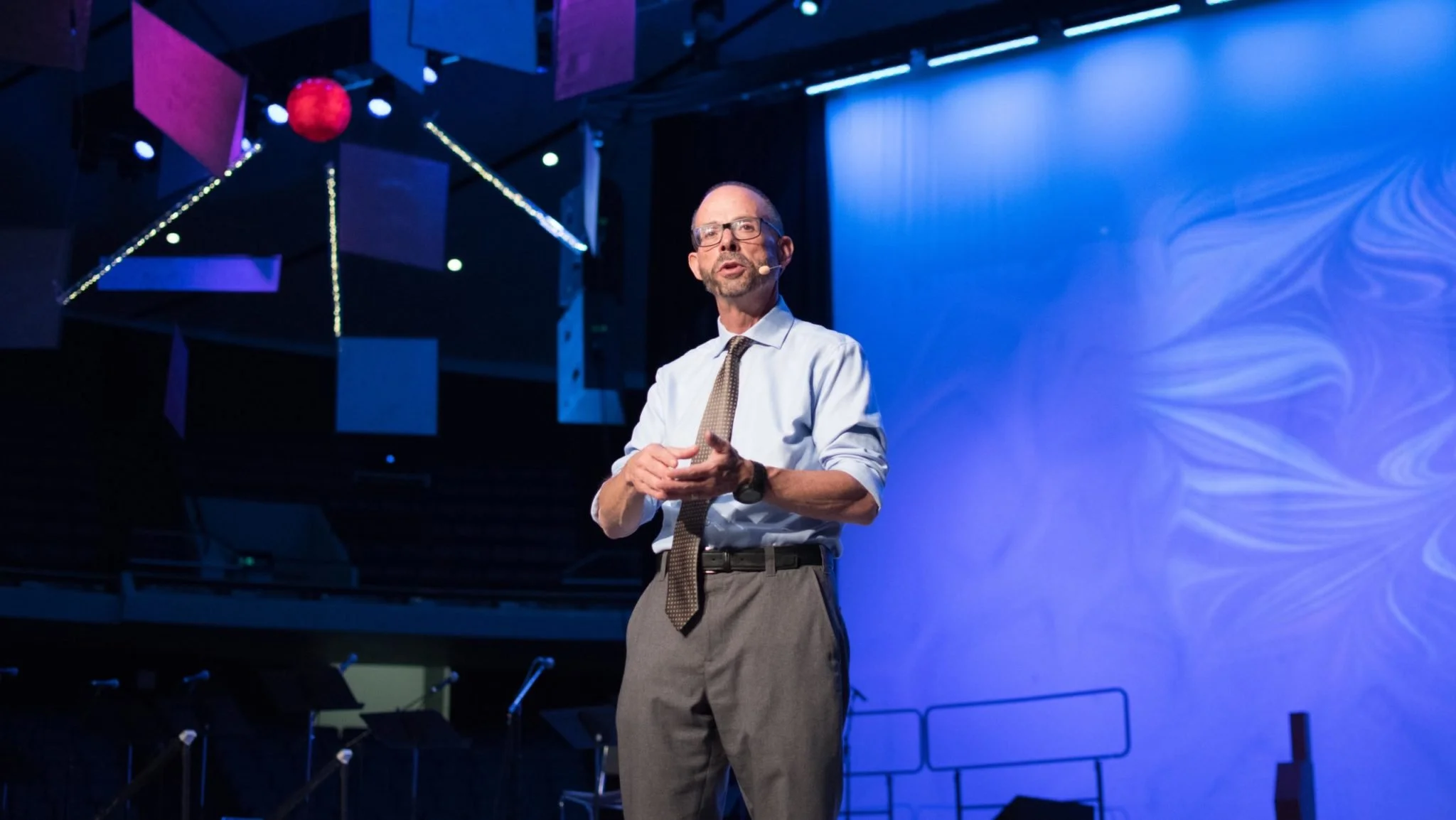
Heidi, Daniel, and David remember the life and work of John Allen, Jr., and track the shifting landscape of Catholic leadership around the current immigration situation, and Heidi interviews Minnesota author and activist Laura Fanucci.
INTRO
Daniel’s Dubuque, Iowa lecture, “Finding Hope in Challenging Times”
The Accessorized Bible is now available
Seminary Co-op event
David’s March lectures online on Queer theology and spirituality - Register here
SEGMENT 1 - US bishops begin to speak out against Trump policies
Overview: Archbishop Broglio and the three Cardinals speaking out
Emily Sanna’s US Catholic article, “Catholic silence in the face of ICE violence is not neutral”
Bishop Cokely’s visit to the White House
Bishop Robert Barron’s recent statement
Michael Sean Winter’s column in the National Catholic Reporter
NCR editorial: “The Church speaks out, a new era has dawned”
A backgrounder on the Consistent Ethic of Life, from friend of the show Steven P. Millies
Concerns about Vice President Vance speaking at the “March for Life”
Ken Burns’s documentary on the revolutionary war
Nuremburg (2025 film)
SEGMENT 2 - Remembering John Allen, Jr.
Christopher White’s remarks in NCR
A remembrance in Crux from Elise Ann Allen
Allen’s various books, including a book on Opus Dei
Boston Globe Spotlight coverage and the launch of Crux
SEGMENT 3 - Interview with Laura Fanucci
TRANSCRIPT
INTRO
DAULT: Hello and welcome to the Francis Effect Podcast. My name is David Dalt. I host a radio show called Things Not Seen about Culture and Faith, and I'm an assistant professor of Christian Spirituality at the Institute of Pastoral Studies at Loyola University Chicago. I'm here with my friends Heidi Slump.
And Dan Haran. Heidi is senior correspondent at Common Wheel Magazine. She's also an award-winning journalist and part-time faculty member at Loyola University Chicago. Dan is professor of philosophy, religious studies and Theology at St. Mary's College in Notre Dame, Indiana. He's also a regular columnist at National Catholic Reporter.
Every couple of weeks we get together to discuss news and events through a lens of our shared Catholic faith. Dan and Heidi, welcome to you both. Heidi. How have you been?
SCHLUMPF: I've done Well, thank you so much for asking. It's good to see both of you again. And for our listeners we're recording this a little bit early to, to accommodate some of our schedules. And so we are recording this on this like, very frigid 30 below Wind Chill day in Chicago in much of the Midwest.
So I've been good. I've been struggling like a lot of people I think in dealing with the. How to deal with the everyday life on when the things that are happening in our country and in our world are happening especially in Minnesota. And so I'm really grateful that we have the interview later in the podcast with Laura Fucci.
But it is, yeah it's taking some doing and it helps to be surrounded by good people who are going through similar things. So I'm grateful to be with both of you today and to talk about some other topics that are also not super happy, but and. My class at Loyola is going well, so that, that brings me a lot of joy to see young people who are open and curious about what the church has to think to teach and and hearing what they think about things.
So I've been really enjoying teaching again. How about you, Dan? How's your classes going?
HORAN: Are going well. We just finished week two. It's hard to believe like you all in Windy City, Chicago. We here in South Bend are freezing right now. It's been as I think it has been for. Lot of people. And as this episode drops we will have known how this weekend played out in retrospect where something like 160 million people in the country are gonna be affected by a pretty intense snowstorm and ice storm that's coming through from the southwest up to New England.
We've been getting. Really dumped on with Lake Effect snow in South Bend this winter. We've had a couple storms where we've had a foot plus including last week. And basically every morning I've woken up. This week there's been at least another one or two inches of dusting overnight. So, my three-year-old.
A Siberian Husky named Ronner loves this cold in snow. She is made for it. She is having a blast you know, basically swimming through the snow and loving that her human who is walking her at you know, six o'clock in the morning where it's, you know, two degrees out, but feels like negative 15 as it was this morning.
I'm not enjoying it quite as much, but. The semester's moving on and like the semester. So will the season of winter, God willing, in spring, hopefully it'll be around the corner. I do wanna give a shout out that two weeks from today I'll be in Dubuque, Iowa to give a lecture on Hope, finding Hope in the world today in a context of fear.
And so, we'll post the the link for more information about that in the show notes. But if you're in the Dubuque area or not far from there keep an eye out and come and join us. But that's kind of what I'm looking forward to, moving along with with the winter weather and the semester, David winter, weather semester, other things.
What's on your plate?
DAULT: So, again, we're in the midst of incredible cold, and so the kids are home today because school has been canceled. I also am in the midst of the semester. We're two weeks about to be three weeks into these two classes that I'm teaching, one on Ignatian Spirituality, and the other is a kind of introductory class to theology and ministry.
And I'm just enjoying very much working with the students and, you know, as you both know. There every class is its own sort of microcosm and has its own sort of dynamics. And so everything that I expected these classes to be, I'm largely kind of chucking out the window and I'm having to make adjustments in real time, not because anything is going wrong, but just because the inquiries and the questions and the conversations are taking us in new directions.
I'm very excited to report that my book, the Accessorized Bible, is in the world as of January 13th, and we are starting to have a. Events about it. I've been on a couple of podcasts, but I also wanna mention, if you're in the Chicago area, Dan is gonna be joining me at the seminary co-op bookstore in Hyde Park on March 21st, that Saturday at 3:00 PM we would love for you to join us.
Also coming up for me in March. I'm gonna be doing a Lenin series through Loyola University's Institute of Pastoral Studies. And that series is gonna be on Queer Theology and Queer Spirituality. It'll be online on Zoom, and I'll put some information about it in the show notes so that people can sign up if they wish.
But I'm very excited about this because these are some questions that actually arose. For me out of working with students around these topics because they wanted to think about how they could be part of a church that publicly is so anti L-G-B-T-Q-I-A and still be themselves. And so I'm, I've been developing these ideas very conversationally with.
The real lives of students who are in vulnerability, and I'm looking forward to trying them out in public and seeing what people think. So I'm very excited for those things coming up. And I'm excited also for your event in Dubuque. That sounds like that's gonna be awesome, Dan. Speaking of things that are coming up.
Let me quickly talk about what we're gonna be doing today. So on our first segment, we're gonna be looking at the various Episcopal voices. So a set of three bishops and an archbishop, or a set of three cardinals and an archbishop who are all beginning to speak out against Trump's domestic and foreign policies.
And so that's an interesting sort of moment that we haven't encountered before that is emerging. We're also going to be, looking at the life and remembering the life and work of John Allen Jr. A Catholic journalist. And then in our third segment, Heidi is gonna be interviewing Laura Fucci, who is an author and activist on the ground in Minneapolis, Minnesota, and is speaking out from a sort of Catholic and interfaith standpoint from that, for want of a better word, that kind of battle zone.
All that's coming up on the Francis Effect. Please stay with us.
SEGMENT 1
HORAN: Welcome back to The Francis Effect. I'm Dan Horan. I'm here with David Dol and Heidi Schlump. Every couple of weeks we get together to discuss a variety of topics from a perspective informed by our shared Catholic faith.
It is hard to keep a comprehensive list of all the actions that President Donald Trump has taken to destabilize America's relations with other nations and all the ways he has upended long established foreign policy norms. Trump was among other world leaders this past week who attended the annual meeting of the World Economic Forum in Davos, Switzerland.
Along and erratic speech. The president's tone was belligerent as he verbally attacked European allies with a number of exaggerated complaints around immigration policies, trade imbalances, and a fictional claim that America was the only reason why the Allies won World War ii. Trump also threatened further tariffs and reiterated his claim that Greenland must become the property of the United States.
All of this comes in the wake of our recent military invasion of Venezuela, where US forces deposed and exfiltrated Venezuelan President Nicholas Maduro, and threats of military actions against Iran, Cuba, and other nations. The response at Davos was a clear condemnation of the words and policies of President Trump and his administration.
European Commission President Ursula Vanian stated that quote, we now live in a world defined by raw power, whether economic or military, technological or geopolitical. The shift in the international order is not only seismic, but it is permanent and the sheer speed of change far outstrips anything we have seen in decades unquote.
Canadian Prime Minister Mark Carney gave perhaps the starkest criticism of Trump in his policies in a speech at Davos where he noted that quote, the old order is not coming back. We shouldn't mourn it. Nostalgia is not a strategy unquote. While it may be jarring to hear world leaders speak in this way, it is even more unexpected to hear such criticisms from us bishops, but that is exactly what has been happening over the past few weeks.
Archbishop Timothy Broo, the most recent past president of the United States. Bishop's Conference and current head of the Archdiocese for Military Service made a statement on January 18th that any US invasion of Greenland would likely be morally unjust. Broo also criticized our recent military actions in the Caribbean and urged soldiers to follow their consciences and refused to follow unjust or illegal orders.
Chicago Cardinal Blaze Soch Washington Cardinal Robert McElroy and Newark Cardinal Joseph Tobin have released a joint statement titled, charting a Moral Vision of American Foreign Policy. The statement highlights, quote, the contributions of Pope Leo and outlining a truly moral foundation for international relations, and has provided us an enduring ethical compass for establishing the pathway for American Foreign Policy in the coming years.
The Cardinals go on to say quote. As pastors and citizens, we embrace this vision for the establishment of a genuinely moral foreign policy for our nation. We seek to build a truly just and lasting piece, that piece which Jesus proclaimed in the gospel. We renounce war as an instrument for narrow national interests and proclaim that military action must be seen only as a last resort in extreme situations, not a normal instrument of national policy.
We seek a foreign policy that respects and advances the right to human life, religious liberty, and the enhancement of human dignity throughout the world, especially through economic assistance. While Archbishop Broo and these Cardinals are not speaking for the entire Bishop's Conference, this seems to be a notable public break of support in the sharp rebuke of current American policies.
David, why don't you get us started? What are your initial thoughts about all of this?
DAULT: Well, I'm drawn to a recent art. Article written by Emily Sauna in US Catholic Magazine, where she titled the article, Catholic Silence in the Face of Ice Violence is Not Neutral, and I am, I'm aware that my whole reason for becoming Catholic back now 20 years ago. When I had sort of, become Christian in my twenties and then was largely hanging out with Protestants and then sort of saw a kind of balkanization of Protestantism and I was really kind of in a crisis.
The reason why I became Catholic was because I thought that it. Provided a structure among other things besides being beautiful and true and good. I saw a structure that could actually stand against systemic violence and global capitalism with a moral voice. And I have been disappointed for two decades that oftentimes when the popes would speak out the bishops.
Their various ES would not echo those messages. And I have been especially a vocal critic of the US Conference of Catholic Bishops. I'm still a critic of the US Conference of Catholic Bishops, but I am heartened and emboldened by these singular. Bishops and in small groups and on their own speaking out with finally, I think some moral clarity about the violence that is going on both in our foreign policy, but also that is going on domestically.
And so I want to encourage more bishops to speak out, and I want to encourage Catholics who are in these diocese to feel heartened. That their concerns have been seen, but I'm also aware that these are small dots in a much larger map of what we might call silence, and to use Emily Sauna's voice, that's no longer an acceptable position.
SCHLUMPF: Yeah, I mean, I was very heartened when I saw the. News about the three cardinals and their statement. Much of the statement is just summarizing what the Pope said and saying, we stand with the Pope. So that's not quite as brave as or radical as people might think. And unfortunately because you know, cardinal soup bitch, who the right, you know, just knee jerk rejects anything he says.
I think prevents the. Their words from reaching a broader audience. I will say the first thing that I thought was like, this is interesting, coming from these three cardinals and not from the broader US Conference of Catholic Bishops and who by the way have still not spoken out about the killings in Minneapolis, the killing in Minneapolis.
And I thought, oh, it seems like, you know, and I don't know, I have not done any reporting around how this came to be. And I won't, I wouldn't say that I know this, but it does seem odd to me that it wouldn't come from the conference. Now some people have said, well, these are the three highest ranking, cardinals that are not retired. So it's not odd that the three of them might come together and do this, but often these statements come either from the conference as a whole or from a chair of a specific committee that is related. So, kind of wondering about that a little bit and why they maybe had to go outside the conference.
But I'm glad they did it. And again, to just support what the Pope is already saying is not that radical.
HORAN: I would just add to that in terms of further context, Heidi, you bring up a really good point, and one that is, I think, a legitimate response to some of the rightwing criticism that have said, well, these are three, quote unquote progressive. Cardinals and first of all, I don't know how you can be a vow religious or ministerial priest in the church and be progressive in a secular political sense, right?
That's just simply untrue. These words have no meaning when it comes to Catholic identity. But what they are people who are realists, right? They're people who see the world as it is and respond to it, which is what the Hebrew prophetic call is, right? What is a prophet one who sees the world as it is?
Sees the world as God intends it to be and calls out the difference between them. That's what Jesus did. That's what John the Baptist did. That's what I think pastoral leaders should be doing. And these three cardinals are doing that. To your point, you know, they are also the only three active cardinals who are archbishops in the United States in pastoral ministry.
Right now, there are retired cardinals in the us. There are bureaucratic cardinals in the Vatican that are American. You know, Robert Privos was one of them before he was elected Bishop of Rome, never served as a bishop or cardinal in the United States. So they occupy a certain kind of domestic responsibility as the most senior clergymen, the senior church leaders in the United States.
I think to your point about the U-S-C-C-B, there's no way the U-S-C-C-B as a body and its elected representatives are gonna speak out because the three most senior elected U-S-C-C-B officials, including Archbishop Coley of Oklahoma City, who's the current president, are all ideologues. You know, it's very clear as these cardinals were meeting in this consistory in Rome with.
Pope Leo and Pope Leo was explicit about the condemnation of the US political action abroad and internally he's been very clear about that, as well as calling for peace and international cooperation. These cardinals came back and did the right pastoral thing in alignment with the gospel and in communion with the Bishop of Rome.
Coley by contrast, went to the White House and had a meeting, public meeting with President Trump where he was photographed, you know, shaking the hands of Donald Trump as Trump's sat in essentially his US throne there in the Oval Office. And there was no. There was no reporting of any kind of criticism or pushback or moral concern on the part of Archbishop Coakley.
Deeply disturbing. And as you said, Heidi, you know, the fact that there hasn't been a statement about the shootings in Minneapolis and some of these policies is also, you know, a little bit disconcerting. I would add to this too, that, you know, we have other, Maybe not high profile in terms of their leadership positions or dioceses, but we have certainly social media, high profile bishops like Robert Baron out of Minnesota in a state where all this is going down.
Posting, apologetic sort of tweets and statements on behalf of the Trump administration and the ICE officers. Deeply unsettling. And so yeah, the U-S-C-C-B is less than the sum of its parts, I would say, particularly when it comes to public moral leadership. But I am really happy to see that even Archbishop Broo.
Not known, of course, for being a quote unquote progressive has spoken in truth with the church's teaching about primacy of conscience and, you know, the elicit of obeying unlawful illegal, immoral orders. So he's just doing what is right and good for him.
SCHLUMPF: Yes. Bishop Barron's comments I think have been disturbing to a lot of people. And I know he wrote a piece for Fox News that while he's, you know, kind of a both and kind of thing and really focusing primarily on the alleged so-called corruption in the state, which is just a right wing talking point.
I will say Michael, Sean Winters pointed out in his column about the cardinal statement that it was shared or an article about it went up. Within minutes from the Vatican News. So he suspects some coordination with the Vatican on that. And again, because the statement primarily just says we're standing with the Pope, that's not surprising.
I do think the other reaction that I saw to the Cardinal's statement, came from the National Catholic Reporter, they did an editorial and the headline was The church speaks Out. A new era has dawned. And I remember reading that and thinking, what are they talking about? And then I realized it was about you know, that there were.
It does look like there are some leaders who are starting to question this administration's the morality of the things that it's trying to do. I think that might be overstated a little bit and also a wishful thinking kind of thing. I hope I'm wrong. I hope that it is the beginning of a new era but I think it's one that's not going to be happening as quickly as is needed.
DAULT: Well, and as we have pointed out at several points here on this podcast, the U-S-C-C-B has felt a great ease in calling out previous administrations around issues like abortion or other sorts of notions of not being properly Catholic, in the case of President Joe Biden, but where they have had Cold Feet has been naming.
The kind of consistent ethic of life issues around things like the death penalty war shooting people in the face, in the street with no due process. My wife, who was an editor at US Catholic, used to say that anytime that anything was going on about abortion, she could expect to get a fax from the U-S-C-C-B within an hour. But I guarantee you nobody has been getting faxes Around Renee. Good being shot in the face or the, these other sorts of things.
The U-S-C-C-B just I don't think has been speaking up. And so again, I'm very heartened that these bishops are
SCHLUMPF: I was actually analyzing some of the statements from the US Bishops Conference and they did have a statement about abortion the day she was shot, but I'm sure it was because of the discussion about the, the Hyde Amendment and Trump kind of backing away from that in the discussion about healthcare changes, possible changes to healthcare or Affordable Care Act.
My guess is that was planned way in advance and not, you know, I think may have even been posted before the killing. But and also just to point out Dan, you mentioned the Coley visit to Trump and. Two days after that, there was a rule change from the administration that made it easier for foreign born religiously workers to renew their visas more easily.
And so, you know, some may say that sort of smart politicking and that Coley went there, had this meeting and then. You know, my guess, I mean, it seems likely that maybe that got brought up and then he got something out of that. And surely that's something that I know is important to the church. I don't mean to dismiss it, but yeah, I think that's how too many.
Folks in this country have been playing this administration, which is being including the Democratic party. Let's be cautious. Let's get what we can. We know we have to pay to play, so we're gonna do that. And then just I'm jumping around here. My thoughts are so scattered, I apologize. But on the topic of abortion, just a note that, that cardinal statement.
Included abortion. It mentioned abortion in there. So I know there were conservatives criticizing it and saying, oh, and what about abortion? Clearly they didn't even click through and read the statement because the statement did include abortion. A you know, like you're saying, Dan, these cardinals are not like left wing progressives in any way.
They have a consistent Catholic view of all of these issues.
HORAN: That's right. And you know, speaking of abortion, since we're we. Talked a bit about that already. You know, we're recording this before or concurrently with the annual March for Life in, in Washington DC the anti-abortion activist event. And one thing that actually has been kind of heartening to me is in some of the coverage anticipating this, there have been people raising concerns about.
Vice President JD Vance, being invited to speak there in light of comments he's made about immigration and about the policies internationally, our foreign policy, as well as what's happening in Minnesota and other US cities. So I think that's good. You know, one of my longstanding critiques, and I still hold this, of the, I like to call it March for Life, because it really is a march against abortion.
Is that not often enough? Not consistently enough has there been conversation about the consistent ethic of life, right? And so if you are marching because you believe that the unborn deserve, you know, life and protection in the womb and all of this, that's great. But I think, you know, going back to something, David, you said you should also be, if you are actually pro-life.
As concerned about people getting shot in the face in their own cars, in this country as well as elsewhere. And the sovereignty of other nations where the foreign policy here has no sort of checks and balances, no congressional oversight. When the administration decides to depose a sitting sovereign in another country, you know, as bad and maybe as illegally, they're in that position that they may be.
I just wanna take a step back for a minute. And say two things. One is to follow up, Heidi, to your point about Coley's visit and how opportunistic it is that, you know, this is not the role of the church in government, right? We know from the church's teaching, you can look this up in the catechism, you can look this up in many documents of Catholic social teaching papal and cyclicals and the like, that the role of the church is meant to be.
A protector and promoter of the common good. It is not about, well, we have a declining vocation pool in the US diocesan context, and therefore we need to import foreign born priests and deacons and religious sisters. That's essentially what Coley got away with. As you're saying, Heidi, in terms of an advocacy, which was very opportunistic, it's also deeply transactional.
Maybe it's not an overt. Explicit quid pro quo. I mean, we didn't see Coley give Trump a gold-plated cross in the way that Tim Cook gave a special iPod or whatever it is. But one can imagine the implicit quid pro quo, which is we are not gonna rock the boat, we're not gonna critique you, we're not gonna name you in our public statements.
You know, you give us this, we'll just kind of turn the cheek look the other way. Which brings me to an maybe unexpected social pop culture kind of in intervention here. So we're not actually. Talking about the Oscars, and we're not talking about the pop culture as we typically do at the end of a season, but I can't resist talking about two things I've watched recently and one of which I'm continuing to watch.
The first is Ken Burns' latest documentary on the Revolutionary War on PBS, which is just awesome. It is really extraordinary and as somebody who grew up in upstate New York and along the East coast and who has a family that's very into American history, and we visited a lot of historic sites in Philadelphia and Gettysburg and New York and stuff growing up.
Been on vacation. It's really cool to see. The other thing I watched recently this past week was the movie Nuremberg, the 2025 movie about the, you know, the background to forming this international tribunal to hold Nazi war criminals to account and how such a thing internationally had never been done before.
It's actually quite interesting legally to think about how. Nations hold one another to account when you have such gross atrocities. I bring these two things up because it's impossible at this moment in history for anyone who has eyes to see and ears to hear, to not think about what's happening on our own soil and our own administration and internationally in light of these historic moments, on the one hand.
As you might expect, Ken Burns is doing an excellent job and his colleagues in telling the very complex story of the foundation of this country. And though there are things like the enslavement of African men and women and children, though you have a very mixed, especially during the revolutionary period relationship with indigenous peoples in North America.
There's a lot there that is definitely problematic. But one of the things that is really inspiring is, you know, as imperfect as it is, this desire to overthrow tyranny, this desire for self-agency, this desire for self-rule and democracy, which it's by all accounts and the historians make clear something that the founders really were committed to and brought together a disparate group of 13 very different.
Geographically, economically, culturally, religiously, colonies, right? So I've really enjoyed that, but it also makes me very sad to think about what happens 250 years later where we find ourselves in 2026. It really is unsettling. The Nuremberg thing I think, is quite self-evident and one of the things that comes up, whether it's the trial of Eichman in Jerusalem in the 1960s, sometime later, whether it's looking back over Nuremberg and the way the world was exposed to the Nazi atrocities.
Kind of point blank is that these things happen gradually. It happens slowly. It happens bureaucratically, it happens through. Ostensibly democratic processes. And when you hear somebody like Russell Crow who plays the Nazi number two, Goring on the stand, talk about how these things happen through, you know, the election of Hitler and the rise of the Third Reich, and things that the people ostensibly mandated.
If you give an autocrat a fascist an inch, they're gonna take a mile and things turn bad very quickly. So, I don't wanna sound alarmist but it is interesting to review our own history within the last century or the last two and a half centuries the whole kind of history of this nation in its birth.
And to think about where we are. And where we might be going and what role as people of faith we can play in this. So this is a roundabout way through kind of pop culture to come back to these three cardinals in our, in archbishop that I think what they're doing is what not only they should be doing, but what their brother bishops and what all.
People of faith and goodwill should be doing as well. So I've also been really heartened by the response on the ground in Minnesota by the everyday people who are looking out for their neighbors who are still not, they're refusing to be intimidated. 'cause this is an intimidation campaign as it was early on in Germany, right?
That becomes quite clear when you look at the history. So sorry for a little bit of a detour there. But if you haven't seen Nuremberg yet, if you haven't watched Ken Burns' documentary, highly recommend.
DAULT: Well, and just as a way of bringing this. Current conversation to a bit of a close, and I'm grateful for everything that has been said, and I especially commend both of those pieces of media Nuremberg and the documentary on the Revolutionary War that you mentioned. Dan. I'll also just give a quick shout out for folks that are interested in learning a little bit more about.
That history of America. A friend of the show Steven Mills and myself, do a regular podcast where we read through all of the 85 Federalist papers and comment on them. And I learn a lot from his wisdom and his knowledge as a political theorist. But I've also been returning a lot lately to the writings of Dietrich Bonhoeffer, and particularly his letters and papers from prison.
And there's one. Passage in particular that I think speaks to what we've been talking about today. And this is from early on in the collected volume the newly greatly enlarged edition of the letters and papers from prison. Where Bonhoeffer writes, we often expect that others we often expect from others more than we are willing to do ourselves.
Why have we hitherto thought so in Temperately about man and his frailty and temp ability? We must learn to regard people less in the light of what they do or admit to do, and more in the light of what they suffer. And I really think that right now, if we can be interrupted by the suffering that is going on around us, the suffering of those that are in peril because they are immigrants, the suffering of those that are L-G-B-T-Q-I-A, the suffering of those that are on the.
The front lines trying to observe and document what is going on with the terror in the streets and who are being violently oppressed or killed because of that attempt to just exercise their basic rights that are guaranteed in the Constitution and that are given to us from God. I might add you know, at this particular moment, the church should be all ears and all hands on deck with the suffering.
We shouldn't necessarily be doing photo ops in the White House. We should instead be on the ground. On the front lines with those that are vulnerable as Jesus commanded us to do in Matthew 25. And as always, listeners, we know that you are struggling with these questions too, but we want to assure you that you are not voices crying in the wilderness.
We are in solidarity with you and we are in prayer with you as you are trying to figure out how to navigate these very troubling times. Let us continue to lift each other up and let us continue to try and care and be the church. And live the gospel even as sometimes our leadership is unable to follow us.
But I'm heartened that at least these four bishops, archbishops cardinals that we've been discussing, at least they are trying to take some kind of stand. So we will continue to return to this question as it arises. But for right now, we're gonna take a quick break and when we come back we're gonna be remembering John Allen Jr.
This is The Francis Effect. Please stay with us.
SEGMENT 2
===
DAULT: Welcome back to The Francis Effect. I'm David Dlt and I'm here with Dan Haran and Heidi Schlump. Every couple of weeks we get together to discuss a variety of topics from a perspective informed by our Catholic faith. Last Thursday, the online Catholic publication Crux announced that its CEO and editor in chief John Allen Jr. Had died after a lengthy battle with cancer. Allen previously served for 17 years as the Vatican correspondent for National Catholic Reporter before moving to the Boston Globe in 2014 to take on an editorial role at their newly established Catholic outlet crux before it was spun off as an independent publication, he was widely recognized as one of the best connected and respected Vatican journalists in the world. Former NCR reporter, Christopher White recalled how Alan was a mentor to him as he started his own Catholic journalism career. In a remembrance published last week, white wrote quote, many will rightly mourn the loss of the man who became
one of the most prolific English language interpreters of Vatican Affairs. I also mourned the loss of a mentor whose same brash and tenacious style that convinced a restaurant owner to open for his friends on his day off. Allowed John the ability to penetrate Vatican walls to provide greater clarity on an often opaque institution unquote.
Alan was recognized as someone always interested in the internal workings and politics of the Vatican bureaucracy, who was sometimes criticized for being too invested or close to sources in the hierarchy, but he was also interested in Catholicism elsewhere in the world, including the global south. A regular presence at university panels and diocesan conferences.
Alan was a staple at the Los Angeles Religious Education Congress, where he often received top billing in the large arena venue known for his frank and candid state of the Vatican types of talks. Alan often spoke extemporaneously to as many as 7,000 people in attendance. He was the author of several books on the church, and Alan was a regular guest expert on secular news networks like CNN and he was frequently quoted in national and international news publications.
Heidi and Dan, you both knew John. I know that all three of us are united in expressing our condolences to John's widow, Elise, and Allen, and we join our prayers together with all those who mourn, John Allen's loss. Dan, perhaps you can get us started in remembering his life, work and legacy.
HORAN: Yeah. David, thank you. I, you know, John Allen, for those of us who are involved in Catholic media, Catholic academy, anyone who's interested in a kind of Vatican politics and news. Certainly over the last 25, 30 years are familiar with John Allen's work. He certainly was a giant in terms of Catholic media and we move in small circles and so I, I knew him a little bit, not super well.
I wasn't close to him. I'm grateful that you shared a few remembrances from. From our colleague and friend Chris White, who was one of his kind of mentees early on in, in his own career. And Chris, in his own right has done tremendous work in Vatican coverage and Catholic media. But, you know, I'll just share a little bit of my own sort of experience of John both up close and sort of, a little bit removed and as you said about his presence at things like the LA Congress.
It's so true. You know, John was known and is remembered by his reporter, colleagues and. Sources and friends. As somebody who loved to hobnob, he was a networker. He loved to get on the phone and more recently on text and email and, you know, had lots of connections you know, connections that go back.
To the nineties and early two thousands, particularly in the pontificate of John Paul ii and then Benedict the 16th. And, you know, and he, some people said like, maybe he didn't know as many people in the Francis era when this new pope from the global south appeared and brought in a whole new sort of set of you know, bureaucrats, for lack of a better word, in the Vatican city state.
And nevertheless he remained committed to coverage. And, you know, probably most famously his now widow, his wife. And he, in the publication Crux landed the first kind of major interview, long form interview with Pope Leo the 14th. And so that not a bad way to kind of go out in one's professional career in this world.
I think one of the things he'll be remembered for in, in spaces by the general kind of Catholic population of, you know, those who might attend LA Congress or some of these other diocesan events around the country, is that he really did relish in being able to tell stories from his perspective about what was really going on behind the scenes.
You might think of him as a kind of. Wannabe Catholic Wizard of Oz. Let me tell you what's happening over here. And I mean that as a compliment. He was very entertaining as a presenter even if he had his own spin on things, right? But he certainly had the confidence, the authority, the background and the connections to be convincing and to convey a lot of the complexity of what was happening in the church.
Some of his books became really influential. He wrote a very well read widely read book on Opus Dei that I think. Brought a lot of attention to some of the things that were not as well known before that publication in the early two thousands. And he's written a number of books that have continued to be influential in helping people to understand, you know, maybe what's going on in both the Vatican in terms of the kind of Italian Roman culture, but also maybe the church more globally.
I think what's also interesting is that as we more the lost the passing of somebody who was still quite young, right? He died of cancer in his sixties. And that is a tragedy, I would say. But he also is somebody who overlapped with some in incredible and important shifts in Catholic media coverage.
His own career reflects this, right? He was sort of a, an old fashioned physical paper news reporter when National Catholic Reporter in the nineties and stuff before the internet was big, was still doing kind of on the ground old school journalism. But then, you know, with the spotlight with. Its coverage in Boston with the Boston Globe and the revelation of you know, just the horrendous history of clergy sexual abuse and its coverup.
You know, he, this coincided with the emergence of new media and internet media and the Boston Globe launched. Its a. Online Catholic coverage known as Crux, and he was tapped to kind of lead that initiative. And then when the Boston Globe felt like they could no longer sustain that particular enterprise, it spun off and became an independent news source.
And John stayed with that and kind of did the fundraising and kind of kept the thing afloat. And it continues to do, as I mentioned this interview with Leo the 14th and other kind of breaking news and features work so. He is somebody who will be remembered for a lot of things, including his important and impressive career.
But I also think, you know, I'd be interested to hear what the two of you think, especially you, Heidi, who also has been, you are, and continue to be a giant in Catholic journalism. You know, what your thoughts are about kind of John's place specifically, but also what his whole career kind of represents as an arc of emerging and changing dynamics in news media.
SCHLUMPF: Well, you're right. He was a giant. And it's such a loss to the church, obviously, to his family and to Catholic journalism. I had known that he was sick and as you mentioned, Chris White, who I'm still good friends with I know had been in contact with him throughout this. John and I were not close.
We did not overlap at NCR. He was the Vatican correspondent. While I was a part-time columnist there but I didn't have like day-to-day interactions with him, but as a long time Catholic journalist and just person who read widely obviously I knew of his work and I'd been at many events where he had been a speaker and.
You were right that he was a excellent in addition to being very connected and just having incredible knowledge. He was such a good storyteller both in print but also in person. And I think he did a lot of flying around and doing speeches in part because he was so good at it and he just really helped everyday Catholics understand.
Their church better. And he certainly sometimes had to share difficult things about the church, but he did it from a perspective that was not part of the polarization that we see in today's church. So if you think of his career that goes back you know, before the millennium that he. You know, he had a way of sharing it.
It was more than just straight news because I think there was a lot of analysis there and context and background, but it wasn't opinion, it wasn't straight opinion, and it certainly wasn't part of some of the very polarized, you know, some of the right wing type media that you see now. I think one thing that's really important to notice is that John mentored so many young journalists, and I know he wasn't initially very happy when I plucked one of those young journalists away from Crux when I hired Chris White back to NCR.
But journalists, whether they were at a crux or not, many of them are now thanking John for the way he introduced them to sources. Brought them out for dinners and really showed them how things were done. There's so many people. In addition to Chris Michael o Locklin, the current president of NCR, also worked for Crocs clergy, and gra, who's with they pee?
Inez, Sam Martin who, you know, when he didn't have the expertise from South America, he brought her in. He did a great job, I think, of managing a news organization. But even Chris acknowledges that often investigative reporter and manager fundraiser are two different skill sets. And so I know that could.
That could be challenging for lots of people in his position. I was sometimes critical of where Crux got their funding from the Knights of Columbus and I think more recently from Bishop Baron's word on fire. But it's a challenge to try to find sources of funds funding for journalism today, especially especially religion journalism.
So, yeah, he'll be very missed and he certainly was influential in my career just observing him and getting to know him and his work. Made me want to be better at what I do, so I'll always be grateful for that.
DAULT: Well, let me speak as someone who is more distantly acquainted with Alan's work and who didn't have the chance to overlay. Up with him in some of the professional ways that you all have described. So when I went and taught in Rome over this past summer, one of the things that really struck me was how much the Vatican and the sort of different offices of the Vatican, their concentrated of course around St.
Peter's square. But as you move through the city of Rome, there are also sort of islands where Vatican buildings are there as well. And I had the opportunity because of the. The sort of good planning of my friend and colleague at IPS, Mike Canis, who I was teaching with. He set up all of these different meetings with various organizations and decast within the Vatican, and so we had the chance as a group to sort of go within the walls at various points and to meet with various officials, but I was aware of how much of that was dependent upon.
Personal relationships. It wasn't simply a matter of we were professors with theology degrees and we could just knock on the door and come in, but it was because of the kind of patient way that Mike had built up those relationships over years and years of being in Rome and being part of these conversations.
As I'm listening to you both describe the work of. John Allen, one of the things that really strikes me is how important his personal touch was in the way that he gathered news, and it sounds like he was a great storyteller. You've mentioned that it also sounds like he loved to sort of talk about the intrigue behind the scenes.
But I'm wondering, you know, as we continue to think about the hole that he leaves, how can others step in? Is it still going to be a matter of having to build these kind of personal relationships or is the landscape changing? Was he the last of an old guard, I guess is what I'm asking? Or is he the sign of what is still going to be coming for the future?
HORAN: I've had the same sort of question actually in the last, you know, 24 hours or so. And because when you have somebody who has had such a kind of a footprint, we might say in the Catholic media world you do wonder. And you know, his area was, you know, he was a Vatican Isa. He was somebody whose, you know, currency, his language, his thinking, his connections.
We're tied to the Holy Sea. So that's a very specific group and there is a whole international cohort of people who do this sort of thing. I think of, you know, like from Britain for instance, somebody like Chris Lamb has been somebody kind of in the next generation. Our friend and colleague, Josh McElwee is another one who was kind of moved into this space, Chris White for many years as well.
And then you have, you know, folks like like, jerry O'Connell in America. And Colleen Dully, who you know, is kind of, of that next generation as well. We think of people like Tom Reese, who is a contemporary of John Allen's and of Jerry's. So, I mean, I think we'll have to see.
Maybe your question, David is a bit more. Pointed toward the English speaking world. 'cause that was really where John kind of shined was he was the English speaking translator, literally and figuratively of a very kind of culturally Italian Holy Sea for many decades. So, so we're gonna see that.
Heidi, I'm wondering what you think in response to David's question.
SCHLUMPF: Yeah, I mean I definitely would say that there are still Vatican Eastes and there's a new generation of people who are doing this work very well, too many of whom I think learned from or even were personally mentored by John, but. You know, that's, that is still how journalism is done is through sources and relationships.
I think what is always a challenge, not just for John, but for all of us, is, you know, keeping that line or how that line gets blurred when you're in an, especially when you're in an internal. When you're in a, in an organization that you're also a part of, right. So for example, I cover the Catholic Church, but I'm also a Catholic.
I go to mass. And you have to deal with people that have been sources over years becoming. Like friends and you know, is it a friendship? Because there's also that source reporter relationship. And you know, there were times you could have been critical of John and of any journalist for maybe getting too close to their sources, especially in a place like Rome where that personal, interaction was so important. I mean, John, I used to listen to John's podcast too. He had a podcast where he talked about, you know, last week in the church or something before he got ill. And you know, he would often be talking about, well, my wife and I had so and so over for dinner, you know, Cardinal Powell or somebody.
And then it, you know, you wondered how that affected the reporting that came out when there were. Hard things that you had to report about somebody like Cardinal Powell. And that's always a challenge for journalists and that's why we have journalistic ethics, you know, that we try to follow, but I think it's especially hard in.
A situation when you're covering something that's so important to the individuals too, like, like your own, you know, faith organization. But I think John was a professional and he did it very well, and if he, you know, crossed the line sometimes on getting too close to sources, I think that happens to a lot of reporters And and people were very grateful for the work that he did do.
And I think it's going to be a real loss that he's gone.
HORAN: You say, Heidi? I mean, I'm just curious, kind of zooming out for a minute to think about, you know, we can mark these transitions of Catholic journalism through a career as extensive and impressive as John's like, you've, you have been doing this work, you know, basically parallel to him. What do you see as kind of the biggest difference from maybe when he and maybe by extension you started and where we are today and where we might be going?
SCHLUMPF: Well, in fact, yes, he and I are about the same age and are contemporaries. I will say what I saw. John's career showed, you know, he was initially a print journalist. And then he moved to an online publication.
Obvious the Boston Globe did Crux in print for a while first and then online. And his publication was online only. He embraced multimedia in terms of doing the podcast, and certainly he was kind of an influencer before there were influence. Right. So every Catholic conference or organization wanted to book him because they wanted to hear what he had to say and hear his inside stories and get his perspective on what was happening in the church.
Just as an aside, I think I remember one of the points he made very early on in my career that helped me as a Catholic watcher. Was that he explained that not everything that came outta the Vatican was directed at, you know, US Catholics. And that sometimes there would be a statement from the Vatican on something and all the progressive US Catholics would all freak out 'cause they thought it was directed at them.
And he'd be like, no, that was about Africa. You know, and was, had such a global. Perspective, you know, that was very helpful. So yeah, obviously the rise of multimedia, but again, he also, his career spanned that ideological shift in the church. So, he started under John Paul ii, but certainly when the US church was still relatively more middle of the road or progressive and then saw the rise of the right wing church, especially in the us and spanned several popes.
I think he did. Handle well the remaining true to journalism, even as the ideologies world in the church and the world around him. So, so definitely a model in so many ways. So I know, we're all very saddened by his passing and we will keep both the, be the journalists at Crux and John's family in our prayers going forward, and we hope that you will as well listeners. We're going to take a break now and I'll be back shortly with my interview with Laura Ucci about things on the ground in Minnesota.
You're listening to the Francis Effect.
SEGMENT 3
SCHLUMPF: Welcome back to The Francis Effect. I'm Heidi Schlump with today's guest, Laura Kelly Fucci, a Minnesota based author, and dare I say, online Catholic influencer. I've been following Laura for a couple years now, and I wrote about her for a peace and common wheel about Catholic mom bloggers who are inspiring a new generation and will link to that piece in the show notes for you folks, Laura.
Is on the ground in the Minneapolis area and she's been responding to the invasion of ICE there. She's been involved in providing aid for neighbors who are afraid to leave their homes, and she was part of the group of faith leaders who demonstrated in the below zero temps. Last Friday, she also has been providing wisdom to her, tens of thousands of followers online, including preaching on the daily readings.
Laura has written for America Magazine, US Catholic Magazine, our Sunday visitor News Service. Give us this day, scripture Reflections. And she's been featured on the hallow and ritual apps. She's the author of several books, including. Everyday sacrament, the messy grace of parenting and grieving together a couple's journey through miscarriage.
Her newest book called Living Easter 50 Days to Practice Resurrection comes out in March. So welcome to the Francis Effect, Laura.
LAURA FANUCCI: Thank you so much for having me. It's great to be here with you.
SCHLUMPF: Well, I'm so grateful that you're willing to talk about a, that talk about, for our listeners what's going on in Minnesota. Obviously, we're all watching it online. Some folks might be in the area or have gone to the area, but you live there and I know that the situation is changing daily, but could you describe what it's been like for the past few weeks?
Is it really, does it really feel like an occupation there in your state of Minnesota?
LAURA FANUCCI: Yeah, I can say it has completely upended life as we know it. The changes are everywhere, and the fear and the tension in the air is just palpable. I know that a lot of folks have seen like the most commonly viewed videos, right, are the ones of the really intense confrontations in downtown Minneapolis.
But I live in a northwest suburb of Minneapolis. ICE is everywhere here. I see them when I'm driving around. I see them when I'm going to my kids' schools. It's really intense. There are friends I know who are US citizens who haven't left their house in weeks because they are terrified that they could be detained.
I know a friend who's in the midst of the immigration process, who is doing everything the right way who has been staying inside with her children since before Thanksgiving. Because she knows that the hearing people are getting deported from the hearings that they're showing up to for doing things the right way.
There are stores and restaurants all around us, even out here in the suburbs that have shut down because so many restaurant staffs have been dramatically reduced. A couple of restaurants around here, ICE came in and just essentially took the whole staff. So a lot of immigrant owned businesses and restaurants are locked deadbolted right now, and you have to call to get them to open the door for you because they're worried about the safety of their staff and the safety of their customers.
When I look around at Mass at my Catholic parish on Sunday, I can see it looks very different from how it normally does. There are a lot of brown folks who are normally, they're in our pews next to us who aren't there now. And there's a lot of, you know, I'm a mom of five and so I've got kids in different schools.
My oldest two go to high school in downtown Minneapolis, and so. You know, parents are just at the forefront of this. We're trying to get kids safely to school. So a lot of parents are trying to figure out, you know, can we give rides if the parents of our kids' classmates are not able to leave the house?
Or if one parent has been deported and then the other one is just terrified to even leave ICE has been showing up to a lot of bus stops. So there are patrols of parents at bus stops, at schools outside daycares. And I mean, one of the most remarkable. Things too. When I think about how many folks I see when I make the mistake of reading the comments online, you know, there's a whole section of the comments where people will be crying out about, just obey the law.
Just don't get in people's way. Let law enforcement do their job. Is breaking laws left and right and not even just in their treatment of immigrants, they drive at, like, you'll see them convoys tearing down the interstate 20 miles over the limit. Running red lights going the wrong way down one way streets like, it's just terrifying to be out and driving around the city right now.
So, yeah, I can just say in every way possible, like church, work, school, my kids, all of it has just been dramatically affected.
SCHLUMPF: Well thank you for that. You know, honest on the ground report, some people I think have minimized what's going on. They. And so it's good to hear from somebody reputable like yourself, and a lot of what you're saying reflects what I saw here in Chicago when ICE was here. But still, what's happening in Minnesota is on a scale that we didn't even see here in Chicago, both in terms of the numbers of ICE agents who are there and the.
You know, violence. I mean, certainly there was violence that happened here. A man was shot and killed by ICE in Chicago as well, but the ratcheting up of the violence is really frightening there. In addition to all of that. That you've described. I know you've also witnessed some real coming together of people to help their neighbors, which we also saw here in Chicago, right?
Like we started with those whistles. But I know for you personally, sometimes you ask your followers online if they'll throw in some money so you can help a local family. And as we're speaking today, I think you just asked. Couple, you know, a day ago and got $15,000. I remember you noting online that you said, this crisis is reminding us of what we should be doing all the time.
That is feeding our neighbors, helping our neighbors. Could you say a little bit more about the response there in Minnesota and what that's telling you about folks?
LAURA FANUCCI: I think that somehow in the worst of circumstances, the best of humanity shows up. That is just something I've learned over and over again in my own life and looking out at how people respond, you know, to national tragedies and things like that. The way, oof, that thing that people are showing up here in churches, in schools, in local organizations, is so incredible and so holy.
So it's like you have to hold all of this at once. I mean, people are just, churches are gathering. Tons, literal, tons of food to feed families in their communities. Like I see the, there's so many grandmothers who are out protesting, who are just saying like, well, we'll do the patrols. You know, like, I don't have some other things going on today.
I can help with this. And so I see that so many people are upset about what's happening and feel helpless, and so to just get to invite people in to say. Look, we can't fix this, but there are families here who are hungry and if we raise some money, we can go to the store and get food and literally bring it to people.
And that feels so close to the ground and it feels so important. I just think, you know, it reminded me of, during the pandemic, I remember one of my kids saying, when the supermarkets around us started having hours in the morning, like they'd open an hour early, and that way older adults, people with disabilities, people who are really immunocompromised could come and shop with even less crowded store.
And I remember one of my kids saying, mom, why didn't we always do that? I had no good response for him. I mean, maybe we'd never thought of it but we could have and we should have. And in some ways I think that about what we're doing now, like the neighbors around us who needed help with life's basic needs.
They needed that before we all had our eyes on the intensity of what was happening. So my prayer right now is that some of these community organizing efforts that are in place and some of these mutual aid efforts can continue because the need is enormous. And this is, I mean, this is like love your neighbor in the flesh, right?
That so many in immigrant communities are in deep need and so many people who are on the margins of society are very vulnerable to what's going on. So. Yeah. I think this is in some ways how we've always been called to live, but it can get easy to forget with everything else that's going on in our lives.
SCHLUMPF: Well, I appreciate you bringing up how faith leaders have really come together in Minneapolis and around the country. Really, it's been heartening to see. And I think this points to the idea that I know you've talked about how God cares about politics and what's happening in the world. I know much of your past writing and books have been about parenting.
Or about infant loss, which I know you have experienced and about surviving cancer, which I know you have also experienced. So how and I think you've always been interested, obviously, and involved in social justice, but how do you specifically see what's going on now as connected to our faith? And why do you think it's so important for Christians and Catholics to get involved?
LAURA FANUCCI: Yeah, I mean, as someone who's devoted her life to theology and loves scripture, you just cannot read scripture without finding the call to welcome the stranger to love your neighbor. I mean, Matthew 25 says, if we wanna know how we will be judged for how we lived our life, it's right there. That's the blueprint.
I was hungry and you fed me. I was thirsty, and you gave me drink. I was a stranger, and you welcomed me. And I just think Jesus spells it out so clearly there that, when we see it around us ratcheting up the, like, I, I guess I just don't know any other way, but to respond to that most basic need I think, you know, for a long time, as someone who is very much online in my writing, I would see so much of the way that political posts were shared and the political rhetoric was happening, and I just thought.
I don't think this is a helpful space for politics. I think it's actually making it worse. So for a lot of time my political engagement was more offline. I would say things like, you know, the George Floyd murder that happened here in Minneapolis and the call that I really felt, to change the way that I was working and learning and advocating around racism that galvanized me.
I also, like in my life have experienced loss around gun violence. My uncle was murdered during a robbery, and so, school shootings have been a thing that I have really tried to organize prayer and action around for a long time. And I think when I look at what's happening right now, it feels so crystal clear to me that God is calling all of us to see that this is exactly the way that we're to love our neighbor and we're to bring our faith to bear upon what's happening in the world, which is actually what politics is, right?
It's not. The partisan infighting politics at its core is how are humans living together within societies? How do we make decisions? How do we have laws that are wise and just and prudent and keep us safe? Yeah, so I think for me, when I think about the need to speak out right now, it's kind of one of those I've done a lot of theological work on vocation and calling and sometimes people will talk about calling as the thing you can't not do, and it feels very clear to me right now that.
Trying to speak up and trying to invite people to help around. This is the thing I can't not do.
SCHLUMPF: So what's your perspective in terms of religious leaders and maybe specifically Catholic religious leaders and their responses? I think initially I was somewhat critical because we haven't heard anything, you know, from the U-S-C-C-B, although I think there has was a statement now from Archbishop Kley.
Your local archbishop has said a few things and I just saw a piece this morning that Colonel Tobin, I think has said some pretty strong statements about, this needing to stop and how Catholics can get involved in trying to get ice to not get additional funding. But I think you shared on your social media about initially a couple weeks ago, you know, you were at a church where a pastor wasn't even mentioning what was happening.
And this might have been after the killing of Renee Goode. And, you know, you. Or I don't know if you personally, but some people pushed back and he apologized and now he is speaking out, and I know you've gone to some of these events that have religious leaders at them. What's your feeling about how the response has been specifically from Catholic leaders too?
LAURA FANUCCI: Yeah, I guess I would say maybe as in all things, it's been a mixed bag. I appreciate, I mean, Hopee Leo has been very clear speaking out that the inhumane treatment of immigrants that we're seeing right now in the US is not pro-life. That you can't support this and call yourself pro-life? I do. I have appreciated some of the statements that the U-S-C-C-B has put out.
The video that they made back in November, I think was a very powerful statement. I think among the bishops here in Minnesota, it's been very mixed. I do appreciate that our archbishop has said some statements. I really appreciate the statement that Bishop Neri from the Diocese of St. Cloud.
Has put forth, I think it is the most pastoral, caring, and compassionate statement and message that I've seen a bishop give to his flock. And so I'd encourage folks, there's a YouTube video of it with English captions where you can see the text and I just think it absolutely centers those who are suffering the most.
And to me, that's always the way Christ would act. So I do, I get so much. Hope and draw so much strength from that kind of leadership. So I have seen some of that among. The bishops, I think. Yes, I did make this real where I shared how my pastor had not said anything at the there was no mention of what was happening on the Sunday with the baptism of the Lord.
And we just got a very nice homely on baptism, but no mention of what was literally happening outside our doors and lots of people, I mean, that, that has gone pretty viral. And so I'm seeing a lot of comments where I hear that many more. Protestant pastors have spoken out about that. There's a lot of Catholics who feel you know, hurt and alienated and upset that their pastors haven't spoken out.
There are definitely instances of many Catholic pastors who have spoken out, and you'll see that reflected in those comments as well. But I would very moved and emboldened by the fact that the next weekend at Mass, my pastor said, in the middle of mass, publicly apologized, was very clear that while the staff had.
They had some excuses, but no good reasons. He said basically that some of the staff was out of town and some things didn't get put into the prayers of the faithful. And that he hadn't preached about it. But it was very present and has been since at our parish. And so I've been very moved to see, I mean, a public apology from a priest.
I've never seen that or heard that in the middle of mess. And I really commend my pastor for that. So I do think that we have to give each other the grace to say, this is a really hard time, and people drop the ball sometimes, but that doesn't mean that we just give up the whole game and say we can't make things right.
So. I do think there has been silence that has been upsetting in certain Catholic corners. There have been some pastors who are speaking out in support of what ICE is doing, which is also upsetting to hear. But I feel overall I would just urge, you know, pastors and church ministers to know how much the people are hungry to hear a good word about this, and that it can be done in ways that are not, you know, partisan and divisive, but just speak to the suffering that's going on right now, and I'm heartened to see that.
SCHLUMPF: Just a quick follow up question in part for my own interest. Where, what was your demonstration that you did on Friday? Was that the gathering of religious leaders? Were you part of that and was there a sizable Catholic presence there? I.
LAURA FANUCCI: Yeah, great question. I was at a meeting that for three days last week that we're with, I was the only Catholic there. It's a small group of us who are working on building spiritual communities in, many of them are online, so outside traditional religious spaces. So some of the work that I've done online is what brought me to that group.
A number of those. Protestant pastors went that morning to knowing that they would be arrested at the airport. I did not go because of what the work was with that group, but I went to the march that was right outside. And so was able to be part of that incredible peaceful. Just huge outpouring of support from the community.
And that was a really moving experience. I will say that among the friends I know who were involved with that clergy protest at the airport, I don't know of any Catholic clergy who were involved. That's not to say that they weren't there, but my, I don't know if any of them, and the vast majority were Luther Lutheran pastors here in Minneapolis.
Yeah.
SCHLUMPF: It is Minnesota. A lot
LAURA FANUCCI: It is indeed. Yes, it is.
SCHLUMPF: Well, what is there? You know, I've really appreciated. Your breaking open scripture in the midst of all this too. It's really grounding. I know one day you just read the psalm for the day and it was kind of brought me to tears. So is there any, anything else you can share from your own, you know, spiritual reflections or anything else that you'd like Catholics to know, especially if this may be coming to their city next?
LAURA FANUCCI: You know, I have been in all my, you know, text threads with friends across the country. I'm really trying to urge friends in places where. There has not been this ICE presence yet to think about how to prepare beforehand. And I know that might sound scary for folks, but there's so many things that I'm involved with right now where I think, oh, we could have had the groundwork laid for this and this would be a lot easier to mobilize right now.
So I think the simple fact of getting to know your neighbors of getting to know who are the folks in your community who are. Poor and vulnerable. You know, those are gonna be the people who are most affected by anything like this. You know, I'll go on a limb and say, I think that every immigrant.
Community in this country has a new level of fear and vulnerability right now. So I think getting out and supporting immigrant owned businesses, you know, checking in with your friends who are immigrants, there's just I mean, as I've been doing that I haven't heard anybody say no, no, we're fine. I hear people across the country saying, yeah, we're pretty terrified of this too, because even though we're citizens, and even though, you know, we're born and raised here, we see that doesn't matter right now.
So I just think, you know, even doing one of those, like know your rights trainings and learning more about the, there's lots of great. Organizations now that are running these online where you can simply learn, here's literally what your rights are as a citizen. Here's what you can know about if you encounter this or that.
Not any kind of like, let's be agitators by no means. It's actually how can you be a peaceful presence in the midst of really intense situations. So I'd say, you know, the more you can learn about that and the more you can get to know your neighbors and organize now and honestly as people of faith, I think to lay that.
Foundation of prayer and of charitable giving. Like, I just think we have to stay really close to what God is asking of us in this moment. And that's why this practice of, you know, really turning to the daily readings and saying, God, what are you saying to us in this time, in this place about how you're calling us to act and to bring about the work of your kingdom?
I think that has been so grounding for me in a time when it's really easy to spiral because of the news and everything that's happening. So yeah, that would be some of what I would suggest.
SCHLUMPF: Well, this is a question that I didn't let you know in advance, but it just came to me. I'm wondering, do you see, how do you see or can you see resurrection breaking through in this moment? I know you just wrote a book about resurrection, but you probably wrote that, you know, a year or two ago and it's just coming out this spring.
Have you been thinking about that theme of resurrection at all and what, do you have any thoughts about that?
LAURA FANUCCI: I sure do. 'cause I think, Lord, what kind of sense of humor do you have that I just wrote this book that's supposed to be all about hope and let's practice resurrection every day of the Easter season. And what I'm seeing around me is the opposite, right? It's fear, it's death and despair. And for me it is having, I have to put like it the rubber to the road to say either.
I believe in resurrection, or I don't, and I do. I believe that every time it looks like the end, it's not the end. I think that's the promise of the resurrection, that every time we see nothing but death, God is always on the move working to bring new life. And I mean, as we were talking, I, it just popped into mind like the reason I started this most.
Recent round of giving, you know, to ask people to just join in on my Instagram was that my family and I went out to lunch yesterday at this Mexican restaurant that had been raided the day before and they're down to bare bone staff. And I had seen when we were sitting there at lunch, we saw people starting to carry in groceries and supplies from their car.
And we were like, wait a minute, we should talk to the owner. And we talked to him and the stories he was telling us about. The conditions that people are living under in their community and just how terrified everyone is. It does look like that. It looks like death. It looks like despair. It looks like the end.
And then to get to invite people into saying, we're not gonna let that BB end. We're not gonna let fear. Rain. If we could do a small thing, if we can feed these families, if we can come together and do something a little bit bigger than any of us can do on our own, like to bring a car full of groceries and supplies back to him last night and to see the staff, like their eyes get big and they're starting to cry.
We're trying to communicate in like, not our first language, either of us. And just at one point the owner kind of just put his hands together in prayer and we both just kind of bowed to each other. And I thought, okay, we're finding that hope in each other. I see the people coming together to sing on street corners to folks who have been cooped up inside.
I see the way people are bringing like art and beauty and flowers into the places of protest. I just see the way that people are trying to find out where. Are the least among us and we need to go right out and meet them. I think, okay, God, yeah, you win again. Like that is resurrection all along. And I keep telling myself, this time cannot last.
This will not be the end of what is happening here in Minnesota. And there's going to be time when there is a new sense of freedom and peace and joy on the other side, and we're gonna have to live that really well. We're gonna have to keep caring for our neighbors in that. We're gonna have to say, what have we learned from this and how do we keep living out that spirit of resurrection to care for folks?
So I'm trying to hold that in mind as this kind of like Easter vision of what could come next out of this Good Friday that we're living in right now.
SCHLUMPF: Well, thank you for those work. Of hope. And you're right, it does sort of feel like Fri Good Friday or Lent or something. But as Christians, we don't believe that's the last word. So thanks for that reminder. But as well, thank you for sharing the honest reports of what's going on there and how it's affecting the people around you, but also how people are responding.
I really appreciate it. I know you've also got. Below zero wind chills, and kids home from school and all kinds of other regular, you know, cancer, post-cancer checkups, and everything else going on in your life too. So thank you for taking the time to speak with us here at The Francis Effect.
LAURA FANUCCI: Thank you so much for having me. Thank you for your prayers.
SCHLUMPF: well listeners, that's all we have for this week. Thank you again for joining us. You've been listening to the Francis Effect.