The killing of Renee Good, the invasion of Venezuela, and an interview with Maxwell Kuzma
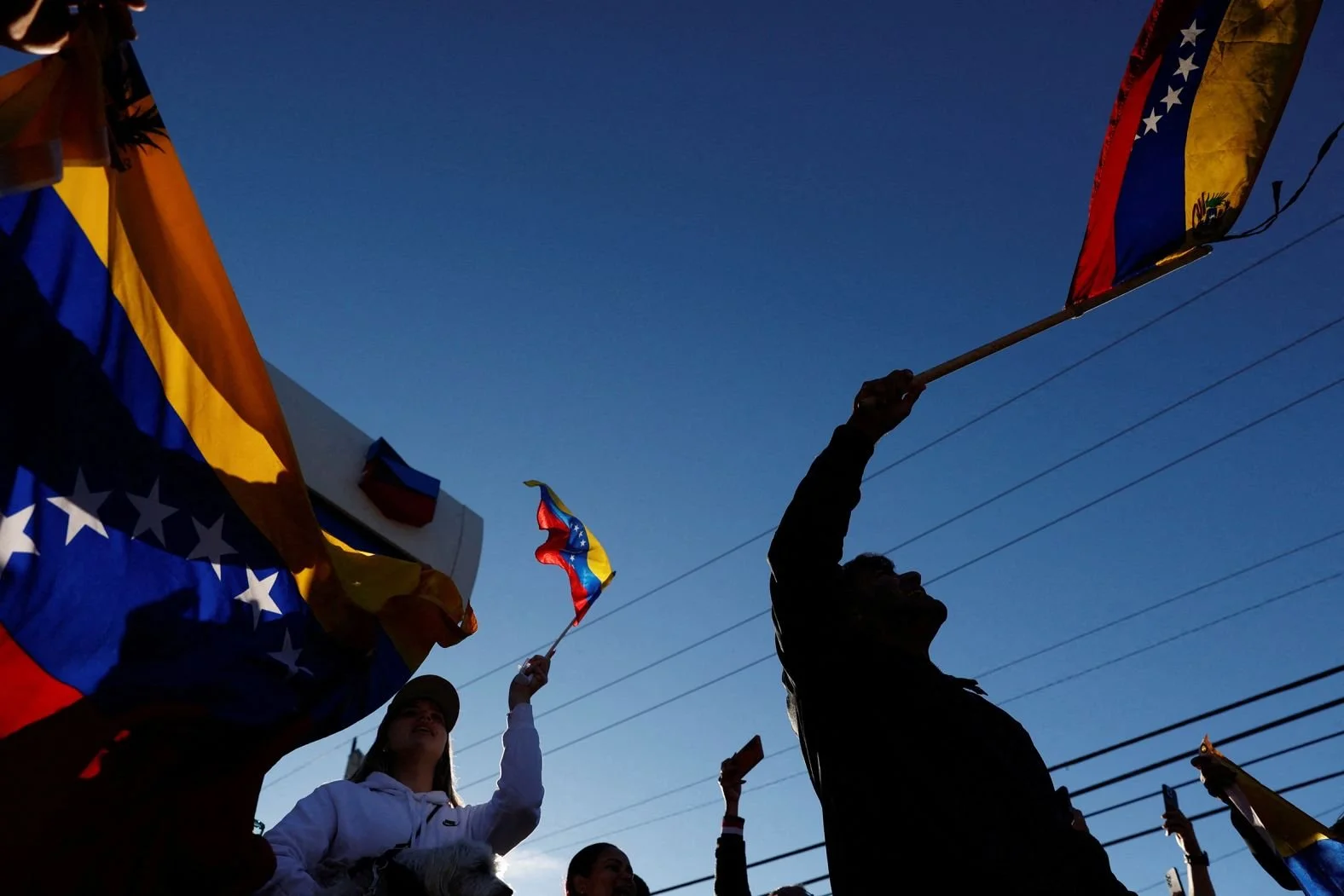
Heidi, Daniel, and David return for their 18th season, and things are a bit dire. Looking first at horrible events in Minneapolis, and then horrible events abroad, they turn to the Gospels and Catholic social teaching for a glimmer of hope. Things are brightened by Heidi's conversation with Maxwell Kuzma in our third segment.
INTRO
Various conferences
Dan has finished the full edit of his volume on Thomas Merton correspondence
Release of The Accessorized Bible
SEGMENT 1 - The Killing of Renee Good
Backgrounder on the killing
The Daily interview with Minneapolis police chief
NBC reporting about the career of Jonathan Ross
Shooting of Latino father in Chicago
Bishop Pebda statement
No statement from the USCCB
Pope Leo’s remarks to the Cardinals
List of unarmed persons of color killed by law enforcement
SEGMENT 2 - US Invasion of Venezuela
Council on Foreign Relations backgournder on Venezuela
CNBC reporting on Trump’s meeting with oil company executives
New York Times interview with M. Gessen
Interview with President Trump, “We don’t need those niceties”
The universal destination of goods
Commentary on the Star Wars series Andor
SEGMENT 3 - Interview with Maxwell Kuzma
Maxwell Kuzma’s Substack
TRANSCRIPT
INTRO
DAULT: Hello and welcome to the Francis Effect Podcast. My name is David Dolt. I host a radio show called Things Not Seen about Culture and Faith, and I'm an assistant professor of Christian Spirituality at the Institute of Pastoral Studies at Loyola University Chicago. I'm here with my two dear friends, Heidi Schlump and Dan her.
Heidi is senior correspondent at Common Wheel Magazine. She's also an award-winning journalist and part-time faculty at Loyola University Chicago. Dan is professor of Philosophy, religious studies and Theology at St. Mary's College in Notre Dame, Indiana. He is also a regular columnist at National Catholic Reporter.
Every couple of weeks we get together to discuss news and events through a lens of our shared Catholic faith. This is the beginning of our eight. 18 season. We've been doing this now for close to nine years, which is amazing, and I'm so happy to be doing it with the two of you. Dan and Heidi, welcome to you both.
Heidi. How have you been?
SCHLUMPF: Happy New Year to our listeners, to the two of you. It hasn't been happy so far. We're gonna be talking about that in the, in our two segments, of course. But personally, I had a good break, a little time off from work. The pace slows down at Common Wheel and so I was able to spend some time with family.
Both on my side of the family in Wisconsin and with my husband's side of the family in Pennsylvania. Got to connect with my colleague Regina from Commonwealth in Philadelphia as well. And now that I'm back, it's kind of. Trying to get ready for the new semester. I've made a bunch of changes to the way I am teaching this year based on ai.
That's a whole nother conversation that I know you get three academics together. They can't help but talk about. And I'm just working on a lot of cool projects that you'll see in. The coming weeks over the weekend, I stopped into the conference in a conference being held here in Chicago, the American Historical Association, the academic conference was here.
They had a panel about Pope Leo's Chicago roots. Also I was able to go to the American Catholic Historical Association, who also had a panel about the Pope and to meet up with my journalistic friend and colleague Colleen Dooley from America Magazine. So it's been a busy new year already.
But I will say one thing I'm gonna chance it here and say it out loud that I haven't gotten sick and no one in our family was sick over the holidays. And I know that flu has taken, you know, really gotten a lot of people in terms of being a tough one this year. So I'm knocking on woods, but if I have a little bit of a gravely voice, it's because I'm a little worried I might be coming down with something.
So, good thing we're meeting virtually, and I'm not in danger of giving it to either of you. How about you, Dan? Are you healthy and how are you doing?
HORAN: I think so. I'm healthy enough at this point, so that's good. And I'm sorry to hear you're a bit under the weather. Heidi. Yeah I think likewise. It was a good break. It's always nice to have a break. I was talking with another academic colleague at another institution over the weekend, and he made the remark, you know, it's always wonderful to see the students come, but it's great to see them go too.
So there's that nice kind of calm or eye of the hurricane come before the storm in between semesters. But here in the tri-campus, Notre Dame St. Mary's Holy Cross we are starting our semester today, so. It's, you know, the students are back, classes are rolling, which is great. The break kind of went by very quickly and in addition to the normal kind of course teaching and that sort of thing, I happened to be on two faculty search committees for St.
Mary's. This. Year. And so we were meeting even during the break and interviewing candidates for a position. So, it's been busy. I am, like my colleague said I'm excited to see the students come back and to get into the semester. But the spring, in my opinion. And experience tends to go by much faster than the fall.
I don't know if that's the same for the both of you, but we have all these breaks with the midterm break and then there's the Easter break. And then, you know, the days are getting longer, which is nice. We're moving in that direction, God willing and warmer. And so, yeah, ready to start the semester.
I'm also happy to share I'm always channeling this as a sort of David dot kind of update. One of the things I did finish over the holidays was a full edit of the correspondence between Thomas Burton and Naomi Burton Stone, which I've been working on for many years. It's a little bit longer than I would've liked, but it actually accounts for only about like 42% of the ex extent correspondence.
So just to give you a sense of like why it's taken so long is to go through these texts and to. You know, to edit them in a way that is sensible, logical academically rigorous, but also narratively kind of engaging. And so, yeah, so one step closer working on the the scholarly introduction and then it goes out for review in the coming months.
And so, I'm happy to see it moving toward, existing in the world and, and off my to-do list. So, if you're inclined, keep me in prayers. I keep working on that and some other projects that I have due, and at least one project that's overdue. So I beg the grace of my publishers. Speaking of publishers publishing, teaching in the such, David, what's up with you?
DAULT: Well, in speaking of overdue, I am the king of blown deadlines, so I just raised my fist in solidarity with you, so we. Both my wife Kira and I did not get much break in the winter break. 2025 was so busy for me that the last four weeks have been spent just trying to catch up on several of the blown deadlines that I had to sail past just because there were too many things happening.
Too many irons in the fire. So I am. Entering this semester. Our semester at Loyola also starts today. Uh, Still a little behind the eight ball, but I think most of the essential pieces are in place. And I'm excited, just as you mentioned, I'm excited for this, this spring. I gave a paper last week at another history conference here in Chicago the American Society of Church History.
I gave a paper on an organization I used to be involved with called the Chicago Sunday Evening Club. It was in a panel on Chicago's influence on religious broadcasting, and the paper was well received and it played nice with the other papers in the panel. And I've not really been to a history conference before.
Most of the. Places I go or philosophy and theology conferences. Just had a wonderful time. Caught up with some old friends and it was just delightful. And I just, I hope that I get a chance to go back because I just had a very warm reception and I think that's really nice. It's nice to go to a conference and not feel isolated and weird, but instead to feel like you are among friends.
I'm also very delighted. To to report, just as you've mentioned progress on your book on the Thomas Merton correspondence. Listeners, as you are hearing this is the release week for the Accessorized Bible. So by the time that you hear this podcast, it will be officially out in the world and available available wherever your fine books are sold or received.
And as my old, professor and friend Walter Brigman used to say, even if you don't read it, for God's sakes, buy it. And so, but on that note, I'm also excited to say that later this spring Dan and I are gonna be at the seminary co-op bookstore here in my neighborhood of Hyde Park. In South side Chicago, and Dan is gonna have a conversation with me about the accessorized Bible there in public at the bookstore, and I'm very excited about that.
So all of this is good and fun and coming up in your future. So if you're in the Chicago area, please join us for that. Speaking of things that are coming up. Let's talk about what's gonna be happening on the show today. So in our first segment, unfortunately, we're going to be talking about the recent killing of Renee Goode, allegedly by an ice agent or a border patrol agent there in Minneapolis.
In our second segment, we're gonna be talking about the recent invasion of Venezuela and who is in charge of things there now and what that might mean for both. The Venezuelan economy, but also for the increasingly strange position of the United States in international relations. And in our third segment Heidi interviews Matt Kuzma, who is an LGBTQIA plus activist.
So all of that is coming up here on the Francis Effect. We hope that you will stay with us.
SEGMENT 1
DAULT: Welcome back to the Francis Effect. I'm David d, and I'm here with Heidi Schlump and Dan Haran. Every couple of weeks we get together to discuss a variety of topics from a perspective informed by our Catholic faith. On January 7th, a 37-year-old United States citizen named Renee Goode was shot and killed in her car by a US Immigration and Customs Enforcement, better known as Ice Officer in Minneapolis, Minnesota.
Goode was a mother and wife, a writer and poet. The Trump administration has defended the ICE officer's use of lethal force claiming the man shot good in quote, self-defense unquote. Claiming that she was poised to run over the ice agent with her vehicle. However, several videos of the shooting, which were filmed on phones by witnesses from a range of angles, clearly contradict this narrative.
While it remains unclear whether good's car ever came into physical contact with the shooter, who has been identified by several news outlets as Jonathan Ross. Video evidence shows that good's wheels were facing away from Ross and it appears as though GOOD was attempting to leave the area near the ice agents.
After Good. Was shot three times and her vehicle stopped hitting a nearby car and light pole ice. Agents refused to let a witness who identified himself as a physician provide medical care to good at the scene. Good. Was pronounced dead at a nearby hospital. The killing of Renee Goode, which took place about one mile from where George Floyd was killed by a police officer in 2020, has sparked a wave of condemnation and protest from individual citizens to faith leaders to elected officials.
Thousands gathered around the United States last weekend to protest the unsolicited presence of ice agents in major cities and the Trump administration's anti-immigration policies. While he didn't mention the killing of Good in Minneapolis explicitly, many Vatican commentators have drawn connections between the shooting and remarks that Pope Leo the 14th delivered on January 9th to the Vatican Diplomatic Corps concerning the global rise of force and war.
Dan, I know that we have all been thinking about this tragic event, the government's defensive response and what this means for our communities and country. Where do we begin to discuss this?
HORAN: Yeah. But it's really really difficult, I think, as Heidi was sharing in the outset of our episode as we were catching up with one another. This has been a difficult time, a difficult season, and it seems like one day after another we're getting worse and more terrible news. So I think the place we begin, of course, as people of goodwill and people of faith is to acknowledge that this is a tragedy and share that our heart and prayers are with Ms.
Goode's family especially her children her wife and all those who know and love her. I think the other thing it's worth thinking about is you know, the multiple levels in which this sort of tragedy unveils intersecting injustices, right? So we have the. Ramping up of a federal police force of sorts.
They're not, but they're not actually police. They're neither military nor police. They're enforcement officers for the Department of Homeland security. There was a really interesting interview this morning. We're recording this on Monday of this week with on the New York Times podcast, the Daily with.
The police chief from Minneapolis and you know, he was saying that one of the things that's really striking to him as a professional in the field for more than 25 years. Is that every kind of step of the way these ice agents are not engaging in best practices of policing and peacekeeping.
the number one example he raised was in what has been widely seen in numerous videos of this encounter with Ms. Goode and the ice agents. You see the ice agent who fired the gun allegedly move in front of the vehicle. And one of the things that this police chief said is it's pulling cars over 1 0 1 for law enforcement officers.
You never put yourself in the path of the vehicle. Just you do not do that. So, so there's like, and from there you can kind of like. Go down with the list of all the things that they're doing wrong or inappropriately. And the police chief kind of speculated that they're not getting the training, they're not getting the experience, they're not getting the kind of people who would be inclined as they ought to be professionally, to deescalate situations to in, in interact with the public.
And so there's that kind of question on a civil and kind of legal. Framework. There's the moral question and it's been really disturbing to see certain public figures, including the current vice president who identifies as Catholic basically besmirch and run a Renee Goodess rep, you know?
Good standing through the mud and unequivocally defend the ice agent. Even after, you know, video evidence seems to suggest that the Trump administration's articulation of what unfolded is false, or at least minimally not verifiable. And then we have this bigger question about the status of immigration and immigration enforcement in this country.
We saw the mayor of Minneapolis. We saw governor, you know, the governor of Min of Minnesota, we've seen many other folks who have said, you know, this is not a force, this is not a kind of process that is being solicited by those who are in elected leadership of these municipalities and of these states.
And so, yeah, that raises all kinds of questions. Again, somewhat ironically, I think we've talked about this before, that the Republican party traditionally has been the kind of leave it to the states. It states' rights emphasis. And yet here is the federal government overreaching, I would argue in pretty dramatic and lethal ways.
So those are just a few things, you know, kind of a few lanes we could, we can begin thinking about and discussing. But I'm really eager to hear how you two have been thinking about this.
DAULT: Well, one piece that I want to bring into the conversation is. It's easy from a distance to frame the narrative and say, this was a lack of training. This was an, this was a newly hired officer. This was some sort of administrative snafu putting unprepared boots in the field in Jonathan Ross's case from everything that we know about him, and I'm pulling from reporting from NBC News.
He's a 10 year veteran of the Department of Homeland Security. He has a background also as a military veteran, so he is not unfamiliar with rules of engagement. He's not unfamiliar at all with the kind of what we would call the proper training. And so some of the arguments that have been raised here is that this is not something that you can really train yourself out of in this particular case, and I.
I don't want to speculate too much here, but ICE is doing what it's supposed to do under the Trump administration. It is creating violence and havoc. It is creating terror, and it is making citizens of the United States feel as if they are unsafe and that they have to comply and not exercise any of their basic rights because simple non-compliance now.
Could carry a lethal effect. And the other sort of piece of this that, that we haven't touched on very much yet is that in addition to all the other things that you mentioned, Dan that this agent Ross did stepping in front of the car sort of violating traffic stop 1 0 1 after the killing, he also fled the scene.
And the other ice agents did not allow any other investigators to basically investigate what was a crime scene. And so all of that has complicated. The question of sort of where is this agent now and what sort of, consequences to his actions could be brought, given that a lot of the evidence has at this point either been hidden or destroyed by the actions of the ICE agents around him and his own fleeing of the scene.
So those are some initial sort of just complicating factors to bring in.
SCHLUMPF: Well, not to mention the reports that she was denied medical attention by someone who identified themselves as a physician at the scene. Yet the details coming out of this are just so horrific. But to be honest they're not that different than what we saw in Chicago. I mean, a suburban Chicago dad was also.
Killed by ice agents. Similarly shot in his car. And I am kind of grateful for the reaction to Renee Goods killing because it does seem that it's waking people up more broadly to how violent, like you said, David, this vi this idea of they're out there. Literally just being extremely violent and not just towards, you know, undocumented people or immigrants, but there's no doubt that because this was a US citizen and a white mom that.
It resonates for a certain, you know, category of people the way it didn't when it was the Latino dad in Chicago. And, you know, I've heard some other people say this too, but I immediately thought of this as well is, which is people of color have been living with this reality with law enforcement, you know, for decades and centuries in our country where I, I saw some people on social media.
Chatting about how, yes, not obeying law enforcement is not a good thing, but the punishment is not death. And they were talking about how in high school they were at a party and the cops came and everybody ran out the back and no police fired at them. But if you're an African American person living in a city in the United States today, you don't run from law enforcement because they will shoot you in the back.
I mean in, in, you know, some cases. So. You know, I was grateful to see Bishop Heda from Minneapolis St. Paul did have a statement immediately calling for, you know, kind of bring down the temperature. We haven't had any statement from the US Bishops Conference on this yet. I double checked right before we're recording here on Monday.
And it does, you know, I'm grateful to see faith leaders speaking out, and it does seem like this is galvanizing a lot of people which I think is good because we need it. It's almost too late. I mean, the budget has, is being passed in that's gonna give extraordinary amounts of money to this to ice, to, to hire even more.
People who are going to go out and terrorize US citizens. And if you think it's not gonna happen to you or someone, you know, that time we're already there. We're already there and it's frightening.
DAULT: I just wanna say, speaking of the bishops, there's an Episcopal bishop in New Hampshire the right Reverend a robert Hirschfeld he's of the Episcopal Diocese of New Hampshire, and it's, there are reports coming out that he made a statement to his clergy over the weekend to basically get their affairs in order and make sure that they have their wills.
And the thrust of the statement was. It is our job to put our bodies between the violence and the vulnerable. I mean, that, that's an amazing statement from an, from a bishop to make. I kind of wish that we were hearing it from the Catholic bishops as well, but the fact that any bishops are saying that at this point is both terrifying, but also that is the Christianity that I understand.
To be following, and I have said often to our children here in the household that's part of our job. We have a responsibility if we are relatively safe and if we have privilege, we use that privilege to protect the vulnerable. And so that is the reality that we're living in right now.
HORAN: I think there's also, you know, there's they're related, but separate these questions around the legality and kind of the moral standing of the enterprise itself. Right? So, you know, it's been said, both of you have mentioned this in one way or another so far. That, like, okay, well who was quote unquote in the right or the wrong?
Did Renee Goode, did she somehow violate some sort of law or act inappropriately? What is the culpability, the responsibility of the officer who fired the weapon? And so on. But I would like to step back and say like, ice. It doesn't have any reason to be in these cities. You know, I think there are some people who are certainly not in the manner in which they are going door to door.
And as one law enforcement expert said in an interview, you know, with these quotas that are imposed from Washington, that they need to round up so many people. We have seen Heidi, you had mentioned this, you know, there are US citizens who have been killed, many of whom have been wrongly detained.
These are violations of constitutional rights when we talk about legality, right. There's also this business of the covering of the ice agents' faces. One of the things that police chief I mentioned in the New York Times interview said is that all legitimate professional law enforcement officers know the procedure that they introduce themselves to.
The people that say in a traffic stop by their rank, their name, you know, they, they make clear what's going on. If they, if the. A person being detained or being questioned has reasonable questions. They have an obligation and a right to answer those questions. And what we see with this really kind of amateur hour level of professionalism.
I mean, there's hardly any professionalism with what we've seen reported around these ICE raids and ice agents. As many people pointed out, it's inevitable that somebody's gonna get hurt, that people are going to die. And so I, I don't know I'm with those who say these these agents need to be, you know, removed from these cities, from these capacities.
It's the condition of the possibility of this kind of tragedy, and it's, and sadly, I don't think this is gonna be the last of it.
DAULT: I have a question for both of you, and maybe this can be a way for us to pivot from this subject, and I hope that we never have to deal with a subject like this again, but I have fears that we will. But to really bring this and put this firmly in a Catholic perspective, when we look at. The history of the United States in Latin America we can see oftentimes that the Catholic Church has been in the position of standing between the violence and the vulnerable.
Of course the most visible example of that is Saint Oscar Romero, but there are. Countless others. And so my question to both of you is, what can we be learning from that history, from that very Catholic history, not just of liberation theology, but of solidarity and of trying to think about hope in what are increasingly, apparently hopeless situations.
Just what are your what are you going to at this moment from that history and those traditions to, to give you some light in this dark moment?
SCHLUMPF: Yeah. Well, I think the tradition of the church standing with the oppressed and, you know, against the authoritarian dictators is part of, you know, what keeps me Catholic and what encourages me to think about. You know, the injustices that are happening in my lifetime, whether it's here or in other parts of the world unfortunately because the church and so many Catholics are aligned with MAGA and Trumpism, you know, it's sort of an uphill battle to say, but wait, there's this church too, this church of St.
Oscar Romero, this Church of Catholic social teaching, this church of standing. With the oppressed, but I think we have to keep saying that. And I do think in. Pope Leo, we have a pope again, just like we had in many previous popes, specifically with Pope Francis, who is going to keep saying that. And, you know, people who thought maybe Leo wasn't gonna speak out have maybe been surprised that he is speaking out and standing up for the oppressed.
So that's it. That's where I find my hope in the top leader of the church is saying these things. Even if the US bishops haven't been as vocal.
HORAN: Yeah. What I would say, and I appreciate the references to Romero is that this is what Christianity demands. I mean, we worship a God who was wrongly executed in public. I've seen a number of memes that are. Some might read as cynical, some might read as kind of maybe, you know, maybe inappropriate in the moment.
But you know, of ice agents cartoons pointing at Jesus on the cross saying he should have obeyed the laws or something to this effect. But the honest truth is this is who we believe is God incarnate. This is who we worship. This is the whole centerpiece of the Christian faith is recognizing.
That when God walks among us, God prioritizes, accompanies draws near to those at the margins and literally risks his own life. For for those at the margins and for the entire world as Christians, we would say. But then how quick we are to forget the admonitions of Jesus, right? The exhortations to walk, you know, in his footsteps, to pick up our cross and follow him.
I think we like some of the early followers of Jesus. Oftentimes want the kind of glory or the comfort or the identity of being called a quote unquote Christian without, as Jesus says, drinking from the cup from which he drinks. And then of course, in, in John's gospel, Jesus makes clear that there's no greater love than to lay down one's life or a friend which we can also expand to say, neighbor.
And you know, especially, you know, in Matthew 25, we get a whole list of those that we are called to care for and reach out to and serve. So. The silence is deafening coming from the U-S-C-C-B. Sadly, it is almost always the case unless it aligns with certain political interests of too many of these bishops.
But I'm happy to hear David as you shared, that there are other Christian leaders who are stepping up, who recognize the call of the Gospel to quote another, you know, martyr who spoke, who worked for justice Dietrich Bonhoeffer, who understand the cost of discipleship.
DAULT: Well, and as we're talking about this I think that just as you've said a moment ago, Heidi, that a lot of sort of white Americans are really finding connection and empathy. Now because of their identification with Renee Goode, we need to also be thinking of all of the. The people of color who have been.
Killed by basically police actions as unarmed persons. Just, you know, even most recently, Sheika B Kenney, raging Belt, stubborn Field, Charles Adair, Damon, Lamar Johnson, Marcello Woodard, Marco Dorsey, going back to Armand Arbery and others, you know. This is not a new phenomenon. It's just new to some viewers.
And so as Catholics, we don't just get to pick and choose the vulnerable that we are called to be in identification and solidarity with, but we need to have this as a wake up moment for all of us to say the violence has to stop. There needs to be a a continual, a continuing ethic and a consistent ethic of life across across the board here.
And currently, unfortunately, our government is not enacting that consistent ethic. And so we need as citizens and as the ones who are supposedly in power in this country to hold them to account. We're gonna turn from this subject. For the moment listeners, and this is just gonna be sort of this kind of episode for most of the segments.
And we're gonna be now moving from the domestic stage to the international stage in our next segment when we begin to talk about the recent exploits of the Trump administration in Venezuela. This is the Francis Effect. Please stay with us.
SEGMENT 2
HORAN: Welcome back to The Francis Effect. I'm Dan Haran and I'm here with David Dult and Heidi Schlump. Every couple of weeks we get together to discuss a variety of topics from a perspective of our shared Catholic faith. On Sunday, January 11th, Donald Trump took to social media to repost an image from a fake Wikipedia page declaring that he is now quote. Acting President of Venezuela. This is the latest in a series of events over the past several weeks that have seen the United States become entangled in Venezuelan politics and commerce in alarming ways.
According to a policy analysis published by the Council on Foreign Relations, Venezuela is a classic example of a petro state, a nation quote, where the government is highly dependent on fossil fuel income. Power is concentrated and corruption is widespread, unquote. Since the discovery of the nation's vast oil reserves in 1922, Venezuela has been caught up in the international pressures that come with being a developing nation that is rich in resources.
For several decades, revenues and resources were controlled for the benefit of international corporations rather than for the Venezuela people. In 1976, then President Carlos Andres Perez nationalized the oil industry. In the 1980s, oil prices plummeted globally in Venezuela, experienced a massive recession.
President Perez introduced austerity measures and there were deadly riots in the streets. In 1998, Hugo Chavez was elected president on a socialist platform, and he pledged to use Venezuela's vast oil wealth to reduce poverty and inequality. Over the next 15 years, Chavez built alliances with other Caribbean nations, especially Cuba and consolidated presidential power away from democratic rule and toward authoritarianism.
Chavez died in 2013 and his vice president, Nicholas Maduro, assumed power. Maduro continued the authoritarian practices of Chavez with increasing abuses of human rights. It is alleged by the United Nations and human rights watch that under Maduro's administration, thousands of people have died in extra judicial killings and 7 million Venezuelans were forced to flee the country due to economic collapse in early January, American military forces, along with law enforcement officials invaded Venezuela and Exfiltrated President Maduro and his wife Celia Flores.
They're both now being detained here in the United States in the week. Since that invasion, the Trump administration has been unclear about who is now the recognized leader of Venezuela. What has been clear is that Trump is very interested in accessing and controlling Venezuelan oil supplies. According to the guardian, Donald Trump met last week with more than a dozen oil company executives promising total safety, total security.
Venezuela in an effort to persuade them to invest $100 billion in the country's infrastructure. David, there is so much here to cover a lot of ground that we need to traverse and the situation is still unfolding. What are some things that we should be keeping an eye on in the weeks to come?
DAULT: Well, the thing that I wanna highlight first of all is where you sort of landed there with this meeting that Donald Trump had with the various oil company executives. In that meeting, he was promising to open the markets back to these oil companies because since 1976, they have largely been out of the Venezuelan picture when the oil refineries and other infrastructure was nationalized for the benefit of the Venezuelan people.
And then increasingly for the benefit of the leaders of Venezuela, but in response there's one particular response from an executive from Exxon by the name of Darren Woods, and he declared that in its current state they wouldn't be moving with Donald Trump's invitation because he described it as a situation that was quote uninvestible unquote.
And in. Response to Darren Woods making this declaration, which got a lot of news over the weekend. On Air Force One. The day before we're recording this Sunday, Donald Trump basically said to reporters, quote, I didn't like Exxon's response. You know, we have so many that want it. I'd probably be inclined to keep Exxon out.
They're playing too cute. And so in addition to reposting this this fake Wikipedia page that declares Trump to be the acting president of Venezuela whether that's a joke or not, who knows at this point, but what is. Being very apparent from the actions and remarks from the Trump White House is that they really do think of themselves as the gatekeepers of these resources, as if they naturally belong to the United States of America, not to the Venezuelan people.
There is no talk of the refurbishment of democracy. There is no talk of actually creating a process where the Venezuelan people can benefit from these. These vast petrochemical resources that they have. Instead, Trump has brought in a bunch of basically modern oligarchs to say, okay, who is willing to to prop me up and who is willing to do what I want so that you can get through the gate to now exploit these resources that you used to exploit in the 1970s?
This isn't a step forward. This is a step sideways to a different kind of violence and authoritarianism. And so instead of Murder United, we now have Murder Incorporated. So those are my sorts of initial thoughts about this, but I'm very curious what you two are thinking.
SCHLUMPF: Well, I'm grateful, David, that you go right to the, the crux of this, which is that it's about oil. So there's no, I mean, Maduro was not a good guy and that some people celebrated that he's gone. It does not make us liberators by any means. And this isn't about drugs either. No matter how many boats they.
Blew up beforehand to get us used to that fact of, that, that would be the excuse they were using. In listening to the Ezra Klein show yesterday with the columnist M Gessen, Jesson Gessen, who, you know, has experience of living in Russia and knowing about how this kind of oligarchy works.
Talked about how different this was because, and I guess for me too, just to wake up that morning and be like, what the hell? Like I just like you. It's not that the US hasn't monkeyed in or even had covert operations to try to, you know, change the leadership of other countries because of, you know, natural resources that we wanted to get our hands on before, but at least we like had the veneer.
Of pretending we were not doing it, and to just be so overt about it. And Gessen was talking about like, is it better to go to the un and lie like we did in the case of Iraq and pretend, you know, that we were trying to at least get, you know, legitimate reasons for going to war. And he's like saying like, in a way it is at least better to do that than to just be so overt about not even giving.
A shit about international law at all. I mean, it's just I, so I'm just sometimes just flabbergasted by how quickly and how fast and how extreme this administration has gotten already. And it's to, you know, you put this together with like the shooting of American citizens, you know, on our own streets in our cities.
And we're in some pretty, pretty scary territory here. And, and already. I feel like Venezuela is like dropping off the front pages of the news. And we are going to have a multi-year, if not decade commitment now to this country, and if not to much of the continent. All of this very worrisome.
Dan, talk me. Talk me down.
HORAN: I'm afraid I can't, I'm gonna, I'm gonna pour some fuel on the fire. And, you know, I think one of the things you're pointing toward is, you know, what's really disturbing about this is the disregard for international sovereignty. That there is no respect for borders for the right of nation states to kind of have their own rule and, that ahead of state. Now admittedly there, there's some contestation here, right? Because it's pretty clear from international observers that the election, the most recent presidential election in Venezuela was fraudulent, I guess is the best way to describe it. That Maduro most certainly did not win the vote, but has retained power.
Nevertheless, the fact is that. You know, you have one country going in and literally to use the language of Maduro when he appeared before the court in New York kidnapping the sitting you know, head of state of another country. I think this is just an incredibly dangerous precedent. I don't know how else to describe that.
It seems almost underwhelming to describe it that way, but. You know, what would the United States do if Vladimir Putin, you know, appeared in Washington, dc not him personally but sent in you know, troops or some sort of commandos to do something like this and kidnapped Donald Trump to Moscow.
Like what, that would be the beginning of a war. Right. And I think what we see playing out here is you know, in addition to that absolute disrespect and. A carelessness, right? A kind of absolute disregard for the future in the current status of society in Venezuela and the people of that country.
It's this notion of bullying, which is really Donald Trump's mo, right? Because we are the largest superpower still because we have this military force. Donald Trump just does as he pleases. And that was made evident in a very important interview last week with several New York Times reporters where he was asked in a two hour long conversation in the Oval Office, you know, does he need to respect international laws?
Like on what grounds? And Trump's response initially was that he didn't think that he, I believe that the phrase he used was, we don't need those niceties, which is really quite striking when you see somebody who is the head of state, considering international law and treaties just niceties and not binding.
But then when asked, well then what kind of curbs these sort of actions or decisions Trump said, you know, his own morality, his own mind. So those two points should be very disturbing to anyone who has any morality or a mind that Donald Trump is really lacking in I think, both categories.
So, I don't. Heidi, you asked, can I, you know, offer some hope or some optimism and I find this really disturbing. Like you, when I saw the headline I got the news alert on my phone. I could not wrap my head around this. It just seems also very arbitrary. This is not to mention I add another thing here on the table, and then David, maybe you can help steer us in a constructive way here or give us the hope that Heidi is seeking.
Not to mention that Donald Trump's whole platform has been about. Foreign wars invading, getting involved in other countries behaviors, you know, this kind of, all these things are antithetical to his own self-proclaimed America first policy. And he just keeps stepping into one after another involving the US in what seemed to be.
Really arbitrary and very likely protracted international engagements. I will say, I'll agree with Heidi, like Nicholas Maduro was, is not a good person. Nevertheless, we saw what happens when sitting US presidents either lie as you made reference to Heidi in the case of George W. Bush.
Or in this case, just unilaterally go in to take out quote unquote bad guys, whether that be Iraq or Venezuela. Again, two petro states. You know, one of, you know what's the common denominator here? I think that's quite obvious. And if we've learned anything from the invasion of Iraq we should have learned that this is not a good idea.
SCHLUMPF: Well, and before we go to David for potential hope, let me just add, I thought you were gonna say, not to mention Greenland, which we're like seriously discussing now. And there's not even like the, you know, patina of like, we can pretend it's about taking out a bad guy because I mean, it's just, I feel like I'm in the upside down here or whatever, and I didn't even I stopped watching that show, but but I do think at least.
Some people from the rest of the world are res, are adult, you know, are adults in the room who are expressing concern about this. David, what do you think? I.
DAULT: Well, before things get better, they're gonna. Worse. And so, let me add even more fuel to all of this. So first of all Dan, I think that all of your remarks about contested elections and Maduro being an autocrat and nobody here is an apologist for Maduro. I think all of those are on point, but we are.
Making this commentary from a nation that also has had now three rounds of contested elections at least. And if you go back to 2000, you know, basically we've had contested elections in some form for the last quarter century. So we, we have contested elections. We have a president here who is increasingly consolidating power and now has a private police force that is shooting innocent citizens in the street, as we've just talked about in the previous segment.
And so if we try and imagine that somehow we are a moral force standing against an immoral autocratic force in Venezuela we are not reading the tea leaves. Properly this is, as both of you have commented, a kind of rogue state moving against another rogue state over mineral resources. And at this point, how do we navigate this is the real.
Question. And so as we're sort of moving through this, I want to steer us towards Catholic social teaching and the idea of, you know, we, we talk oftentimes about the common good but also there's a more technical way of talking about that, and that's the universal destination of goods.
The notion that everything on the earth is for everyone on the earth, and that to the extent that we try and make exclusivity or we try and make some kind of. One group able to control most of the benefits from this. We certainly are moving far from the intention of the gospel and the intention of Catholic teaching.
And so when we look at a place like Venezuela that has amazingly rich resources, as I've said earlier in this conversation, those resources are not for the executives of ExxonMobil and other oil companies. Those resources are not for the benefit of Donald Trump. Those resources are for the benefit of everyone, particularly those that are standing on top of them, the Venezuelan citizens.
And so. Everything needs to be structured politically so that the benefit in terms of subsidiarity is as close as possible to those that are affected by these decisions that are being made. And right now we have the opposite of that. We have decisions that are being made that do not include the Venezuelan citizens, that do not include their experience or their suffering, that does not include their long-term health and longevity.
Instead, we're simply thinking about, but what about the businesses? How are we gonna help Donald Trump to have a legacy as a world leader alongside, you know, the greats of the 20th century like Stalin, Mao, and Hitler. And at this point, I, you know, that's where we're at. And so the hope that I have is in.
The hope of the Catholic Church, the hope that was talked about in Lato Sea, the universal destination of goods, and the fact that this earth is a common wheel that is for everyone, not just those that have ties and sit in nice rooms. So I don't know whether that's pushing us in a positive or a more negative direction, but that's what I've got.
I'm curious what you all think.
HORAN: I think the meeting with the oil leaders the other day was really quite telling too. I mean, it's clear that Trump has and as he often does, says the quiet part out loud. Right. About the oil interests and the enrichment of the United States through this, quagmire, let's say. Yet it seemed at least unclear that these US oil executives wanted this.
They didn't ask for this. And I think that's partly what Trump is getting at in terms of feeling a lack of gratitude perhaps, or something from the CEO of Exxon and the like. But I think this is maybe the, the main takeaway of this administration, nobody asked for this. Nobody wants this.
Right? And I think we've seen that time and again when it comes to the tariffs. Nobody wants this when it comes to trade wars with China that affect, you know, our farmers in the Midwest. Nobody wants this when it comes to immigration enforcement in the most radical Stephen Miller informed way.
That lead to things like the, you know, the shooting of Renee Goode, the shooting of other people, the detention of US citizens and others. You know, you see neighbors, you see people in these communities say nobody wants this. And so, I guess. I don't know. I don't know what to say beyond that. I think, you know, I appreciate David, you're you said something quite interesting.
I If you mean the Catholic church is in all the baptized, then I do have some hope. To Heidi's earlier point, if you mean leaders in the US Catholic Church, I not sure that I have a lot of confidence at this moment though. I hope that changes with time. But I think I'm still struggling to find out, you know, what do we do?
It's still 11 months until the midterm elections. And hopefully that will provide an opportunity structurally for the US Congress to regain some footing and do something. But that is not a foregone conclusion. That's not absolute. And so, I, I am, I've been if I can find some little silver lining of hope, I've been impressed by the amount of gatherings and protests in cities and places all over the country.
Including here in South Bend. There were about a thousand people who gathered over the weekend. So I think that shows. Some promise that people are expressing quite clearly. Nobody wants this.
SCHLUMPF: Well, and just to say like, politically, it doesn't seem to make sense, right? So he's already expressed that he's concerned about the midterm. And that if the Republicans lose control of a part of the, you know, of Congress, that he might. Be that they'll be looking to impeach him again, but it seems like he keeps doing the wrong thing, like just ratcheting it up more and more to either distract or think that people will then wanna rely on a strong man.
I will say. I'm encouraged by the protests, by the people pushing back. And I'm discouraged again. As we mentioned in the previous segment, that the US bishops, or at least a committee, has not come out with a statement about Venezuela. The Latin American bishops certainly have had much to say in the lead up to this and aftermath.
And of course, Pope Leo did immediately, and then in his recent. Talk to diplomats. He talked about these broader issues of national sovereignty and the idea that war is in vogue now. And I think the fact that he is a US born pope saying these things gives it a little bit more, you know, cachet. I'm not putting all of my marbles in the, you know.
Pope Leo versus Trump, who will win kind of way of solving the problems of the world. But it does help to have Leo speaking out on these things.
DAULT: Well, just as a way of drawing this to a close I can't remember whether at the end of last season when we did our pop culture roundup, I mentioned that my wife and I had been rewatching the Star Wars series and, or but. Something that comes out from, and or that a commentator that I've seen on YouTube really kind of drove home and it was fascinating to me to see this analysis.
He says that the empire in Star Wars is not run as a tight ship. It's run more like the way that a mafia boss would run something. So Emperor Palpatine, forgive me listeners, I'm gonna nerd out for a second. Emperor Palpatine surrounds himself with people that he knows will just do what he wants, not people that are necessarily comp.
To actually run organizations and so. Analogize as you will. But when we think about Sarah Kor and others who, who talk about the Trump administration what Sarah Kor and others have described it as oftentimes is a kind of mafia style of leadership. And so what we're seeing here is not competency.
We're not seeing strategy towards the midterms. We're not even seeing longevity. We're seeing surviving to the next day. And surrounding yourself with the people who will say yes and will try and exercise as much violence as possible to get that Yes. Done. So the heartening thing is that this is not a long-term sustainable way of running any kind of social anything.
And so what can we do? As listeners, as Catholics, as people of faith. Well, one of the things that we can do is lean into our competencies. What are we good at? What can we bring to the moment that is of mutual aid to others? How can we be building community? And as we're building community and deepening our competencies, how can we be increasing hospitality so that instead of trying to.
Toward the competencies and the benefits that we are developing in mutual aid. We open those doors and we bring more people in and we say, and now what competencies do you have? What can we build that is going to be of value and what can we build that will survive and last. It's not much, but it's so different from what the current leadership is doing, not just in America, but across the world.
It's got to make a difference. And if you think about the early days of the church, that's the only way that the early days of the church survived as well. It flourished in a very hostile environment. We are currently. Clearly in a very hostile environment. But I wanna say to you, my two dear friends, but also to you, our listeners, do not give up hope because the cross is not simply the story of death, but it is also the story of resurrection.
A resurrection that could not be imagined, even by the one that was hanging on the cross. And so with that truth, with that hope. That's what I have to leave us with at this particular moment in the conversation. And with this, we are going to turn from these rather dower topics to some things that are more positive.
So in our final segment today, Heidi is gonna be speaking with Max Uzma about his work with a vulnerable community, the L-G-B-T-Q-I community. And I'm really looking forward to hearing that conversation and I hope that you will stay with us and listen to it as well. This is the Francis Effect. We'll be back in just a moment.
SEGMENT 3
SCHLUMPF: Welcome back to The Francis Effect. I'm Heidi Schlump with today's guest, Maxwell Kuzma, a transgender man and advocate for L-G-B-T-Q inclusion in the Church and Society.
Two years ago, max met Pope Francis and introduced himself to the Pope as a transgender man, which he says helped him to feel free to be quote exactly who God made me End quote.
Max is a board member of Dignity USA, which supports L-G-B-T-Q Catholics and Allies. He also is a columnist at the National Catholic Reporter and a podcaster with co-host Emma Cieslik of the show called Whiplash. That show explores faith, identity, and justice through the lens of queer liberation theology, and I was lucky to be a guest on that a couple months ago.
Max lives on a farm in Ohio, so welcome to the Francis Effect, max.
MAX KUZMA: Thank you so much, Heidi, and I'm excited that now we've got the roles reversed. So
SCHLUMPF: now,
MAX KUZMA: Now
SCHLUMPF: you're
MAX KUZMA: gonna interview me.
SCHLUMPF: You're in the hot seat. Yeah. So maybe you could start by sharing a bit of your journey with our listeners. I know you've written that most of your life, you'd known about your gender identity, but didn't have the language to talk about it. So could you share a little bit of your story with us?
MAX KUZMA: Yeah, absolutely. So I always like to tell the story about a time when I was in daycare and it was nap time and all the little boys were given blue blankets, all the little girls were given pink blankets.
And at that age, you know. You don't, I definitely didn't know the, any of these big words for gender identity and all this stuff, but you do know yourself and I demanded a blue blanket at that young age, and I think that's just a great example of what it's like to be a. A young child who is exploring, and again doesn't have the exact language.
So I also grew up wanting to be around my dad a lot in a way to like copy him. So, so not just like, I like doing what my dad's doing, but also I kind of wanna be like him in a way that is unique. It's particular. I wanted to echo something about the roles that he was playing in our family or in society.
When I saw him, I wanted to be like him, but at the same time. My family was very conservative Catholic. So even though as I grew older, I could express myself maybe in gender non-conforming ways, such as having a shorter haircut than most girls would have or wearing masculine clothes. The thought of transition itself or even just gender affirming care from like a therapist was basically out of the question.
So it wasn't until I graduated from college that I was finally kind of outside of this fundamentalist bubble I grew up in. I finally had sort of the mental space to really think about and consider what transition would mean for me and for my faith.
SCHLUMPF: So, and I know you've talked about how, for you, the transition also led to a spiritual metamorphosis.
So can you say a little bit more about that too?
MAX KUZMA: Absolutely. I'm gonna unpack this one a little bit 'cause that's such a big chunky term. So, you know, many transgender and gender diverse people and people of many sexual identities as well have shared this insight in a variety of different faith, Christian faith, but faith traditions.
Great book by a lesbian Episcopal priest is Queer Virtue by Elizabeth Edmond, and she talks about this deep knowing of the self that requires a unique engagement with spiritual and ethical questions. In the Catholic tradition, we certainly have many trans people who have spoken and shared their experiences as well.
You know, I wasn't the only transgender person who gotta meet Pope Francis, for example. I have been particularly inspired though, by the ministry of Sister Louisa Darwin and something that she always talks about. Is the importance of listening to the stories of trans people, and specifically how those stories demonstrate the classic spiritual journey.
So when I refer to my own spiritual metamorphosis, I'm kind of speaking about the effect that journey I went on had on me. So I believe that trans people receive spiritual gifts by going through this difficult discernment process of coming to understand ourselves in this profoundly deep way. And I have experienced the effects of those gifts and graces.
In the form of a much more deepened relationship with God and the ability to engage moral and spiritual questions in a way that I was just never willing or able to do before. So that's kind of what I mean when I say spiritual metamorphosis.
SCHLUMPF: Yeah. So it kind of forces you to confront like your own self identity, but then also did God make me this way?
And what's my relationship to God? But I wonder. So I could see the spiritual metamorphosis, but I wonder if, I would think a number of L-G-B-T-Q people have a difficult time with the institution of the Catholic church, especially given some of the teachings. And I wonder for you, was that part of, you know, a struggle or a challenge and why do you stay in the church?
'cause it seems like you have a really strong connection to the church, not just to God.
MAX KUZMA: Definitely, and thank you for saying it that way. I think that was very well worded. For me it was definitely that when I went on that discernment journey and I had this opportunity to kind of, I guess, confront myself, but also the church.
I did confront the church as part of that internal interior journey spiritual journey. And in that process, I realized that. There was way more to the Catholic tradition than what I had been presented with. And so essentially it's not that, you know, I think that the church is perfect in every single way on L-G-B-T-Q issues.
It's just that I see that there is a more. Expansive, diverse and interesting tradition than what I was ever presented with. And then secondly, that I want to be able to provide an example and a model essentially for the next generation, because I think especially we're living in a particularly difficult political time for trans people and young trans people especially.
And so just to provide an example that, hey, you know, you can be transgender and Catholic. It may not be. This perfectly contained, easy to describe thing. It may take different forms or look differently depending on who you are or where you came from, where you grew up. But that's okay. And that we need these stories because we are all part of that body of Christ.
SCHLUMPF: So was part of that, like discovering that there was, for lack of a better term, like liberal Catholicism out there? Yes. Having grown up in a more traditionalist family?
MAX KUZMA: Yeah, absolutely. I, I. I think I knew about it. You know, I knew this idea, but it was specifically breaking out of this idea that there is a black and white binary, like the liberals are the bad ones and the conservatives are the good ones.
That's kind of how it was presented to me. So being able to grow out of that and see that that, okay there, we don't have to look at it this way. We can look at this as a spectrum of gray there. There's much more to life than just these. Neat categories that are way overly simplified and ultimately don't really help anybody.
SCHLUMPF: Yeah, so. That's true. And I hesitate sometimes to use those words liberal and conservative, but they're shorthand and in general, people know what I mean when I say them but they're political terms not ones that really apply to the church. You know, one of the issues that came up, at least in the news that I covered and other people wrote about also last year or, but during the bishop's meeting.
The US bishops met in November in Baltimore, like they always do. And the big news was about, you know, they did a statement on immigration, which was great, but they also approved these rules for Catholic hospitals and other healthcare centers that would prohibit interventions the way they described it, that would transform sexual characteristics of a human body into those of the opposite sex or to nullify sexual characteristics of a human body.
So, you know, there had been a previous document looking at it from a theological perspective, and now this has been codified into the directives for Catholic healthcare. What does this mean to you? This basically ban on gender affirming care and how does this, what's your response to what happened in November?
MAX KUZMA: Yeah, and I think it's it's good that you quote it because I think on some level it's just. Demonstrating kind of a lack of understanding of what transition actually is. And that's, I think, a response that a lot of advocates and trans people within the Catholic space had in response to this.
But yeah, what it really means is that anyone benefiting from gender affirming care at any Catholic hospital across the US may be cut off from their healthcare, which has been proven by studies with every major medical association. To be lifesaving suicide preventing healthcare. Catholic hospitals hold about one in six hospital beds nationally, so this is not a small impact, and I feel that it's a kind of bureaucratic choice that alienates an already marginalized community even further and honestly just conveys a sense that L-G-B-T-Q people are unwelcome and unsupported by Catholic institutions, like whether they mean it or not, that.
Really does feel like it's the message that's being sent. So personally, I question the priorities of focusing on something like this while offering kind of weaker responses that they were kind of, you know, told by the Pope to say something about immigration and they did. But we all were like, okay, that's kind of the best you can do.
So, that's kind of how I felt. I'd like to see less bureaucracy. And more visibly meeting with uplifting the voices of marginalized people across the board, so not just the GBTQ community, but all marginalized and vulnerable people.
SCHLUMPF: So I didn't sense any I wasn't there in Baltimore, but I was watching, I didn't sense any connection in their minds between seeing that as a marginalized community.
Right. Similar to the way, you know, undocumented and all immigrants are a marginalized community as well.
MAX KUZMA: Yeah, exactly. It's like, well, like when I read the gospels and I hear the story of Jesus going out to being with these people, like, it's just clear that those are the people. On the outsides of society and you know, we can see that played out in our world today too.
SCHLUMPF: Do you have any concerns personally or for people you know about whether they're going to be able to get the care they need? You mentioned that one in six hospital beds are at a Catholic institution, and especially in some rural areas, people don't have a lot of choice about where they go for their healthcare.
What are there some like immediate concerns or have you sensed any through the organizations that you're affiliated with too? Like any response to this?
MAX KUZMA: Yes. I definitely have concerns. As somebody who has already basically benefited from, you know, the major milestones of trans healthcare myself, you know, I'm not as worried about my own situation, but I do spend a lot of time thinking and praying for the younger generation of trans people that have to navigate these situations going forward.
I have heard anecdotal stories, you know, from different groups that I know. Of people who are now faced with, okay, what are we gonna do? Do we need to move? Do we need to relocate? How are we going to make sure that we can continue to get this life saving again, medically proven life saving care for our kid in this situation.
SCHLUMPF: So in addition to the Bishops doing this, we also have on the political side, you know, the you know. Republicans and other conservatives in power who are making rules about trans healthcare and other things that affects transgender folks. What would you be looking for, like from your church, whether it's, you know, the bishops or leadership or from everyday Catholics in terms of like, how can the church better support L-G-B-T-Q folks more generally?
MAX KUZMA: So I think. More generally just from like Catholics just from the Catholic community. It would be really amazing to see kind of what I was saying about putting welcome into action. Some people might say that, you know, we could never have an L-G-B-T-Q Ministry at every Catholic church, but the real question is, why not? Like if the truth is that an L-G-B-T-Q Ministry is just to demonstrate love and welcome that we welcome L-G-B-T-Q people. Like if that's it, you know, like if that is the purpose of that group, why is it that we can't have that at every parish?
Because we also know that's the other thing about. A lot of the studies that have been done surrounding L-G-B-T-Q issues, we know there is also lifesaving suicide preventing evidence. Welcome, just welcome in and of itself, making sure that people know they're not gonna be turned out of their family, they're not gonna be rejected, they're not gonna be homeless.
Like these are like real survival based things. So I really would love to see more L-G-B-T-Q ministries and you know, we've seen father James Martin with his outreach ministry. Now two popes have basically said, yes, we like what you're doing. Keep doing that. So I think parishes in the US especially could very much follow in those footsteps.
I think then, you know, looking at the institutional church, I look to the example of Pope Francis who I think the biggest thing about Pope Francis beyond like yes, you know, it was deeply impactful to personally myself experience that, that loving personality. But I really think it's that. He showed what was possible outside of these carefully curated and scripted interactions because he was so off the cuff in his warmth and in his encounter.
And I think that had such a big impact on me and could and would have such a big impact if the institutional church could develop that posture. More broadly to, to actually be like, again, like Jesus being with people, meeting them where they're at. Not holding people at an arm's length, but physically going and meeting and being with them.
SCHLUMPF: Well, just following up, maybe could you say a little bit more about the time that you did meet Pope Francis? And then maybe if you have any thoughts about Pope Leo. I know a lot of people are kind of reserving judgment while we wait and see, and he's about to start his consistory this week as we're recording this.
So we may know more in the weeks and months to come, but tell us about what it felt like to meet Pope Francis, and then your thoughts on the current Pope.
MAX KUZMA: Yeah, absolutely. I think definitely the idea of meeting the Pope and especially Pope Francis as a person who already had demonstrated a history of openness and love towards L-G-B-T-Q people, you know, it's hard to put that into words.
That's kind of one of those like big mountaintop experiences. Like, I think about that and I still kind of pinch myself, like, did that really happen? It was very powerful. More so it was powerful to be with, you know, I was with a group of a total of four transgender men who had met through the outreach community and like to see their excitement as well and to know how much he meant to all of us together.
Like, not just as a, an experience that was great for me, but also to see, okay, this is the impact and to meet some of the other people. The. The transgender sex workers of realm that were part of this community that Francis specifically ministered to. That was such a hugely impactful thing. for Pope Leo I am excited about Pope Leo in many ways.
I love that we have an American Pope and someone who understands aspects of the complex political landscape that we're living in. I do sometimes. I mean I do very much Ms. Pope Francis' warmth and that off the cuff thing I spoke to, like I would love it if Pope Leo could show us a little bit more off the cuff.
'cause he's very prepared. He does speak decisively on very important issues in a way that I think is brilliant. Like he is prepared on very specific things when the press kind of comes to him. But I would love to see some of that personality and that warmth come through in off the cuffing counters.
SCHLUMPF: Are you concerned at all about his views on L-G-B-T-Q people, or are you kind of wait and see? At this point,
MAX KUZMA: I am not concerned because we've already seen indications that he, at the very least will continue kind of what Pope Francis established. But that's not the same thing as like being excited, you know?
Mm-hmm. So, I would be more excited if I could see some more, overt examples. You know, maybe specifically the meetings with the L-G-B-T-Q community members ourselves, and not just I'm gonna allow this to happen. I'm going to sign off on what Father Jim is doing, but okay, let's actually see him encountering and meeting with and in conversation with the actual members of the L-G-B-T-Q community.
SCHLUMPF: Well, we can pray that's something to come and that could still happen. We'll have to wait and see. Is there anything else that you would like to share with our listeners about yourself or about your ministry or about L-G-B-T-Q people in the church?
MAX KUZMA: I think that probably the thing I would love to just end on is I really liked that you asked me about the spiritual metamorphosis, and I think that's something that, you know.
People who are not L-G-B-T-Q may not always follow all the developments. Like I, you know, I'm reading all the new, every time something new happens I'm in it, but I not, you know, people who are not L-G-B-T-Q don't necessarily need to do that level of, you know, attention. But if they. I want to, encounter something deep and meaningful about the L-G-B-T-Q community.
I think looking into that spirituality stuff is really interesting and could also speak to their own spiritual lives. So I would encourage your listeners to, to kind of do some digging into that. Like look into some of these stories, like read some of these accounts and just kind of see, like, hear the story of L-G-B-T-Q people of Faith and what they've gone through in order to.
Encounter Jesus and to develop this spiritual life that has blessed them
SCHLUMPF: well. I'm just so grateful to you, max, for sharing your spirituality both here and in the ministry that you do, your writing, your speaking your podcast, and all the other ways that you put yourself out there in, in. In a culture where that's, you know, that takes courage.
And I think there are risks involved. So I think I'm really grateful for the way that you do that. And I'll encourage our listeners to listen to and read you more. We'll share your links to some of your ministries in the show notes. But thank you so much for coming in and being on our podcast with me.
MAX KUZMA: Thank you so much, and thank you for, you know, uplifting a voice like mine That really means a lot and is a great example of solidarity that allies can definitely always demonstrate.
SCHLUMPF: Well, thank you. And for our listeners look to the show notes for more information about Maxwell's ministry and you are listening to the Francis Effect. We'll be back in two weeks.