The midterm results, Magnifica Humanitas chapter 5, and and interview with Christiana Zenner
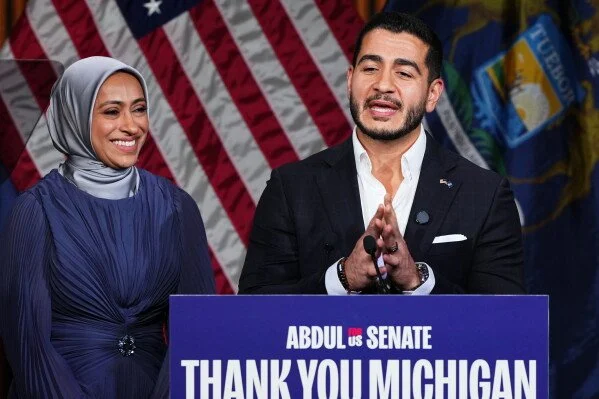
Heidi, Daniel, and David start to unpack the results of the 2026 midterms, especially with what it might mean for Catholics moving forward. Then they continue their deep-dive into Magnifica Humanitas by looking at Chapter 5. And Heidi interviews theologian Christiana Zenner about environmental theology and Laudato Si'.
INTRO
Paulist retreat center in Washington, DC
Catholic Journalists gathering
USCCB Meeting
Ilia Delio
Villanova Conference on World Religion and Culture
Thank you to our fans!
SEGMENT 1 - Midterm Results
2026 election results
Challenges to Haleem Jeffries for the speakership of the House
Chris Van Hollen appears to be challenging Chuck Shumer for the Senate Majority Leader position
The Latino vote has shifted (again)
Heidi’s reporting on the election
The Daily - Nate Cohn’s commentary
The “Blue Tsunami”
Mississippi has just been decided
Quality of the candidates
Dan’s column on campaign subsidiarity
2024 autopsy report
11 Democrats failed to vote on the impeachment proceedings for Secretary of Defense Pete Hegseth
How will this affect the upcoming USCCB meeting?
SEGMENT 2 - Magnifica Humanitas chapter 5
No war is just - Bishop Wester on the Commonweal Podcast
80th anniversary of the bombings of Hiroshima and Nagasaki
Catholic Military Archdiocese - Joe Capisi
https://www.commonwealmagazine.org/schlumpf-broglio-military-conference-just-war-trump-leo
Archbishop Broglio
“We can all do our part”
Sr. Elizabeth Johnson: “Words function”
SEGMENT 3 - Interview with Christiana Zenner
TRANSCRIPT
INTRO
DAULT: Hello, and welcome to The Francis Effect podcast. My name is David Dalton. I host a radio show called Things Not Seen about culture and faith, and I'm an associate professor of Christian spirituality and philosophical theology at the Institute of Pastoral Studies at Loyola University Chicago. I'm here with my two dear friends, Heidi Schlumpf and Dan Horan.
Heidi is senior correspondent at Commonweal Magazine. She's also an award-winning journalist and part-time faculty member at Loyola University Chicago. Dan is professor of philosophy, religious studies, and theology at St. Mary's College in Notre Dame, Indiana. He's also a regular columnist at National Catholic Reporter.
Every couple of weeks, we get together to discuss news and events through a lens of our shared Catholic faith. Dan and Heidi, welcome to you both. Heidi, how have you been?
SCHLUMPF: I'm doing well, and as we're recording this, I am in Washington, DC for a special gathering and retreat of Catholic journalists. So I'm in a little bit of an echoey room in case you hear the difference at the Paulist Center that's near Catholic University of America and Trinity University.
And we'll be gathering with about two dozen other Catholic journalists over the next two days, and we're getting ready to start shortly after we record this. And then I'll be headed to Baltimore for the US Bishops Conference meeting, so it's a good week of travel. But otherwise doing well. I'm starting to feel the pressure t- of the end of the semester, as I'm sure you guys are too.
So how are you doing, Dan?
HORAN: Yeah you took the words right out of my mouth. It's, a kind of a crazy time in the fall between fall break here at the, in the tri-campus community. And then Thanksgiving kind of shows up, and then when you come back for Thanksgiving, it's, essentially finals and grades and lions and tigers and bears, oh my.
So it's a - stressful time, busy time, but still lots of things to be happy about. One of which is I was reminded that about this time last year, we had our first of what ended up being many lake-effect snowstorms. And so, we are, knock on wood, snowless in South Bend at the moment, but there are threats that we're gonna get some flurries perhaps even tonight.
So yeah. We're just getting ready for the end of the semester like you, Heidi and seeing what happens. David, how about you? What's up?
DAULT: So, it is the same story, second verse. We are getting ready for Thanksgiving break, and I think everybody in the Dalt household is ready for that. But as often happens, right before the Thanksgiving break, I will be traveling to the big religion conference that is this year happening out in Denver, Colorado, the AARSBL meeting.
I'll be running some sessions out there, and I'll be meeting with a lot of people, having a lot of coffees, and trying hard to stay sane and not sick in the midst of all of it. And the other piece of all of this that is sort of good news on my horizon is I just signed a new book contract, and so there'll be my third coming out, I hope sometime in twenty twenty-eight from Equinox Press, a little book called Materialism: A Critical Primer.
And so now we have the ink on the contract, and we have a timeline for getting it written, and I am delighted about all of this. I'm also planning a new class for the spring. I've been tapped to take over the liberation theology course at Loyola Institute of Pastoral Studies for the spring semester.
I don't know if this will become a regular course for me, but gosh, I'm having fun going into the material and learning all about it. I've gone back over the last several months and reread a whole bunch of Hegel and Marx and stuff that oftentimes liberation theologians get accused of being like woke Marxists.
I'm hopefully going to equip some of the students to be able to critically engage with those kind of accusations to figure out the places where they don't apply and the places where they might.
HORAN: So I should jump in to say one more thing I forgot to mention a moment ago. This past week I was in Philadelphia at Villanova University for a conference sponsored by the World Institute for Science, Religion and Culture f- founded by Sister Ilia Delio, a Franciscan sister and theologian.
And it was a really wonderful conference focusing on evolution and love, especially in an age of conflict. I spoke primarily about the incarnation and then did a workshop on contemplation. But the reason I'm bringing this up is a shout-out to our many fans who were at the conference. I heard from several folks who listen to the Francis Effect including one woman who mentioned that she has been reading Magnifica Humanitas along with our commentary and kind of reflections on that.
So, shout out to all those that said hi in person, and to all those who are listening, it's always great, I know I speak on behalf of David and Heidi to meet fellow Francis Effect fans in real life. So, yeah, what a pleasure, what an honor, and thank you for listening.
DAULT: Grateful to hear that, and thank you to all of our listeners and fans out there. And on that note, we're going to be picking up with Magnifica Humanitas chapter five in our second segment today. The first segment, we'll be looking at the results of the midterm elections and talking about what to be expecting as we move through the lame-duck session and into the new term in January.
And then in segment three Heidi is gonna be interviewing Christiana Zenner, who is a theologian from Fordham University, and they're gonna be talking about environmental justice and Laudato si', a perennial topic and a most important one. So all that is coming up here on "The Francis Effect." We'll be back in just a moment.
Please stay with us.
SEGMENT 1
HORAN: Welcome back to The Francis Effect. I'm Dan Horan, and I'm here with David Dolt and Heidi Schlumpf. Every couple of weeks, we get together to discuss a variety of topics informed by our Catholic faith. The 2026 midterm elections brought a series of historic victories for the Democratic Party.
Heading into the new year, the Democrats will take decisive control of both the US House and the Senate. While the shift in power is significant, these numbers do not reflect a supermajority or filibuster-proof numbers in Congress. The judicial branch, particularly the United States Supreme Court, still seems very willing to render decisions that are in the interests of the MAGA movement, and the executive branch remains under the increasingly unpredictable control of President Donald Trump.
As James M. Lindsay, a senior fellow at the Council on Foreign Relations, recently wrote, quote, "The question all of Washington is now asking is whether President Trump will respond to his new political reality by accommodating the Democratic Congress or confronting it. His history of doubling down rather than backing down when challenged, along with his decision to make administration hardliner, Stephen Miller, the new White House Chief of Staff, suggests that the latter outcome is more likely.
If so, the next two years will be tumultuous." Unquote. We should also note that a number of governors races and state legislatures also flipped in favor of the Democrats in the election. These shifts occurred not only in historically blue or purple states, but also in longtime Republican strongholds, such as Arizona and Iowa.
, As of this recording, Democrats have won 46 and Republicans 39 of the 88 state legislative chambers on the ballot. The elections, of course, are only the beginning. As we move from the lame duck session to the swearing-in of the newly elected officials, it remains to be seen what the possibilities and shape of this new political landscape will be.
David how are you thinking about this and what do you think we should be looking for here?
DAULT: The very first thing, and you mentioned it before, is that w-what is coming in January is not just a new set of congressional leaders that will be in conflict with the White House, but they seem to be in conflict with each other in many degrees. There is particularly a kind of insurgence against the old guard leadership of both the US House and the Senate.
So Hakeem Jeffries, who is the sort of presumed Speaker of the House, or was the presumed Speaker of the House there have been some people saying that they will not support Jeffries moving to the speakership without some major concessions, or they might be looking for other candidates.
And then as we're recording this, real developments are also happening in the Senate with again, the assumed Senate Majority Leader Chuck Schumer now being challenged, it looks like, by Senator Chris Van Hollen, and we're still kinda getting reports about that and what all that's going to look like.
But several of the, the incoming senators have said very plainly that they were not willing to support a Schumer leadership. And so I'm keeping my eye on that among all these other sorts of developments and just kinda wondering how all of this is gonna be kinda playing out as we move actually into them being sworn in and assuming, we hope, legislative responsibilities in the new year.
But I'm wondering what you two are thinking.
SCHLUMPF: Well, I'm watching all this with some trepidation because I hate to see the Democrats so quickly get into an intraparty squabble, and I'm still kind of reveling over here in what happened on Election Day. I, for one, was pretty surprised. I think it was pretty clear the Democrats were going to take at least one portion of Congress and had a good chance of taking the Senate, but the number and scope of the victories were pretty astonishing.
I mean, really, like, once in a century, definitely once in a generation kind of thing to see, and really have the potential to reshape the way the United States, acts in the world and treats its own citizens. So I'm hopeful that's an opening for good, and as we discuss the - papal encyclical in the next segment, maybe some of those things can talk to each other.
But yeah, just looking at how those victories happened, I think lead us to think carefully about how the Democrats should be thinking about how they move forward. So certainly I thought, and we- and again, we don't have , good data yet. It's just exit polls at this point, and more granular data will come later.
But obviously, in all kinds of demographics, people move towards the Democratic Party. And what was of particular interest to me was that, yes, some ... Definitely the Catholic vote moved back to being I think the title of my analysis is Split Down the Middle Again. But Latinos and Latino Catholics who really had a sizable shift in this el- election, the folks I spoke to and the gentleman from Notre Dame that I quoted in my piece said they did so reluctantly, and - it might be a temporary.
These are not people who have permanently shifted to the Democratic Party. So, I'm not here to say necessarily that ev- that moderation, is the answer, but I also think we should take a little bit of time to think about what just happened. I know elections for leaders have to happen in the next weeks, but I hope it can be done in a way that is life-giving to the party and to the country and not getting us back just into polarization, but this time within the party.
What are you thinking, Dan?
HORAN: Yeah. I mean, I have a lot of thoughts. I'm still actually kind of in disbelief about how things went the morning of the election. I listened to The Daily and I recall, I think it was Nate Cohn, one of their kind of pollsters and interpreters and gurus around political statistics laid out four possibilities, the last of which was what was by in retrospect was actually kind of an understatement of what has come to be called a blue tsunami as opposed to a, a blue wave.
And I don't think I thought that was possible. I don't think anyone did. I mean, it really has been just absolutely extraordinary. And we're recording this not long just within about 24 hours, 36 hours of Mississippi being decided the election being decided for Senate and Senator-elect Collum being his story alone is just really tremendous when you think about his opponent and what she did.
So that's, there's so much we could talk about, but I'm thinking about a, a couple things. One right now and I think maybe we'll come back to this other question I have in, on my mind, which is like, is this really a referendum on Trump? Which Heidi, I hear you saying and from some of your reporting seems to be the case where people are like I need to send a clear signal.
This is not okay. This is not good. I'm not okay with this." And it really does leave open this question about how much of a kind of Goldilocks situation this was and whether or not it can be replicated in two years or in four years and so forth. So I think that's a live question. But I have, , two additional thoughts, immediate thoughts I should say.
The first is I was really happy to see the quality of the candidates , that ran on the Democratic ticket and how diverse they were. I mean that in every sense of the word, including in terms of local politics and ideology that - There has been this kind of fracturing of a litmus test across the board, right?
We have people like Hamilton and Talarico who are ministers or ministers in training and, are won decisively in, in very red places that had gone for Trump by double digits just two years earlier.
And I was happy to see this selfishly because I wrote a column about a year ago about political or campaigning subsidiarity, which is w- the people who are representing a community should reflect that community, right? And their interests instead of working for something, whether it's the MAGA, czar that is Trump, or whether that is a party platform or something like this.
The one size fits all, it does not work, and I think the Republicans have seen that f- quite painfully in this election cycle. I think the Democrats had missed that message for the previous decade or so. So I'm glad to see that kind of playing out, and that is the way it should work, right? All politics is local, as, as the saying goes.
And then the other thing I wanna say, and this picks up on something, David, that you started the segment talking about, which is Senator Van Hollen's run, his announcement that he's gonna run for leader to challenge Chuck Schumer, and I think that is really a great thing. I think one of the problems that we've seen, whether it's in the Biden administration and his refusal to kinda step aside even after he had promised to run for only one term, whether we see that with Senator Feinstein of the past, whether we see that, I know Congresswoman Pelosi, Speaker Pelosi is finally stepping down.
But we see this generational hold, and what the election has revealed to us is that there is a hunger in the electorate for change, and not just arbitrary change. I think it's new ideas, new energy a complex way of thinking that I don't wanna paint with too broad a brush, but that we don't see with Leader Schumer and others.
I have tremendous respect for Chuck Schumer, but I don't know. When I'm his age, I don't think I wanna be working at the pace that he is, so I sometimes wonder what's going on with these senators who are in their 70s and 80s running for another six-year term. Yeah, David, what are you thinking about this?
DAULT: I wanna pick up a couple of points as well, and my, my friends who are members of the Democratic Party will sometimes remind me, sometimes forcefully that I do not identify myself as a Democrat. I have never been a Democrat, and I say regularly that I caucus with the Democrats. So I am kind of working from a somewhat critical position here, and I'm thinking in particular about the autopsy after the 2024 election, and the way that the Democrats seemed to bobble the ball with regard to taking accountability for how Trump, who is an adjudicated rapist and who has all of these other sorts of things like January 6th hanging around his neck, was still able to get back into power so easily.
And so I'm thinking of that when I see some of the events immediately after the election, and I know that the election is a lame duck session. The election doesn't immediately mean that the Democrats who have been elected will come into power. Nevertheless, a couple of events over the last few days, thinking particularly of the bringing of articles of impeachment against Pete Hegseth, and in the process of trying to get that moved forward, we had 11 Democrats who were basically MIA on the floor to help to advance it.
The optics of that were terrible, and when Hakeem Jeffries was asked about it in the aftermath, he basically said, "Well, I haven't talked to them." It's not a good look. And so even though I recognize that, this is being spun as we just elected you and you've already bobbled the ball, I know that's not the case.
I'm very concerned about the optics between now and January when these people are sworn in because so much can go wrong in terms of the narrative. And so we are... We're not right now fighting for legislation, we're fighting for the narrative, and we need people who want to assume leadership to be on target with the narrative, and I hope that we see a better job of that in the weeks to come.
SCHLUMPF: Yeah, I think we... Yeah, that was really shocking to me, and I know Nancy Pelosi was one of the people who was not there for that vote, and that was very disappointing. I think as we move forward too, we have to think, like, the Republican Party doesn't just go away. I mean, they're still gonna be there, and they have, still have a lot of money and a lot of smart people who have helped them amass the power that they've had over the past years and the past decades.
So the Democrats will not be doing what they do in a vacuum, and they need to be aware that there's a response on the right as well. And I've read some interesting, responses. Some are, blaming it on the voters who did not continue to vote for Republicans, but some are being critical of Trump and pointing out the way not only he personally but his policies, which have hurt many people in the country are why the election went this way.
I think there is... what happens is we get this analysis very quickly that's based on, the data that's available, and even pollsters admit now that polls are not that helpful in ascertaining what the reality is. And so this idea that everyone only cared about the price of gas, which is, there is truth to that and so there are Republicans who think, "Well, we just need to pivot more to caring about economics," is part of the story, but also part of the story, I think, is, and I think you mentioned it D- Dan, like, like, th- this isn't right.
Like, s- there was a pull on the moral, guts of people who, even if they weren't coming out of a religious perspective, were saying, "This doesn't seem right the way we're treating people," our own citizens in many cases, and going to war and bombing schools and ki- killing children. Now, there's quite a bit of discussion about whether this means that the Democratic Party is now the religious left and whether just because a couple folks were able to use religious language well and have backgrounds as seminarians or ministers.
I applaud all that because I would like to think that there's room in both parties for people of faith. However, I don't know that, I think that strategically that's not necessarily smart for the Democratic Party because a huge portion of their base is still non-religious folks and even folks who are maybe anti the, anti, have quite negative feelings towards religion.
But I do praise the openness to people of faith being able to be part of that, of both parties and to speak freely about if and how their religious faith informs their political decisions.
HORAN: Well, and I would, I was thinking a lot about, the, the religious implications here, and in particular, what the impact might be for the US Conference of Catholic Bishops that are meeting this week. And in, in part, I... This might sound like an overstatement, but I don't believe it is, especially in hindsight, that the USCCB collectively, not every bishop, 'cause there is a diversity there, but in the lifting up of abortion as the, quote-unquote, "preeminent issue," in the cozying up to both Trump 1.0 and 2.0, in the immediate condemnation of the then president of the USCCB in the f- d- after the inauguration or on inauguration day of only the second Catholic US president these sorts of actions reveal to me a kind of selling out, a selling of one's soul for political benefit.
And the argument by a lot of anti-abortion Catholics, including many bishops, was that this was necessary, right? This was the party that was gonna make it happen. And in 2022, in the Dobbs decision, we see how that kind of played out. I think now there's a little bit of a buyer's remorse among some of the bishops, and yet there are still others that we can name, that we can think of, that have been discussed, that have totally em- embraced, we might say have gone full MAGA, right?
Have cozied up to the White House, continue to reiterate some of these talking points, to mitigate actually the bishops conference really excellent call for justice for migrants and refugees and pastoral care, particularly for those detained in ICE facilities and elsewhere.
But you have these rogue bishops who nevertheless are kind of, just talking heads for basically the MAGA movement. So I wonder, I guess I'm curious to see what the two of you think, if anything that this widespread kind of, e- electoral, surprise might have on the thinking or the actions, the decision-making of individual or collective bishops.
SCHLUMPF: Well, that is precisely what I'll be looking to try to ascertain when I head to the bishops' meeting next week, is to see not only in their official actions, things they vote on, things they talk about in open session but to see what I can find out about what happens in cl- behind closed doors because much of the bishops' meeting now happens in executive session, and that seems to be where they where they discuss the more controversial issues.
So I don't have a good feel for that yet, but I also know things don't usually turn on a dime. But we do-- We have been seeing some shift over the past year, and it'll be interesting to see at this, their first meeting, after a full year since that, that statement and series of videos about immigration to see if it's continuing in that direction or if it's moving more slowly than the rest of the country, apparently.
So
DAULT: I would just add, I'm very interested to see whether or not the USCCB takes up any of the invitations that Pope Leo has offered, particularly in documents like Magnifica Humanitas, where very clearly, and we'll be talking about this in our next segment, the language of, might makes right, which has been the rhetoric not only of, the kind of American policy, but it has literally been the rhetoric of Trump and Miller and others that are there in the White House.
That has been thoroughly repudiated by the Vatican. Will the bishops actually take that up as an invitation to address what is going on plainly on our streets and plainly in our national policy? I don't have great hope that they will, but I am always trying to hold out a kind of hopeless hope that they will that they will finally listen to the guidance of the Chair of Peter, and that they will sort of follow in the footsteps that I think Pope Leo has been very boldly walking.
And with that, listeners, we're going to move from this discussion, and we're gonna take a quick break. And when we come back, we will be talking about chapter five of Magnifica Humanitas, so please do stay with us.
This is "The Francis Effect."
SEGMENT 2
DAULT: Welcome back to "The Francis Effect." I'm here with Dan Horan and Heidi Schlumpf. Every couple of weeks, we get together to discuss a variety of topics from a perspective informed by our Catholic faith. Earlier this year, Pope Leo XIV published the first encyclical letter of his pontificate, "Magnifica Humanitas," or "Magnificent Humanity," is focused on what the document's full title describes as safeguarding the human person in the age of artificial intelligence.
Given the significance of this new encyclical, the public interest in its contents and implications, and the timeliness of its subject matter, we here at "The Francis Effect" podcast are doing something a little different this season, and we're dedicating a portion of each episode to unpacking and discussing this church document.
As we continue to explore this document, we invite listeners to read these sections and follow along with our discussion. We also welcome your engagement on social media. Feel free to share your own thoughts and questions about the encyclical on our Facebook and Instagram pages. This week's segment focuses on chapter five, paragraphs one hundred and eighty-two to two hundred and twenty-eight, which is titled "The Culture of Power and the Civilization of Love."
Here, Pope Leo changes gears to look at a theme related to artificial intelligence but is rarely considered by most consumers of the technology. The Pope is concerned about AI's impact on war and conflict. He writes, quote, "Alongside conventional warfare, there are hybrid forms such as cyber attacks, information manipulation, campaigns of influence, and the automation of strategic decisions.
AI acts as an accelerating factor in these processes, particularly within a context where many technologies are intrinsically ambivalent," unquote. Pope Leo returns to the images of the Tower of Babel and the rebuilding of the temple as opposing frameworks for thinking about how to approach AI and the damage that it can facilitate on the battlefield and in other conflicts.
He associates the emergence of what he calls the culture of power, which treats war as commonplace, fails to put limits on violent force, develops ever more dangerous weapons, and weakens multilateral dialogue and cooperation. In contrast with the culture of power, Leo calls for us to build a civilization of love, which promotes dialogue, empathy, and multilateral cooperation.
He recognizes that the threats AI poses to individuals, to communities, and to nations transcend national boundaries and requires a new commitment to diplomacy and peacemaking. Interestingly, Pope Leo positions the Holy See, that is the international nation-state more commonly known as the Vatican, as a potential model for international dialogue and cooperation.
He states that the Holy See is committed to adopting the gospel imperative of mercy when it comes to international political action. Pope Leo closes this chapter with a plea for prayer and peace. Dan, help us get started. What are your initial thoughts about chapter five?
HORAN: So my very initial thought is it's certainly in continuity with the previous four chapters. We see how Pope Leo is laying out an argument beginning sort of from the, the macro, looking at how Catholic social teaching has laid out a foundation that can help us navigate some of these questions or at least orient us as we're looking at what Pope Francis called the technocratic paradigm, right?
This age that we're in right now. And as you said, David, this chapter is primarily focused on global issues, right? International concern, particularly around force and violence. And with an emphasis on reminding people, again, it's interesting he begins the chapter by talking about Babel and the Second Temple, but then kind of tr- leaves it behind and doesn't kind of really return to it until the end.
But nevertheless, if we think about this contrast that he's laid out in earlier chapters, we have a vision of individualism and power accrual in the Tower of Babel, and then we have this idea of a community coming together. And so the theme of cooperation, which has long been a, a key principle in Catholic social thought is really the centerpiece here.
How do we work together as members of a global community? How do we work together as members of one human family? And he does a very good job, I would say, in identifying or diagnosing what we might call with the Second Vatican Council, the signs of our times. And there's one passage I just wanna draw our attention to, and then I'd be curious to see what you two think in your initial readings here.
And this is, this comes from paragraph 205. Pope Leo says, "At the core of these issues is a false realism." So here he is, he's diagnosing, like, how do we get into these situations in which violence and conflict are, the name of the game? And he says, "At the core of these issues is a false realism based not only on the prevailing mentality of force, but on the cultural and anthropological belief that war is an inevitable part of human nature.
It is said that things have always been this way except for occasional pauses, and that it will always be so. As a result, the concern is no longer the search for peace, which has been lost as a point of reference on the international stage, but rather how and when to take military action." And I couldn't help but think of current Secretary of Defense, maybe not current as of the release of this episode since he's in the kinda spotlight these days or the hot seat, but he sort of embodies exactly this false realism that Pope Leo is talking about.
It is an internal logic that based on the Gospels is completely insane, right? This is what St. Paul talks about in the first letter to the Corinthians when he says that Christianity, what we claim to profess, what we believe seems like foolishness, is a scandal, a stumbling block to those who operate according to a certain wisdom of the world.
But we who operate according to the wisdom of God, we are fools, as it were, right? And so, what people like Pete Hegseth as maybe a prophet of this false realism, to use Pope Leo's language represents is a kind of thinking but it's a kind of thinking directly at odds with Christianity and with the God of Jesus Christ
SCHLUMPF: Dan, that's interesting because I too highlighted a brief quote from the document that, that similarly points to that. It's from from paragraph 181 where Pope Leo says, "Thus, war is not only fought, but also culturally conditioned through simplistic narratives, a friend or foe man- mentality, disinformation, and fear."
And I do think that I'm grateful to be rereading this because certainly his comment about the just war theory now being outdated made news when the document was first promulgated, but there certainly has been a lot of conversation about that since then, and I actually have written two pieces that go in to more depth about that.
So I interviewed... Oh, geez, now I'm gonna forget his name. Okay. I did two pieces about that, including an interview with Archbishop John Wester for the Commonweal podcast, where we discussed the idea of just war and whether that was really even an appropriate framework anymore for looking at the reality that you're describing, Dan.
And, the title of that episode ended up being No War Is Just because, he basically argues that in a time of nuclear weapons, you really can't use-- you can't justify and use just war criteria anymore to look at war. , So yeah, I think certainly it interweaves with issues of AI and when AI is used in war and this...
But it's really about the broader narratives, the, the friend or foe, the fear, the culture of fear, disinformation. And I just-- when I reread this stuff, I just am so grateful to be a Catholic and grateful to Pope Leo for putting it out there, this very alternative way of looking at things.
DAULT: I wanna pick up on what you're saying, Heidi, because that strong stance against the idea of just war theory, and you mention -- Bishop Wester's claim that no war is just. This is the wonderful example of Catholic interpretation developing in real time, because I first heard Bishop Wester and his brother bishops making that claim from the stages of Hiroshima and Nagasaki when I was there a couple of years ago for the 80th anniversary.
They were beginning to develop that in real time, and they were saying very plainly, "We must move away from just war theory to a, a, a kind of path of solidarity and a different way of thinking about this." And now we see it moving up the ranks to be promulgated as an encyclical. I think that is just fantastic.
And so I wanna use that as a way of sort of, of bridging to what Dan was asking about a few moments ago. When you talk about paragraph 205, Dan I'm mindful that there are aspects where in this chapter, Pope Leo says, "Listen, we're not talking about a utopia. We're talking about real events with real history."
However, the history that we think of as Catholics is a history that is normed and lensed by the death and resurrection of Jesus Christ. So when we are thinking about what the kind of steady state of human interaction is, the kind of real politic that is being critiqued here is the one that says human beings fundamentally in their nature are in conflict.
And the Catholic position that is being articulated here is no, human beings are created in harmony and always have the possibility of harmony. It is an aberration and a perversion to think that we must be in conflict with one another, and we must kind of be living constantly in zero-sum games where competition rules everything.
And so I'm very grateful for the way in which both the real-time sort of gathering of these spirits that were there in Hiroshima and Nagasaki are coming into this document, but also a real kind of clear stance that no we're talking about an anthropology here, and Dan, I know that you think a lot about theological anthropology.
We're talking about an anthropology that is at odds with the way that the world tells us that human beings are
SCHLUMPF: Well, and I think what we're seeing is I'd forgotten about that trip of course, and that we talked to Archbishop Wester on the podcast here, Francis Effect about that. Is, the, the pacifist side of the church has like you said, been building this and speaking about this for a long time.
But I think what we're starting to see now with Magnificat Humanitas and with some of the other responses is this movement, in different areas of the church to say, yes, the, the anthropology that the world is showing us is not something that jives with our faith and with what Jesus said.
So, the other piece that I wrote about this was in advance of the Catholic Military Archdiocese having a conference, and I talked to their plenary speaker Joe Capizzi who's at the McGrath Center at the University of Notre Dame and is a expert on just war tradition and someone who's definitely not a pacifist.
And even he is like raising questions about just war theory being used as an excuse to go to war rather than something that should really inform our moral decision-making and for the most part be preventing war. And you see, Archbishop Broglio, who's the head of the Military Archdiocese, also using Catholic social teaching to push back against various things that the Trump administration is doing.
So, it's very interesting to see that development and that permeation of this thinking. And like you said, David, it, when it gets elevated to the level of magisterial teaching that's in an encyclical, that really helps it, it sink down to different levels of people in the church
HORAN: And it can be, the way that we're talking about this and how you've mentioned a lot of really great things it can be overwhelming, right? It can seem daunting if we think about discrete forms of s- state violence like Russia's invasion of Ukraine or the terrorism on October 7th in Israel, and Israel's, really disproportionate and dehumanizing attack of Palestinians in response that has been going on for years.
We can think about other conflicts around the globe, and we can say to ourselves, "What is mine to do? What can I possibly do?" And like Pope Francis, who anticipated that sort of being overwhelmed phenomenon in Laudato Si, Pope Leo takes up a similar sort of position here and says we can all do something.
So I was really kind of moved by the last section where he talks about building a civilization of love. And you might expect as you're talking about interstate policy and governance and conflict and war, that he might be targeting in particular or speaking to political leaders or sovereigns and this sort of thing.
But in fact he brings it back to the local, back to the individual, and says in fact, the first subsection of that last part is, "We can all do our part." And I was really quite moved by that, and then he gives some concrete examples that follow, the first of which I was, like, saying amen to from the beginning, which is the need to disarm words.
And he talks about to borrow a phrase from the Catholic feminist theologian Sister Elizabeth Johnson, "Words function." And so here Pope Leo is basically saying the same thing, that, that words can in fact make a difference. They do cause harm. They can make something real, right?
Which should not surprise Christians because at the center of our theology is a Christology that says that the Word became flesh, so words matter. But then he talks about building peace through justice, adopting the perspective of victims, and in this section, I was particularly struck by a kind of repudiation of what has gained popularity among bro culture and these internet influencers, including a certain bishop who's very popular on the internet, who has embraced an anti-empathy position.
And actually, to me, that is mind-boggling. If there is anything, the incarnation shows us that God became human precisely in order to demonstrate divine empathy, that God understands what it's like, particularly for those who are on the margins. Pope Leo then talks about cultivating a healthy realism as a corrective to that false pragmatism or false realism and then reviving dialogue, right?
And having a conversation, which is again building on not only the broader Catholic social teaching, but especially I think the ministry and the writings of Pope Francis, who was a, a huge c- proponent of dialogue in all sectors.
DAULT: One thing that I also just wanna lift up about this and I-I'm grateful for all of this, th-this conversation and these conversations we've had these past few weeks. Listeners may skip over this and not see it, but when Pope Leo is talking about nuclear weapons, he's very clear to say that he no longer recognizes the doctrine of deterrence as a viable and reasonable path.
And you may not know the friction and the energy around the question of whether the Catholic position is a position of deterrence, which means nations will have nuclear weapons, but they shouldn't be used, and we should use all international processes to make sure that they are never used, and the idea of total disarmament, the notion that not only must they not be used, but they must not be possessed.
And this has been a growing conversation on the papal side. There has been a lot of resistance among certain Catholic scholars to the full embrace of a deterrence position, but it is seeming as if the Vatican is moving into a full deterrence position, and I, for one, could not be more delighted and pleased by that.
And to see this language that deterrence is no longer a viable option, I think that again opens up possibilities for us in terms of the wake of Magnificat Humanitas to see how this becomes applied now by Catholic scholars and theologians as they are in conversation with diplomats and others at the national levels across the world to sort of see how can we be a moral voice to try and move towards a more disarmament-based position.
SCHLUMPF: I guess I'd just add too, we're recording this as Pope Leo is kind of on the last leg of his trip to South America, and I just think not only in the words and i- in the document of Magnifica Humanitas, but also in his words as he travels around the world. He has this global authority voice, and I can only pray that hopefully it will have some impact on our world
DAULT: Well, listeners, we are so grateful that you have been with us on this journey, and as we move forward, our next week we will be taking up the conclusion of Magnifica Humanitas. So please do stay with us as we continue to go through this document. As you have been able to tell from these various conversations, we've barely scratched the surface.
This is an incredibly rich and useful document that I, for one, will be returning to for years to come. But for now, we're going to take a short break, and when we return, heidi will be interviewing Christiana Zenner, who is a theologian from Fordham University, and they're gonna be talking about environmental justice and Laudato Si.
This is The Francis Effect. Please stay with us.
SEGMENT 3
SCHLUMPF: Welcome back to The Francis Effect. I'm Heidi Schlumpf with today's guest, Dr. Christiana Zenner, an associate professor of theology, science, and ethics at Fordham University in New York City. This semester, Dr. Zenner is a visiting professor at Loyola University Chicago, where I was lucky enough to hear her give the Teilhard de Chardin lecture a few weeks ago.
Dr. Zenner's areas of specialty include the intersection of theology and environmental science and ethics, all with a feminist and anti-colonial perspective. Her first book, Just Water, explored what Christian ethics has to say about the necessity and availability of fresh water.
Her latest book is titled Beyond Laudato Si': Ecotheology, Equitable Futures, and the Papal Turn to the Earth. She studied biology at Stanford University before doing her graduate work in ethics and religious studies at Yale University. So welcome to the podcast, Christiana.
ZENNER: Thank you so much, Heidi. It is great to be here
SCHLUMPF: So we're recording this as Pope Leo is in South America, and I know among other thing, his- things, his trip includes plans to visit with indigenous people who live in the Amazon rainforest in Peru. So we're only about a year and a half into his pontificate, but what are your thoughts about Pope Leo and his commitment to environmental justice so far?
ZENNER: I love that the timing of this question also aligns, as you pointed out, with his visit to South America and the Peruvian rainforest. And frankly, I think that singularly is a really great vector for thinking about environmental justice and the way that he as pope is taking on this legacy in what may be so far a somewhat less direct way than Pope Francis, who released famously Laudato Si in twenty fifteen and then Laudate Deum Apostolic Exhortation in twenty twenty-three.
It seems to me that Leo's sensibility, yes, as an American pope, but in many respects as a South American pope with his deep expertise in Peru, is so attuned to the intersection of poverty and ecological degradation and various forms of economic development, including extraction that I think is a really important and unique lens that is one that continues some of the insights that Pope Francis wrote about in Laudato Si, then in Querida Amazonia, his document after the Amazon Synod, and then also definitely in Laudate Deum in twenty twenty-three.
So to me, it seems like this connection to place and recognition of interculturality is very important for Leo, and I am really interested to see what he says and what he writes after this trip to the Amazonian and specifically the Peruvian rainforest. I mean, the, the Amazon, like the Great Lakes we're talking from Chicago right now, so I'm aware of our particular emplacement.
But both the Amazon and the Great Lakes represent twenty percent of the fresh water in the world. And the Amazon too, as the lungs of the planet, as a meeting ground for long-standing indigenous claims to autonomy and land protection, and also a long-standing site of encounter between the formerly colonial Catholic Church, centuries ago, and ongoing missionization and questions about how the church lives out its mission in the contemporary world, which includes attending to the dignity of all humans and the planet.
I think it's going to be a really exciting and interesting time. And frankly I'm also wondering if he's going to connect with some of the amazing folks that I had the privilege of meeting last October at the Cumbre Amazónica del Agua, which was a summit on water in the Peruvian Amazon in Iquitos, Peru hosted by the Vicariate of Iquitos from October first through third, twenty twenty-five, which came out with a a joint intercultural but highly theologically inflected statement on declaration of human rights to water and the rights of water.
So I'm hoping, as someone who thinks about water specifically, I'm hoping that will be a direction he takes. But whatever-- whichever direction he takes it, I think it will give us a lot to think about.
SCHLUMPF: Well, we'll get back to water shortly, but , that's helpful, your perspective on Leo. And I sometimes hear s- similar things on other issues, right? Like
that he's going to d- build on what Pope Francis, maybe his predecessor has done, but in his own way and bringing his own experiences to it. So let's talk about Pope Francis for a second.
As you mentioned, he wrote his first full encyclical, the one he, he wrote fully by himself about care for our common home in 2015. Laudato si' remains an important part of his legacy, and you mentioned the other documents as well. What do you believe the impact of Laudato si' and Pope Francis' work has been, and how has the perception about that encyclical maybe changed?
ZENNER: That's a really fun question, and it's one that the, the data keeps shifting, which makes it difficult to diagnose exhaustively. And so one of the things that I've been doing both when I'm ... As a guest in a grad class last night, actually here at Loyola, and then in my own class here at Loyola this semester, is asking that question of what has changed since 2015.
Your podcast is named The Francis Effect, and that term was also famously coined after Francis released Laudato si'. And the question came about, what, what difference does it make for Catholics thinking about ecology, ecological conversion, and climate change, that the Pope is now centralizing ecology as a set of intertwined relationships between God and humanity, humans and one another, and humans and the natural world?
I would say that in chapter two of Beyond Laudato si', I try to take on this question, like, how do we assess the impact 10 years on? And, on the one hand, there's been a lot written about it. There's been a lot of joint statements from other faith leaders, both from ecumenical Christian traditions and also from Islamic consortiums, the engaged Buddhists under the late Thich Nhat Hanh, and a range of others saying, "Yes, this message resounds, and we need it, and we want it."
So I think that has continued to be impactful. I think that Francis himself indicates that in Laudate Deum, which was released in 2023, he indicated that he himself was not overly thrilled with the failure of international institutions to actually take up his charge. And one of the super interesting things that, that has developed, I think, actually happened in the evaluation of Francis himself, which was to recognize that multilateralism on particular kinds of questions was not working really well.
And, now we see another inflection even several more years later after Francis's passing. And I really think a lot about some of the lines in Laudate Deum, where Francis goes through and talks about some of the failures of international agreements, and he says, "We need to come together.
We need to think about collective action." But maybe that's not happening at these globally elite levels. Laudato Deum, Francis says, these super high-level global elite political economic gatherings seem not to be making much headway. There's a lot of words, there's no action or not enough action behind it. And I think much as he did in Laudato Si, he recognizes that there's a lot of regional and national and community-based action, and so he actually lifts up what he calls multilateralism from below, and talks about climate activists and social movement leaders, who he says are often derided in international discourse as being idealistic or not really knowing how things work on a global scale.
But Francis says in that document, actually they are a source of wisdom and information, and we as a world would do well to listen. That seems to me to be a call to a kind of subsidiarity that is connected to other things going on globally. I think we're seeing that in the church in a range of ways Borgo Laudato Si and some of the Vatican initiatives, but also the ways that bishops from various regions of the world are, I would say, accelerating their commentary on environmental justice economic injustice, and the ways that some of these patterns go together in a polarizing world and really trying to be examples of solidarity in, in ways that are place-based and attentive to cultural context.
And I think, the Pope Francis of twenty fifteen was maybe a little more optimistic about, say, the UN climate change conventions. I think with everything that has gone on since, there's a different sense of subsidiarity going on, and I think that's very visible in a lot of Catholic communities around the world too.
SCHLUMPF: So it dawns on me that another news hook that I had forgotten about is that I think the COP meeting is also starting or going on
ZENNER: It is
SCHLUMPF: once this will be airing. And I'm wondering, is that one of those multilateral groups that also hasn't been effective, or do you have any thoughts on that?
ZENNER: Yes, I think it is actually probably the central gathering that has not been effective. So there are individual powerful super actors, like the US, for example, that, that have not been effective for all kinds of reasons. But in terms of international organizations, it's , this annual gathering, the Conference of Parties.
And in Laudato Si as well as Laudate Deum, Pope Francis talks a lot about the importance of those. But in Laudate Deum especially, he does a deep dive into what different markers and years have been with these conferences, and that's when he says we also need to look at multilateralism from below because what's been happening globally isn't enough.
I think, , like many people I certainly as a professor am trying to think about how these intersections of political economy and a largely profit and growth-focused political economy that relies on the invisibilization of both labor and nature, natural resources, how that can be shifted and sculpted towards greater long-term goods for future generations, for the health of the planet, which is also the health of human beings on the planet, and towards goods that are I would call them supra-economic, like education, like fresh water for all.
Those-- Like infrastructure. All of these things cost money, and they have non-monetary benefits, but they also have benefits that extend far beyond the realm of finance into what makes a good society. And so that's part of what I think Francis was encouraging us to think about. I think it's part of what Leo is encouraging us to think about in Magnifica Humanitas, though in his own characteristic and distinctive way.
And it's part of what I'm trying to think about too in my more recent book on water, which is called Water for All.
SCHLUMPF: thank you for that. Let's talk a little bit about one of the major concerns you raise about the document, and this is of interest to me as a feminist and feminist theologian, which is issues related to gender. So can you tell us a little bit about those concerns that you have about "Laudato si"?
ZENNER: Sure. I, gosh, it's taken me a long time to figure out how to write well on this topic. And so I appreciate you indicating that it's a matter of intellectual and personal interest to you as well, because, where the personal and the intellectual intersect is often an action and a an action point and a source of moral insi- insight for many of us, regardless of gender or ethnicity or race or anything else, nationality, et cetera.
But the question of gender and nature, and the question of women in the Catholic Church, they're overlapping questions, they're distinguishable questions, and they each have long and complicated histories that are often incomplete and uncomfortable. And so chapter five of Beyond Laudato Si takes a look at this.
And, I'm really thankful to National Catholic Reporter actually for inviting me to write some words on the oversights regarding women in Laudato Si. And those really boil down to several. Despite the fact that women religious have been leading on questions of care for creation and ecological justice for a long time, no women religious are cited, are lifted up, are engaged as exemplars in magisterial Catholic teaching on the environment, and that's in Laudato Si, it's also beyond Laudato Si.
And that makes me really sad because these sisters have been doing the work and seeing the call to ecological conversion, as Francis called it. They've been seeing it for a long time. So that's an overriding, and it's a culpable omission. The next issue is that there is not sufficient attention paid to how dynamics of sex and gender intersect with climate change, and th-there's a little bit paid about water scarcity, but it's only the tip of the iceberg.
And so when it comes to, what helps women, what helps children, how these intersect with climate change, there's a particularly selective kind of social science and scientific literature engaged. That's a second problem. And then, just as a scholar who's a woman, who also happens to be an expert on a number of things, it was really notable to me that the only women cited in the Laudato Si arc w-was really Donna Haraway in twenty twenty-three's Laudate Deum Apostolic Exhortation.
And Donna Haraway, who is a really important ecological thinker, a multi-species thinker, a feminist philosopher of science she's someone who's written about having a sacramental sensibility based in her childhood in Catholicism, but describes herself as very much not interested in institutional religion.
And so it, there are so many amazing humans. Jamie Shaffer, this is just in the English-speaking world predominantly, but Jamie Shaffer, Celia Dean-Drummond many folks who've done incredible work in and beyond the church. And that's a real sadness not to see them engaged, in, in certain ways.
So those are some kind of practical omissions
the kind of deeper eco-feminist argument, and I... Eco-feminism is a term that has a, multiple decades of history in European and North American contexts. But it's an observation that nature, in, in the way that I handle it in the text, that when nature is feminized in certain ways and women are idealized in certain ways, the two often go together, often to the detriment of both.
So there's an idealization rhetorically, while there's also a denigration or a hierarchicalization effectively. So there's a lot in the chapter that talks about that. I think that is very much true in La Alto C. I'm happy to give a couple examples if you want, but it's,
SCHLUMPF: Well, I personally was, am interested in it because I saw, I didn't read the whole chapter, but I read parts of it. The, the idea of women and nature as victim was interesting to me.
ZENNER: Yeah. Yeah, so, so, eco-feminists starting with Frances Dobon in the '70s and then moving into ... And I'll just speak now especially to Catholic and broader Protestant Christian eco-feminists, have observed that women and women's bodies are often exploited and subjugated in the way that the earth and earth's body or earth's bodies tend to be for particular kinds of gain and dominance.
And so linkages among colonialism, among patterns of domination even going back to Aristotelian, Thomistic kind of anthropologies or ontologies of the rational being superior to the bodily and so forth. And the association, for example, of Mother Earth in this way is something that is really complicated.
Because on the one hand, that seems like an honorific, and it is. At the same time, Catholic tradition doesn't refer, for example, to God as mother. Catholic tradition refers to God the Father, and tends not to refer to the earth as male. So while I know there's a lot of questions of translation and interpretation, one of the things that I'm trying to figure out in that chapter is what's going on with the insistent turn to Mother Earth.
And I say, you know what? It could really be an honorific to indigenous cultures who refer Pachamama, who refer to the earth as mother. Okay, that could be great, but that's not what he says he's doing. So what's going on with how gendered language functions? And really what I'm looking at is how gendered language functions in the encyclical, going back to Francis Bacon and others writing during the Industrial Revolution, drawing on eco-feminists like Val Plumwood who linked coloniality and domination and then Yvonne Yebara and a number of others
SCHLUMPF: So of course, -- listeners who want to know more about it can always read the book, and we will provide a link in the show notes as well. We'll provide a link to that NCR article, which has a good summary as well. I want to, before our time is up, just turn back to the issue of water. We're in the midst of a global water crisis,
and maybe you could say a little bit about what our species and all the species, I guess, we're, are facing or what we're going to be facing and what Christian ethics has to say about that.
I know it's a big topic, but you
ZENNER: Oh, it is a big topic, but thank you for asking it. It's a topic that is deeply complicated and that I also deeply love, and I'm really thankful to be able to turn back to it now after spending so much wonderful time with Laudato si' and eco theology in a Catholic inflection to also now, with the benefit of many years of thought.
I mean, shout out to aging. Like at best, it gives you some really great longitudinal perspectives and the accrual of more opportunity for conversation and reflection. One of the really exciting things that is happening is a kind of pluralism or plurality of ways of understanding waters.
Whereas in political economy in the Western world for so long, water has been pretty much exclusively understood as a resource or a commodity. That is changing, and that changed partly due to the Catholic Church's involvement in advocacy for a UN statement on the human right to water in two thousand and ten.
So the Catholic Church has really been on the right side of history with that one for sure, in terms of supporting the idea that the human right to water is fundamental to the achievement of all other rights. That's a quote from Francis and others. And also essential to human dignity. So really understanding the uniqueness of waters as crucial to human and ecosystemic being and becoming.
And then in addition to that many indigenous and legal pluralism arguments, some artistic, some cultural, some in legal cases, have been positing the idea that water is a relative, has its own kind of subjectivities, deserves treatment and attunement to something akin to the legal idea in the West of personhood.
Which is not to say that water is necessarily a person in the way that the Catholic Church has understood it. I know that a lot of folks would struggle with that. But if a corporation can be a person legally, surely waters which are far more life-giving and essential can be too. And so this kind of creative expansion of what kinds of things waters are and how we think about them, how we relate to them politically and economically and in our daily lives, it's a really, it's a really important time.
Yet another example of where the multilateralism from below can bring a lot of insights.
SCHLUMPF: Well, how wonderful that you've been able to spend this semester at Loyola, and as you were telling me before we hit record that you are able-- You're right there on
ZENNER: Oh my
SCHLUMPF: one of those really important water
ZENNER: Yeah. I make a little pilgrimage every day to the water and greet the lake and say hello to her and, then go do my work
SCHLUMPF: Awesome. Well, is there anything else that we haven't touched on that you would like to add?
ZENNER: I think the only thing that, that I would add, recognizing the great work you all are doing on Magnificat Humanitas, is that it really strikes me that just as Pope Francis, you know, chose his name to signal attunement to care for creation and the poor, so too Leo's explicit choosing of Leo XIV to signal attunement to the new industrial revolution and the questions of AI and certain kinds of biotechnologies, I think is really insightful.
And my, my hope and really my trust is that in those conversations about AI specifically, the insights that Francis and others brought forward about the Earth as our common home will continue to be part of those conversations about AI. Because the extraction, the labor exploitation, all of those are features of the dynamics of the technosphere, even though they're often invisibilized.
And it's... artificial intelligence is actually deeply material. It's often just invisibilized. And so attuning to all of those dimensions I'll be interested to see how he brings those together going forward
SCHLUMPF: Well, I think it's a topic that's gonna continue to be in the news and of course on the mind of theological and ethical thinkers like yourself. Thank you again, Dr. Christiana Zenner, for joining us on the Francis Effect to talk about all of these issues. Listeners, we'll be back again in two weeks. Thank you for listening.