The 40th anniversary of the "Halloween Letter," chapter 4 of Magifica Humanitas, and an interview with Kathleen McChesney
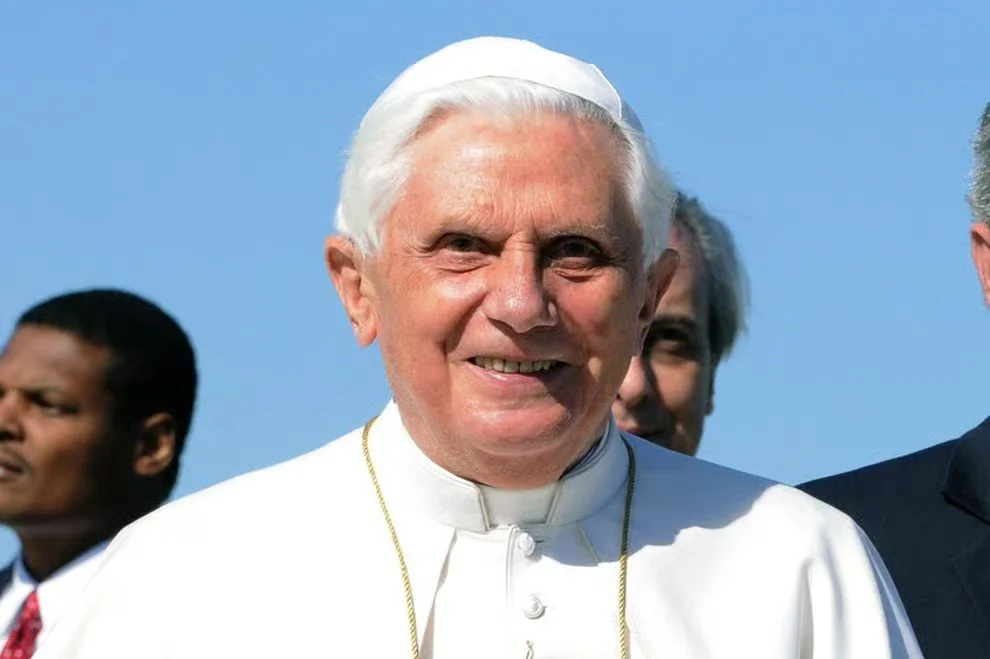
In this episode., Heidi, Daniel, and David dig into the fourth chapter of the new papal encyclical, discuss the 40th anniversary of the Church's problematic pronouncements about LGBTQIA+ persons, and Heidi interviews Kathleen McChesney, who worked with the Church during the height of the sex abuse crisis.
INTRO
Brewers going to the World Series
SEGMENT 1 - The 40th Anniversary of the “Halloween Letter”
The 1986 “Halloween Letter” - "On the Pastoral Care of Homosexual Persons."
The 1975 Letter - "Declaration on Certain Questions Concerning Sexual Ethics.”
“Intrinsically disordered” is not an intensification; it’s a form of Aristotelean theology
Margaret Farley, Just Love
The consequences for Dignity ministry
AGLO - Archdiocesan Gay and Lesbian Outreach
Michael O’Laughlin - “Plague” podcast and Hidden Mercy
Panels in November: “Synodality and LGBTQIA2S+ Persons: Toward a Church of Belonging”
SEGMENT 2 - Looking at Chapter 4 of Magnifica Humanitas
“Universal Truth” and the danger of “alternative facts”
SEGMENT 3 - Interview with Kathleen McChesney
TRANSCRIPTS
INTRO
DAULT: Hello, and welcome to the Francis Effect podcast. My name is David Dallt. I host a radio show called Things Not Seen about culture and faith, and I'm an associate professor of Christian spirituality and philosophical theology at the Institute of Pastoral Studies at Loyola University Chicago. I'm here with my two dear friends, Heidi Schlumpf and Dan Horan.
Heidi is senior correspondent at Commonweal Magazine. She is also an award-winning journalist and part-time faculty member at Loyola University Chicago. Dan is professor of philosophy, religious studies, and theology at St. Mary's College in Notre Dame, Indiana. He's also a regular columnist at National Catholic Reporter.
Every couple of weeks, we get together to discuss news and events through a lens of our shared Catholic faith. Dan and Heidi, welcome to you both. Heidi, how have you been?
SCHLUMPF: I'm doing great. I apologize for the scratchy voice today. I've had a little too much Halloween celebrating and too much Brewers celebrating. So listeners may recall that I'm a Wisconsin native. I'm from a, grew up in a suburb of Milwaukee, and I've been going to Milwaukee Brewers games since I was in probably fifth grade.
And my dad has been a Milwaukee Brewers fan f- for the entire 57-year franchise history. I happened to be off as a freshman at Notre Dame when they went to the World Series the last time in 1982, and thus kind of missed all the hoopla. They did not win back then. But as everyone probably knows by now, they won last week, and I went up to Milwaukee on Friday with my family to celebrate.
We went to where the parade route ended at the Summerfest grounds, and my dad and I were able to go in and see the program with all the players reflecting on their win and celebrating. It was so much fun. I probably won't be able to afford any Brewers tickets going forward now, but but it was a lot of fun to, to do that celebrating.
But it's also put me a little behind in everything else and facing possible jury duty this week, so I appreciate the flexibility Dan and David in we're recording a smidge early here. So Dan, how was your Halloween?
HORAN: It was a lot of fun. We had some friends over. Halloween is a very big deal in our neighborhood which we learned the hard way last year because we were not prepared for how enthusiastic all the neighbors are. So we made up for it this year with a, a fire pit out in the front of the house, friends over to greet trick or treat- treaters a, a family costume theme inspired by Ronner the dog, who dressed up as Baby Shark, and so we were two you know, human-sized sharks parent sharks as it were, for Baby Shark.
So it was a lot of fun. And yeah, the weather was nice. It's started to feel a little bit like fall for a change. A number of us were commenting on this, that here we are at the end of October, and it's still a little bit warmer than it ought to be. And so, we can never really escape the impact of climate change.
And so not to bring it too much into the realm of a downer, but such is life. Other than that the semester is plugging along. It's hard to believe that we're about a month, as this episode drops, a month away from Thanksgiving. So for those students and academics out there, this is that crazy second half of the fall semester rush as the days get shorter the grading piles get taller, and yeah, heading toward the season of Advent, which is again, pretty wild.
So that's what's going on over here. Everything else is kind of maintaining the status quo and keeping things flowing, ongoing, and forward motion, as I guess they say in football which is still, I guess, season, unlike baseball. And congratulations again, Heidi, to the Brewers. That's exciting.
David, what have you been up to?
DAULT: Well, listeners, we are recording this on All Saints' Day, the day after Halloween, and so, it is also the first day of changing the time. So we have just fallen back, and so every year when we spring forward and when we fall back there's this wonderful scene in the TV show "Community" where one of my favorite characters, Abed Nadir, is s- the, the other characters are trying to explain daylight savings time, and it's like, "Oh, but you get the the hour back in about six months," and Abed just screams, and that's kinda how my body feels right now, is I just wanna scream.
Like, my body doesn't know what time it is, and so it's really disorienting to have my body out of sequence with where I think the light should be. So I'm working through that. But on a happier note last night the kids went out trick-or-treating, and we had a wonderful time, a dinner with Kira's parents here in the neighborhood, and just a time to be with family and a time for our family to kinda be out and having fun with the Halloween traditions, which we love very much.
We are very much a Halloween family here in the Dalt household. And like both of you, it has just been a really busy last few weeks, and so I am looking ahead, there's a major conference coming up right before Thanksgiving called the American Academy of Religion Society of Biblical Literature happening out in Denver, so gearing up for that and getting things ready for that.
I'll be running some sessions out there, and And then we blink, and it's Christmas, and so here we all are. But for today, we have some things on the schedule ahead of us that I wanna tell you about. So in our first segment, we're gonna be talking about the 40th anniversary of the Halloween Letter that was released in 1986 from the Congregation for the Doctrine of the Faith. And in our second segment, we are continuing our deep dive into Magnifica Humanitas.
We'll be looking at chapter four of that document. And then in our third segment, Heidi is interviewing Kathleen McChesney, who previously worked for the United States Conference of Catholic Bishops, helping them to respond to the sex abuse crisis. I'm looking forward to that interview. All of this is coming up here on "The Francis Effect."
Please stay with us. We'll be back in just a moment.
SEGMENT 1
HORAN: Welcome back to The Francis Effect. I'm Dan Horan, and I'm here with David Dolt and Heidi Schlumpf. Every couple of weeks, we get together to discuss a variety of topics from a perspective informed by our Catholic faith. In 1986, under the leadership of then Cardinal Joseph Ratzinger, the Catholic Church's Congregation for the Doctrine of the Faith released a pastoral letter titled, quote, On the Pastoral Care of Homosexual Persons, end quote.
Because it was released on October 30th, this document has come to be known as the Halloween Letter. It was presented to supposedly correct confusions about church teaching in the wake of an earlier letter written in 1975 titled The Declaration on Certain Questions Concerning Sexual Ethics. As reported by Emma Czyslik writing for the National Catholic Reporter, quote, "While the 1975 letter continued to pathologize lesbian and gay people, it opened the door to recognize that lesbian and gay people were not coerced into nor voluntarily became lesbian and gay, and instead they were always this way."
Unquote. According to Francis DeBernardo, executive director of New Ways Ministry, the Halloween letter created a great deal of confusion among lay Catholics. Because of the letter, quote, "Many queer Catholics began to question if they would still be allowed to participate in the church, "and Catholics who are already reaching out to the LGBTQ+ community who are now being told to revamp many of their mission approaches."
unquote. DiBernardo suggests that the language of the letter reveals, quote, "Deep fears on the part of the Vatican. The letter's language reveals a fortress mentality. It builds a story of defensiveness against a perilous force that is not only trying to invade the church, but also has already made some incursions through the cracks of the armor to contaminate the community."
unquote. 40 years on, we might hope that some of these attitudes and fears would have changed. As Emma Ciesluk observed in her NCR article, Pope Francis cautiously cracked open the door to LGBTQ+ inclusion during his papacy, and Pope Leo has tentatively followed his model.
However, we s- still have a very long way to go to fully recognize the beauty and dignity of all persons, especially LGBTQIA+ persons. David, as you are looking back at the anniversary of the Halloween letter, what are your first thoughts here?
DAULT: Well, one thing that I want to point out to listeners is that the Halloween letter is the first place where we really get this language that has been so prevalent in these culture war discussions, the language of intrinsic disorder. And oftentimes that is used as a kind of sledgehammer to sort of suggest that to the extent that the church sees homosexual relations as sinful, that it is a sin kind of set apart from other sins.
But I wanna push back against that narrative, and in particular, I wanna push back by looking at the Catechism of the Catholic Church, paragraph 1753, where it says quote, "A good intention, for example, that of helping one's neighbor, does not make behavior that is intrinsically disordered, such as lying and calumny, good or just.
The end does not justify the means," unquote. And so what I want to point out is, much like we are seeing currently with the explosion of violence against those that are considered to be illegally in this country and violating our immigration laws, the immigration laws are misdemeanors. They are like traffic violations, and yet we are blowing them up to be these sort of huge problems justifying all manner of violence.
In a similar fashion, I'm gonna say the, what is seen here as intrinsically disordered has been utilized against LGBTQIA+ people as like this is the sin of all sins, when the Catechism says, "Listen, we have intrinsically disordered behaviors happening all the time. They are as common as lying and calumny," like spreading, you know, gossip against other people.
So I just wanna point out that we tend to focus in on this kind of behavior as if it were, again, to kind of quote some horrible language, a sin that cries out for vengeance, when in fact the church doesn't consider it that way, and when you actually read the way that the church is looking at these sorts of moments, it's not putting it in the place where oftentimes it gets put in the culture war.
Nevertheless, this letter, the, the Halloween letter raises some real concerns, and going back and rereading it, I wanna highlight in particular paragraph 10, and I'm gonna read it in its entirety. So this is paragraph 10 of the 1986 letter, where it says, quote, "It is deplorable that homosexual persons have been and are the object of violent malice in speech or in action.
Such treatment deserves condemnation from the Church's pastors wherever it occurs. It reveals a kind of disregard for others which endangers the most fundamental principles of a healthy society. The intrinsic dignity of each person must always be respected in word, in action, and in law." Okay, so that first part of the paragraph sounds good, like the Church is saying, "No, we must not use violence against these people.
That's deplorable." But the, the very same paragraph goes on to say, "But the proper reaction to crimes committed against homosexual persons should not be to claim that the homosexual condition is not disordered. When such a claim is made, and when homosexual activity is consequently condoned, or when civil le-legislation is introduced to protect behavior to which no one has any conceivable right, neither the Church nor society at large should be surprised when other distorted notions and practices gain ground and irrational and violent reactions increase."
I can't help but look at that language and hear it as the Church saying, "Well, you know, ultimately, these freaks are bringing it on themselves." And I just I find that to be unconscionable, just simply unconscionable language. And I know that we have come farther from that, but we haven't come far enough.
And so that, those are my initial thoughts.
HORAN: Yeah, there's a lot there. And I appreciate the energy. I think it's, it matches the the real problematic nature of this document. The first thing to note as many who have been reflecting on it in this 40th anniversary year since its promulgation, is that although we've had the more sort of inclusive and gentle pastoral modeling of somebody like Pope Francis and somebody like even Pope Leo more recently this has not been rescinded.
This has not been revised. This continues to be a pastorally instructive letter issued by the congregation, now Dicastery for the Doctrine of the Faith. And and so that itself is problematic because, as you said, David, we've come a long way, and I think that is true. It was around the same time during the '70s and '80s when the CDF, or now the DDF also imposed corrections and limitations on the ministry of people like Sister Jeannine Gramick one of the co-founders of New Ways Ministry, who continues to serve the LGBTQ+ community in that capacity.
And certainly Pope Francis had done a lot for her personally and for the outreach ministry of New Ways to to kind of redeem, as it were, some of those really ad hominem and I would say, you know, pastorally, pastoral malpractice sort of instincts that we saw. Nevertheless, it is what you're highlighting here in this document that serves as the logic or the foundation for that condemnation of Sister Jeannine and others outreach and ministry in, in the '80s.
And again, to put ourselves back in the time machine, and for listeners who may not have been alive at that time, we're talking about the same time where the AIDS crisis is exploding, right? So w- there's a lot going on here that we have to recall as we think 40 years after the fact what was happening.
The other thing I want to highlight too that listeners may not always appreciate is, and this is where I'm gonna put my theology professor hat on for a moment, is that when we hear a phrase like intrinsically disordered, it's important to realize that this is not an intensification. It's not, like, very disordered.
I think sometimes people hear it that way, and David, I think I heard you alluding to, like, some of the perception of this kind of language. Instead what's being described here has to do with an Aristotelian framework or worldview about how things function in the world. It's a teleological view that says that everything and every action has a particular aim or purpose or goal.
So this is something that Thomas Aquinas in the 13th century adopts. It becomes one of the ways in which Catholic moral theology is usually expressed. It's why, for instance, you know, sexual intercourse is only recognized as good, and I'm putting air quotes around good because this is a fairly recent thing.
In the past, s- sexual intercourse between a, a man and a woman in, within the sacrament of marriage was viewed as necessary a necessary inconvenience, to use the kind of language of Augustine. But in more recent y- decades and years, the church has been clearer about that no, there's an intrinsic goodness to this, but there's only one way that this can unfold.
That's the purpose, that human sexuality is meant, yes, in a unitive sense between the couple, but primarily in a procreative sense. And so any other use of human sexuality outside of that very narrowly defined parameter is considered disordered. It's not in order. It's not following the sequence. It's not on the right track, as it were, toward the aim or goal that this particular act is intended for by God.
That's the claim. So when we hear intrinsically disordered, what's being expressed here is the church's doctrinal office saying that this expression of human sexuality between two women, between two men, et cetera, is not in l- in alignment, is out of order from the way that the perception is that God had intended it.
So I just want to say that. I'm not saying that, that that- Well, there are a lot of problems with that and there have been a lot of brilliant theologians and ethicists. I'm thinking, for instance, of the really pivotal work of Sister Margaret Farley in a book called Just Love, where she invites from a, a Catholic theological ethical perspective, maybe we should think about the nature of the act itself.
Is it an action of justice or is it an action of injustice? You know, we think about sexual relationships. We can think in wake of the horrible allegations at Cornell University, is there consent? Is this just? Right? And maybe that's the parameter that we should begin with when thinking about human sexuality, not some ancient understanding of how this one act is intended for this one purpose.
So there's a lot more to say about that, but I wanna lift that up because on the one hand, I think it's like you were saying, David, this language, it is dehumanizing, it is problematic, and the way that it's framed within the Halloween letter, as you lift it up by way of illustration, is deeply troubling.
But I also think we should know what we're talking about, because then that invites further fides quaerens intellectum, faith seeking more understanding. Science has come a long way since Aristotle and Thomas. Human psychology, sexuality, and sociology has developed. There's so much more that we should incorporate and unfortunately, 40 years later, this document has not incorporated any of that.
SCHLUMPF: Well, I'm so grateful Dan, for you giving that little mini lesson on intr- the meaning of intrinsic in ethics. And I'm really happy that we chose to discuss this as part of our podcast episode this week because it had kind of slipped my attention, although I did see that really good piece by Emma in the National Catholic Reporter.
But I don't have to go back in a time machine because I was alive. And in reading, I did a lot of reading about this. Many-- There've been a lot of good looks back and reflections on this fortieth anniversary. And I was trying to remember, like, it, when it actually came out, I was not aware of it, but I did a lot of coverage in the nineties of the implications and the fallout from this letter.
So in my first job, which was as a reporter for the d- archdiocesan newspaper here in Chicago this, the institutional fallout basically meant that dignity, which had been serving LGBTQ Catholics and providing, you know, really pastoral outreach and ministry was forced out of any Catholic institution, schools, parishes, wherever they might have been meeting.
And what happened in Chicago is that an alternative archdiocesan ministry was set up called Aglow, which I believe still exists, Archdiocesan Gay and Lesbian Outreach, A-G-L-O. And that was more was very overt in saying that it you know, s-stayed within the lines of church teaching about sexuality.
But it also meant the rise of and many Catholic institutions adopting Courage, the organization that at least in the past has been very involved with conversion therapy, although they claim now that they don't. But so the implications from this letter institutionally were humongous in terms of pushing people and organizations out of affiliation with the Catholic Church.
But the implications on the individual level for LGBTQ Catholics were immense. The amount of pain and suffering and shame and, you know, feeling like doors are being slammed in their face and not being, you know, loved by their church community or by God were very immense. And as you pointed out, Dan, happening at a time when people were dying from HIV, AIDS and already feeling rejected by society.
And I just think you can draw a straight line to-- from that to the situation we're in today, where we have such a large proportion of folks in our country who are no longer affiliated with religious institutions. And in fact, most polls and survey data shows that lack of acceptance of LGBTQ people is a main driver of leaving church institutions.
So, so much, so many implications, and like you both said, we have not turned that corner yet, even though things are slightly better.
HORAN: Yeah, just on that note anecdotally, just ye- Friday afternoon I was speaking to a woman here in South Bend who shared a little bit of her own experience just casually about this exact point that she had been raised Catholic, her parents are still practicing Catholics, but that the what she recognized as an anti-LGBTQ current going back to these teachings and these pastoral documents led her to say, "I, I can't be part of this anymore," and now worships with the Unitarians.
And so this, I mean, this is, as you say, Heidi, like you see it in the statistics, but it's also the kind of everyday lived experience of our neighbors, of people in our families of so many, maybe many of our listeners, in fact. You know, I wouldn't be surprised. But I also want to highlight another thing too, and this maybe hearkens back to David's illustration from paragraph 10 in the document, which is what you hear some people who defend this sort of logic and organizations like Courage Over Dignity or New Ways or Fortunate Families and other pro-LGBTQ+ ministries and apostolates is you'll hear language like, quote unquote, "Hate the sin, but love the sinner."
And we see that kind of internal logic play through in this document, that there is this kind of contorting and backflipping that's being done by the CDF at the time to try to, on the one hand, preserve a more fundamental teaching of Catholic theology and ethics, which is the u- universal and absolute dignity of the human person.
So how do we say that the person themselves is not bad or is not evil? It's, quote unquote, "the acts," right? And yet, as David highlighted in paragraph 10, there's a blurring here that actually slips back into the person themselves, right? That homosexual persons as such is disordered, right? That's, th- there's slippage there.
But I want to take this a step further, and I think that this was something that I've heard discussed in some circles even during the ministry of Pope Francis, which is to be inclusive, to say I love you, to say that you are good to members of the LGBTQ community, that you are loved by God, et cetera, et cetera, that you are welcome, right?
Pope Francis, "Todos todos," everyone, all, and then not- work to clear up, to revise, to correct some of these things in light, and I'm not just talking arbitrarily, I'm talking about in light of other human knowledge, right? In light of real lived experience, borders on abuse. And what I mean by that is it's like a domestic relationship in which one partner says, I love you," and then slaps the person and says, "I love you," and slaps the person, and, "I love you," and I slap the person, and, "Come here, s- please," and I slap the person.
And that is the sort of rhetorical thing that's going on here that, as Heidi pointed out, continues to have serious ramifications. That is a life and death issue for people who are seeing clearly, reading between the lines explicitly, that slap is more powerful and impactful than any kind of, you know, attempt to say, "I love you," or that you're good, right?
That is overshadowed and erased by the implications that follow. So, there's a lot more to say about this but I just wanted to lift that up as well.
SCHLUMPF: Yeah, and I think I would just add that this to-- th-- for-- it might help people remember, this was partially why some people were very unhappy when Ratzinger was then elected pope, because he had this history of, you know, not only with LGBTQ people, but with, you know, feminists and other progressive Catholics.
But on the plus side, I think th-that the church moves slowly, and for-- I understand people who-for whom it feels abusive and who choose for their own mental health not to engage with the institution. But at the same time, I see progress, right? So even the document itself that said this is not something they choose, that God created LGBTQ people to be gay that was some progress for its time.
And to see Francis, who is, who was more pastoral, and to see Leo, who's saying, "Let's stop prioritizing sexual ethics over all other ethics," I think we're seeing some movement. But it is sad to think four full decades and n- and to not have this been rescinded yet is a loss for the church a-a-and I think a very sad thing.
DAULT: O-one thing also to bring into the discussion, if we go back 40 years to 1986, and you remember sort of what is happening in the wider culture, not only in America but in the world at that time, this is the rise of the AIDS crisis, and we're sort of in the, the heart of it at the moment where the AIDS crisis in the mid to late '80s is in full bloom, but it's still not being talked about at the level of the American administration.
You think about Ronald Reagan n-not daring to say it for several years after it's been, you know, a crisis ravaging many communities, but especially the community of gay men. And so this is happening at a time that could not be worse in terms of the, the health and the safety of this vulnerable community.
And I'm thought-- I'm mindful of a really good set of reporting on this by Michael O'Loughlin, who's now at National Catholic Reporter, but back when he was at America Media, he did "The Plague" podcast and then came out with a book based upon his work there called "Hidden Mercies." And and I think-- I commend that to our listeners that really looks at the-- both the good and the bad of the Catholic response to the AIDS crisis, but that this letter is landing right in the midst of all of that, and that can't be forgotten.
Like, it's-- it could not have been a more blinkered and horrible response at that pastoral moment for people who were literally dying from an unknown ailment at the time.
HORAN: It's a really good point. I, yeah, and something I also wanna recommend Mike's podcast very good. You know, one thing, Heidi, you said that has me thinking too, and maybe it's a place for us to end with hope, if not optimism. And hope is, you know, finding the presence of God, finding goodness, finding grace in the midst of things that are really heartbreaking and destructive and dehumanizing.
And that is there are people today, there are theologians, there are Catholic ministers and bishops and other leaders who are doing the work. And I d- I wanna give credit where credit's due to Pope Francis and to Pope Leo. There's always more that can be done and should be done. But I wanna lift up for listeners who might be interested in learning more about outreach to the LGBTQ community, about inclusion, about work that's being done by theologians and ethicists and pastoral leaders, and to highlight a series of panels that are virtual, that are sponsored in part by the Center for LGBTQ and Gender Studies at the Pacific School of Religion as well as Loyola University Chicago, and a couple other co-sponsors.
There are five panels over the course of the month of November about this question precisely and synodality, and it's called Synodality and LGBTQIA2 plus persons toward a church of belonging. And so, I'm a little bit biased. I'm on the last panel along with Dr. Flora Tang, Dr. Craig Floryd, and Dr.
Ish Ruiz. But there are four other panels of very significant people doing this work. You know, friends of the pod like Father Jim Martin and Father Brian Massengale. We have Sister Jeannine Gramick, who I mentioned earlier bishops like Bishop John Stowe, and Emma, who we mentioned from her NCR articles on a panel as well.
So, a, a lot of really good conversation that's gonna be taking place in the coming weeks. And that might in as a positive contrast to the 40 years of the negative legacy of this document, might give us a, a direction to move forward as a church, as a community, and as the people of God.
DAULT: Well, with that, listeners we will of course be coming back to this issue again and again. You know that it is near and dear to our hearts here on "The Francis Effect," and following in that spirit of Pope Francis when he proclaims todos, we want a church that welcomes and supports the dignified agency of everyone.
And so we ask for your continued prayers for these vulnerable communities and know that we are joining our prayers with yours as we think about ways for the church to be more positive in its response.
We're gonna take a short break. When we come back, we'll be talking about chapter four of "Magnifica Humanitas." This is "The Francis Effect." Please stay with us.
SEGMENT 2
DAULT: Welcome back to The Francis Effect. I'm David Dalton. I'm here with Heidi Schlumpf and Dan Horan. Every couple of weeks, we get together to discuss a variety of topics from a perspective informed by our Catholic faith. Earlier this year, Pope Leo XIV published the first encyclical letter of his pontificate, Magnifica Humanitas, or Magnificent Humanity, is focused on what the document's full title describes as, quote, "Safeguarding the human person in the age of artificial intelligence," unquote.
Given the significance of this new encyclical, the public interest in its contents and implications, and the timeliness of its subject matter, we here at The Francis Effect podcast are doing something a little different this season. We're dedicating a portion of each episode to unpacking and discussing this church document.
As we continue to explore this document, we invite listeners to read these sections and follow along with our discussion. We also welcome your engagement on social media. Feel free to share your own thoughts and questions about the encyclical on our Facebook and Instagram pages. This week's segment focuses on chapter four, which are paragraphs one hundred and thirty-one to a hundred and eighty-one, which is titled, quote, "Safeguarding Humanity at a Time of Transformation: Truth, Work, Freedom," unquote.
Here, Pope Leo focuses explicitly , on the tangible impacts that rapid advances in technology, including artificial intelligence, are having on the human community. The chapter is organized into three major parts, each exploring a central theme in Catholic social teaching as it relates to this current moment.
First, the Pope explores truth as a common good, arguing that the ways in which technology can be used to distort reality, promote false information, and interfere with the functioning of democracies are real and disturbing. Among other outcomes, the encyclical encourages a renewed focus on education and the role of schools in protecting truth in this technocratic era.
Second, building on his namesake's key contribution to Catholic social teaching, Pope Leo XIV channels Pope Leo XIII's interest in promoting and protecting the dignity of work for the human community. He reiterates the inherent value of work and reflects on the problems of unemployment and unjust economies.
Finally, Pope Leo closes the chapter with a substantive section about the need to protect freedom, which he sees as under threat from these technological advances. In particular, he focuses on mental health and other social concerns. He also shines a light on some of the less-discussed ills that have had and may arise from these technological advances, like human trafficking and other ethical concerns.
Dan, there's a lot in this chapter. Help us get started. Where should we begin with chapter four, and what are your initial thoughts?
HORAN: Yeah. You said it, David. There is a lot here. My initial, my very initial thought is that this is really where Leo gets to the core of the argument, right? We've seen in the previous chapters we've discussed in earlier episodes that he's situating this encyclical letter within the broader context of Catholic social doctrine.
He's d- lifting up principles of CST and how that applies. In this case, you know, he's drawing and building on Po- Pope Francis' work in Laudato si', talking about things like the technocratic paradigm. And here we get, you know, w- the magnificence of humanity, what is under threat by these developments in a technocratic age, and artificial intelligence in particular.
And I wanna jump to the very end of this chapter kind of reverse engineer our discussion, in which Pope Leo ties together these three themes, right? Of truth, work, and freedom. And he says the following. I'll just give him the voice here. He says "The various areas just considered, the search for truth in public life, education in the digital environment, the transformation of work, the fragility of families and new forms of slavery, these are not isolated phenomena."
And then here's what's interesting. He says, "Rather, they reflect a common underlying issue; namely, that if technology becomes the ultimate criterion, the human person risks being reduced to data, a cog in a machine, or a commodity. If, however, technology is integrated with a wise perspective, it can become an instrument of growth, justice, and fraternity."
So I have a couple thoughts about this. I am a AI skeptic for a lot of reasons. I realize that a lot of the news media that I consume, mostly through subscriptions to The New York Times and The Washington Post, in addition to other sources, have spent a lot of energy on podcasts and articles and columns talking about the pros and cons of the AI boom.
We're recording this on Sunday. You know, last week, the stock market took a real major hit as a result of investors getting skittish around whether or not AI is as good or can offer what it promises. So we're seeing this in all sectors. One of the things I keep thinking about in light of how Pope Leo ends this chapter th- in the quote that I just shared, is that we have been slow marching toward this for a while and it goes back at least to about the year 2005, 2006, with the advent of modern social media, where people did not ask sufficiently enough, "Where is the product?"
You know, and then the famous line is, "We are the product," right? It... There's no such thing as a free lunch, and there's no such thing as a free technology, and that has been and continues to be one of my major concerns about social media use, is that commodification that Pope Leo talks about. We are what's being traded, our information.
We are what's being tracked. We are what's being sold to. And it is our identities, if not always in a kind of s- limited sense or strict sense, you know, being hacked, our identities are what is on offer here. And so, I do see that as dehumanizing, and I think that is a common thread, right? We can focus...
Sometimes I think we lose the forest for the trees in the AI discussions. You know, how does this affect the economy? How does this affect the workforce? How does this affect education? And actually, I think rather skillfully and in a way not typical of a Vatican document, fairly succinctly engages each of these topics in a meaningful way.
So that, th- those are my initial takes. I'd love to hear what you guys think.
SCHLUMPF: I think I've shared with you previously that I'm so excited that we're going through this document because I'm teaching parts of it in my class at Loyola on Catholic social teaching. And so we had previously looked at chapter two where it elaborates on some of the principles of Catholic social teaching, and I'm trying to decide when we get to the section on AI, whether they should read chapter three or chapter four.
And last week, last time we recorded, I'm thinking, "Oh yeah, chapter three, all the stuff on transhumanism, that's so fascinating." But I love this chapter because it gets into the practical realities of where this is affecting our individual lives and our culture and society. So of course, I love the beginning where he's talking about truth as a common good, specifically talking about, you know, communication industries and journalists, and when journalists have you know, upheld truth as a principle in their work, but then also calling out journalists who haven't always done that.
But noting how much more difficult it is to maintain truth as a common good that everyone has access to with AI. And then getting into how it's part of educational institutions and the dignity of work. But the part on freedom and, you know, freedom and slavery, this modern-day slavery that we're becoming slaves to you know, this technology was really interesting to me too, and I think it's worth reminding our listeners that this is the section where Pope Leo gives this apology for actual slavery, you know, not modern-day slavery of the past.
And that ended up being kind of a little side news story when the document first came out. So there's so much richness here, and I do think I've decided it's gonna be chapter four that I'm gonna assign in a couple weeks when we delve into what Pope Leo has had to say about AI.
DAULT: Well, I want to continue the role that I've played the last couple of weeks of introducing some skepticism here. I think that I really like portions of this chapter, and I echo some of the things that you both have highlighted. But like chapter six of Laudato si', I also observe an undercurrent in this chapter of it working against itself, and I find that to be somewhat problematic.
And in fact, the premises that, that we've just discussed, I think are the source of the problem. So we talked just-- you just mentioned, Heidi the notion of freedom and slavery And if we look back at Roman law, the difference between a servus, a slave, and a liber homo, a free person, is who has the power of will.
And a, a, a servus, a slave, never has their own will. They only have the will of the other. And I wanna point out here in paragraph a hundred and thirty-three, in the middle of the paragraph, where it's the, the sentence: "Consequently, some people believe that they can construct reality, and that whatever best suits their claims corresponds to what is true."
St. John Paul II reflected on the consequence of this, quote, "crisis of truth," unquote, going so far as to state that once the idea of a universal truth about good, knowable by human reason is lost, inevitably the notion of conscience also changes. And I think that's a significant premise because it is suggesting that a person's conscience can only be normed and standardized by some imposition of a higher truth, which is a kind of top-down approach.
I philosophically come from a very different premise, and that is that truth kind of bubbles up from the sensus fidelium, from the people themselves, and that an individual person living their lives is the best source of their conscience about themselves, and that following Pope Francis in twenty fifteen speaking to the United Nations, the dignity and the conscience of that person cannot be imposed by an external source.
And so I'm having some trouble here with the notion that we want to abrogate the primacy of conscience, which is so important. And even Cardinal Ratzinger writing about this back in the day was talking about how important and central conscience is. Here it sounds like conscience, and I may be reading this wrong, but it sounds like conscience is sort of being attenuated a little bit for the sake of some kind of one-size-fits-all truth that floats above all of us.
And I think that can be a very dangerous reading, and it leads to some of the, the situations like we talked about in the first segment, where the Church believes that it can look at the lived experience of others and not engage or listen to that experience, but simply say, "This is intrinsically disordered."
And so I have some, some, some hesitation here, even as there's a lot that I like in this chapter, and I really appreciate kind of the complexity of what it is doing here. I think that some of the premises that it is, that it's opening with here in these first paragraphs lead to a kind of vulnerability that can then be exploited and attacked by those that want to use the Church as a kind of policing machine for individual experience and individual bodies.
HORAN: I think the way you're reading that, David, is not unfair. I particularly giving given John Paul II's broader historical context and his what he talks about in other documents, right? This is a small quote, And I, yeah I think it's an interesting choice to use that JP II quote, to be honest with you, because there is this kind of sort of boogeyman of relativism, which was also something to go back to the previous segment, that Benedict XVI, previously Cardinal Ratzinger, was also very concerned about.
Both he and JP II were very concerned about what they called relativism. You don't hear that boogeyman very much anymore, I think in part because the digital age that we're talking about that this encyclical addresses is so hyped up, it is so e- extreme now that y- you know, yeah, it's a different conversation to be had.
I also agree with you that I... So I do think that the logic, the internal logic of John Paul II here can be used and has been used a- against people in dehumanizing ways along the lines that you describe. I do also think there's something here about the quest for truth, right? I'm thinking about a, a number of really good articles and books that were written in, in, during and after the first Trump administration.
This is when we had alternative facts being thrown about, right? When we had to use Stephen Colbert's old term from his Comedy Central show, truthiness, right? As opposed to the truth. We have a, a a, I don't even know how to describe him , a, a nonstop liar in chief whose own social media platform is called Truth Social, right?
So I think there is something valid here about a concern of absolute erasure of some kind of recognizable, what JP II would call universal truth. What constitutes something that falls under that category makes a big difference, right? So on, on its face value, I would say JP II's not wrong, right? If we get rid of any concept, as this quote suggests, of universal truth then conscience goes out the window too, right?
'Cause what then can we form ourselves with, and what is our referent point? What is our magnetic north, right? Our compass no longer works. So that makes sense. The issue I have, and where I'm gonna meet you, David, is the, what he thinks and thought, and as we saw in the previous segment in that CDF document what was being presented as universally true when we know historically, factually, scientifically it not to be the case.
So we run a re- This is a really tricky thing, and I'm glad you lifted this up because it really does bridge our previous conversation with this one. But I will say, I think John Paul II is rolling over in his grave because he could not imagine a social media age or an artificial intelligence age. And this is really a very scary context for sure
SCHLUMPF: Yeah, and I'm so glad you brought that up too, David, because first of all, we always agree on everything, so it's always good to have you pushing us a little bit. And it's something, you know, I've spoken about the topic of truth, and certainly it's very important to me in the work I do as a journalist.
But it, it-- there is that continuum there. So yes, we want to allow for subjectivity and the idea that people know their own subjective experience well and the role of conscience. But on the other hand, what we've seen, especially the danger with AI and with social media, is this extreme swing to the other direction where there's no agreement on any objectivity any objective facts that, that are happening, and people being given incorrect, untrue objective facts that have led not to their flourishing, but to their deaths in some cases.
So, so it's not as black or white an, an issue as some people like to see, but it's not, you know, purely gray over on the other extreme as well. And those kinds of things are difficult, right? Because there is no easy answer, but it's something we have to wrestle with. And I appreciate... You know, Magnificat Humanitas has all kinds of limitations.
It's a relatively short document, so it doesn't go in depth in a lot of areas, and it may oversimplify in that section, but I'm glad they raised it 'cause it's definitely an issue.
DAULT: Well, let me lift up some things that I really liked, and these are some things that I think will cause some headaches over with our friends at the Acton Institute and some other more sort of right-wing organizations that try and read Catholic teaching into cultural and economic matters. But the emphasis on the dignity of work and the consequence of that emphasis being the right of workers to organize and the notion that unemployment is, and here again quoting John Paul II, "A grave evil."
I was glad for that kind of language to be present here because I think that it gives, again a-against a certain reading of Catholicism that always wants to lean libertarian or in a, a sort of, kind of, right-wing direction, this offers real pushback, especially to con- contemporary Catholic institutions that have been union busting over the last four or five years.
And so I think that there, there's a lot here for me to really love, even as I have some hesitations.
So listeners as you have heard just in our conversation here, there's a lot for us to dig into, and we hope that you will dig into this document with us. Please do not hesitate to get in touch with us on Facebook and on Instagram, and just kinda let us know how you're reading these things and what you're discovering there, and we're delighted to be going through Magnifica Humanitas with you.
We're gonna take a short break. When we come back, we're gonna be picking up with Heidi's interview with Kathleen McChesney. She previously worked for the USCCB, helping them to respond to the sexual abuse crisis, so I'm really looking forward to hearing that conversation. I know that you are, too.
Please stay with us. This is The Francis Effect. We'll be back in just a moment
SEGMENT 3
SCHLUMPF: Welcome back to The Francis Effect. I'm Heidi Schlumpf with today's guest, Kathleen McChesney, who currently works as a consultant doing security strategy and crisis management for multinational corporations and nonprofit agencies. She previously served as vice president for threat assessment and crisis management for the Walt Disney Company and spent nearly 25 years with the FBI serving in many leadership positions there, including as executive assistant director.
That's the bureau's third highest position. Most of our listeners will most likely recognize McChesney's name from her work with the US Catholic Bishops Conference to help them respond to the church's abuse crisis. The bishops hired her in 2002 to implement the - Dallas Charter for the Protection of Children and Young People.
She was the first person to lead the then new Office of Child and Youth Protection. In that position, she also coordinated a major research study into the nature and scope of sexual abuse in the church, and she has published and lectured on the issue of sexual abuse of minors in religious institutions.
She's served on the boards of too many organizations to list and has received many honors, including the prestigious Laetare Medal from the University of Notre Dame. So we would be honored to have Kathleen on our podcast anytime, but I reached out to her after reading a piece she wrote for America magazine titled "Ramaswamy's Vicious Attack Ad is Re-Traumatizing Sexual Abuse Victims."
So I look forward to talking with her about that piece, and we will link to it in the show notes. Welcome to the podcast, Kathleen.
McCHESNEY: Thank you. A pleasure to be here
SCHLUMPF: Well, by the time th- this interview airs, the midterm elections will be over, although perhaps some of the final counts will still be unclear. But the ad you discuss in the America piece is still worth talking about. So for those who maybe haven't seen or heard of the ad, could you tell us a little bit about it, and then tell us why you described it as, quote, "The most vicious and immoral strategy I have ever seen in any election in this country"?
McCHESNEY: Thank you, Heidi. I still reiterate that, that it was the most horrible advertisement for a political candidate that I've ever seen. And what it was for your listeners that haven't seen it and don't know, 'cause the ad has been pulled by now, but it involved the O- Ohio governor's race in which one candidate, Vivek Ramaswamy, posted an ad, which was a v- a video ad, of an elderly lady who happened to be the mother of his opponent, Dr.
Amy Acton. And Dr. Acton and her mother had been estranged for 50 years, so using her mother as fodder, if you will, for this ad was, I think, first of all, cruel. Her mother is elderly and appeared to be vulnerable. But the substance of the ad itself was cruel. What Dr. Acton's mother said was that she was a liar and had lied about her past.
The ad did not go into any specifics, but the inference, because many people knew that Dr. Acton had been sexually abused when she was 12 years old by her mother's husband, the inference was that Dr. Acton was lying about being a sex abuse victim. And the intent of the ad, it appeared, was for viewers to say, "Well, if she lied about something like being abused, she probably lies about other things, and therefore is not competent to be the governor of Ohio."
And this was reinforced by comments some other supporters of Ramaswamy said that, "Oh if Dr. Acton's own mother doesn't believe her and thinks she's a liar, she's certainly incompetent to be the governor of Ohio." We know that's not the case. When you talk about people who've been sexually abused and tell their story, as she did, that resulted in the indictment of her stepfather, those people aren't lying, and to infer that, it puts a whole other embarrassment, shame onto the victim.
And we don't do enough for victims of sex abuse in this country. We don't understand enough about what they are going through and continue to go through throughout their lives. So the ad, fortunately, was taken down, but it was despicable to infer that a person was using a person's sex abuse as a cudgel
SCHLUMPF: So just a quick follow-up if you're able. Do you have-- what does the data say about people who are alleging sexual abuse the percentage that turn out to be lying or that they, that we find out have been lying?
McCHESNEY: The data is pretty clear that the number of people who report sex abuse who are lying, prevaricating is very small. You're talking about low percentages, 1, 2, 3%. It's kind of hard to get really accurate data on that. But we do know that because cases, when they're reported, they are investigated, and from that you can, you know, bring the evidence that shows that this person was telling the truth.
And often, people who are victims of sex abuse, their perpetrators have abused other young people or vulnerable people, and when you combine all of that together, the evidence is very strong that they're telling the truth. There are ways to prove that
SCHLUMPF: So in the essay in America, you also note that this ad is not the only recent example of a cultural denial about sex abuse that's been in the news lately. So you mention also the supporters and a- enablers of Jeffrey Epstein and the defenders of the abuse by fraternity members on college campuses.
So why is this denial of sex abuse so pervasive? What can be done to stop such denial?
McCHESNEY: There is a lot of denial about sex abuse as, as you just indicated. And why it, why does it happen? There's not just one reason that it happens. There are many reasons. There are people who fear the consequences of the sex abuse, so they will deny and demean the individuals who are reporting the sex abuse.
If you think about the Me Too movement there was a lot more belief by the public that these things has hap- had happened. But there was also pushback from a lot of individuals who said, "That can't have happened. Why would these people not come forward for years and years?" There's a lack of understanding about victimology, that people don't just go running to report a case of abuse.
It is so personal, intimate, harmful, that it takes people many years, if they ever come forward with regard to sex abuse. And so if you demean persons making the claim, that there is some hope that people won't believe them and you know, that's a bad thing to start with. There are... Some of the other reasons are it's cultural, and it's value driven, and it's the fact that there are many people that have no empathy whatsoever, or whether you're a victim of sex abuse, a victi- victim of a flood, wh- whatever it might be.
There's a part of our culture that really does lack empathy and understanding, and there's not a general knowledge about sex abuse, about what happens to victims. And I'm not saying that there should be, because it's such a, a dreadful part of our culture, our society. These are crimes. And the pushback of, and trying to say that people are telling the truth is, it's unfair, it's unkind, and it's false
SCHLUMPF: So you talk about a lack of empathy. Is this an area where the Catholic Church could help the broader culture to be more empathetic about or in, in less denial about sex abuse? Or does the church still have a credibility problem when it comes to this issue because of their own involvement with sex abuse over the years?
McCHESNEY: Well, a couple things there. One can the church help with regard to the empathy? Over the last two decades, the church certainly has invested tremendous resources and connections with persons who've reported abuse. Throughout all of the diocese in the United States and most of the religious communities, the larger ones for sure, they have victims assistance persons who are generally social workers or psychologists who can help connect not only the, the individual who is the victim with the church, but can also help in some spiritual ways.
So that goes towards the, the healing aspect in that reconnection. That doesn't mean that every victim wants to be reconnected with the church. Many, you know, are done with that. The second part of your question a-about the credibility of the church in this area if people look at the data, and the bishops conference does an annual report on the data of how many cases are new versus how many cases are old.
The number of cases has dwindled, it's diminished over probably the last thirty or forty years. The peak of abuse was in the sixties and seventies. So that is a very positive thing. What is still continuing to hurt the church in a way is the fact that there are so many lawsuits and bankruptcies that are still tied to the sex abuse that occurred many years ago, that when people read about that, and it's in the news and, you know, quite often, when people read that, they tend to think that the abuse is still ongoing when it's not.
I mean, there are periodic cases of abuse that are occurring now. That goes to another issue, and that's complacency. It's so important that the Catholic Church, that the leadership, that peop- people who are involved in protecting children don't let their guard down, that they continue to have the passion and the energy and the, spend the time and the resources on protecting children.
You just can't let your guard down because the numbers have gone down. That's totally the wrong approach
SCHLUMPF: Yeah, and you mentioned those you know, bankruptcy proceedings. The latest news is that some of those costs are being passed on to parishes in some dioceses. So, this is still having an effect even though, as you say, the, the number of abuse cases is dwindling. In your work with the Bishops Conference and specifically I know you talked with dozens or hundreds of victims and survivors, what did you learn about sexual abuse that most surprised you?
Or is there something you wish people, including religious leaders or bishops, still knew about sex abuse that you think they don't quite understand?
McCHESNEY: There are a couple of things that I think still need more attention and understanding, and one of those is about vulnerable adults. The- when the Dallas Charter was implemented back in 2002, the understanding and written within the, the norms was the fact that a vulnerable adult was a person who generally lacked the ability to reason, and we're talking about people with, you know, cognitive disability as opposed to emotional disability.
Em- emotional, psychological, every person can be vulnerable at some point. And as priests who are, you know, should know this, should understand that, and that should be part of their formation. And so there is more emphasis on the human formation now in seminary and so forth. So, so that's a very good thing.
Certainly, I wish that people understood more about the vulnerability because a person going through - a grieving situation, maybe they've lost a spouse, a parent, a, you know, someone close to them, they can be vulnerable. And sometimes the relationship of an adult with a cleric is all wrong.
It gets all messed up. And we've seen a number of cases where actually codependency develops between the cleric and the vulnerable adult, and that's r- really v- very hard to understand for most people that those things do happen. And how do you untangle that? Because the power is on the side of the cleric, and always will be.
So that's one thing for sure that I wish that there would be a greater understanding. Pope Francis did, speaking of the Francis Effect, the Pope Francis did recognize that, and so now w- it's important that more people recognize that those, those cases unfortunately occur, still occur
SCHLUMPF: So speaking of vulnerability I'm thinking of your own vulnerability, and I'm wondering how you as, you know, keep the faith when dealing with such horrific crimes and their aftermaths. So not only with sex abuse in the church, but I know that you were part of the investigation of the famous serial killer T- Ted Bundy, and I just saw in the news recently that authorities have announced they used DNA to link him to another murder, a 17-year-old Melissa Smith.
I just can't even imagine the work that you've done or that you continue to do, and how does, how do you as a person of faith keep your faith in humanity doing that kind of work?
McCHESNEY: Thanks for the question. Keeping your faith is different than understanding, you know, the bigger picture with what, what has happened here. I don't tie those two things together. There is- there's your faith, your own personal spirituality. Then there is the church and the clericalism, and that- that's separate to me.
I don't think clericalism is really part of your faith, and that's, you know, my personal opinion. In-- As a-- I was a police officer, did sex crimes investigations and homicides for a number of years, as you've alluded to there. And I've worked with lots and lots of victims' families and victims, of course.
And what I've seen is doctors and police officers and clerics and laypeople all around who are helpful and supportive of people who've been abused or victimized in some other way. And that is the good thing, the thing that makes you hopeful that, you know, things will get better when you take a child from a, an abusive situation.
And I've done that. The kind of thing that happened to Dr. Acton as we started this conversation, she was removed from her home because of the abuse. I've been there and done the moving of children from abusive situations, and it is very difficult, but it is also really hopeful because when you can take a child out of a bad situation, you know, you can see them just change.
Their fears are just gone. They vanish. They are given food. They're not neglected. They, Even something small like giving a child a toy talking with them, giving them a, a glass of milk, those things are the things that keep you going and knowing that people need to understand what happens to children, happens to vulnerable adults when people are cruel to them.
And this advertisement that we were talking about, that was cruel, and it demeans all the other victims. I mean, when you demean one victim and say they're lying, it's like accusing all the other victims of lying and impacts them as well
SCHLUMPF: It kind of reminds me of the saying from Mr. Rogers about look for the helpers in an emergency situation. And so, you know, law enforcement of-often are those helpers, and like you said, the people that step up to help and people speaking out against this ad, like you, for example.
This is a little off topic, but while I have you here, another law enforcement issue that's been in the news is the death penalty, and certainly in light of the botched execution in Tennessee and the now canceled plans to live s- live stream that federal execution. I'm wondering if you have thoughts on the death penalty.
Many church leaders have been speaking out against capital punishment, including Pope Leo. What are your thoughts?
McCHESNEY: Well, church leaders for as long as I can remember have been speaking out against the death penalty, which is great, and I'm against it personally. I know that there are some victims' families who believe that it is the ultimate justice it is what they seek. I understand why they might feel that way, but I also don't believe that there is any evidence that having a death penalty is a deterrence at all.
And frankly, if any of your listeners have ever been in a jail, and I've worked in a jail or prison those are horrible places. If you have to spend the rest of your life in one, thinking every day about why you're there, what you did that's punishment. That is real tangible punishment.
So I think the death penalty is r- a very bad thing for this country. It's barbaric. It shouldn't reflect who we are. I mean, recently an 80-year-old man was executed. I mean, why? He- I can assure you, he probably was not a danger to society. And the length of time it takes to go through the death penalty cases, some people have been on death row for like 30 years.
That's insane. Just, you know, make that be their life sentence. So I'm very much against that, and I applaud the Bishops Conference. They came out right away with statements reinforcing their commitment against the death penalty
SCHLUMPF: Not to mention the number of folks, I think mostly men, who have been found to be on death row mistakenly f-of having not committed the crime for which they were convicted. So, a permanent solution to something that could be a horrible mistake.
McCHESNEY: Don't n- don't want that. We don't want anyone innocent to be convicted
SCHLUMPF: Well, is there anything else on any of these topics that you want to add that we haven't spoken about?
McCHESNEY: Well, thank you for asking that. I think that it's important that we don't become complacent about abuse in our society, and it doesn't just happen in the Catholic Church. It does happen in homes as you-- we could see from the case that we were talking about earlier. It happens in schools, it happens in youth serv- serving organizations, and so forth.
And so people have to be vigilant, and they have to know who to go to when they get the ba- that bad feeling, or they see someone's conduct that is very disconcerting, doesn't make them feel right when they see an adult with a child or a vulnerable adult that people are being, you know, taken advantage of.
It's hard to speak up. I understand that. People don't wanna be tattlers. But on the other hand, if you can protect someone else, you do need to come forward and let the experts ev- evaluate and investigate
SCHLUMPF: Well, thank you to you, Kathleen McChesney, for all you've done to help the church not be complacent on this issue and for joining us today on the podcast. Listeners, we'll be back again in two weeks for another episode of The Francis Effect, so thank you for listening. And thanks again, Kathleen