The failed execution of Christa Pike, chapter 2 of Magnifica Humanitas, and in interview with Marianne Duddy-Burke
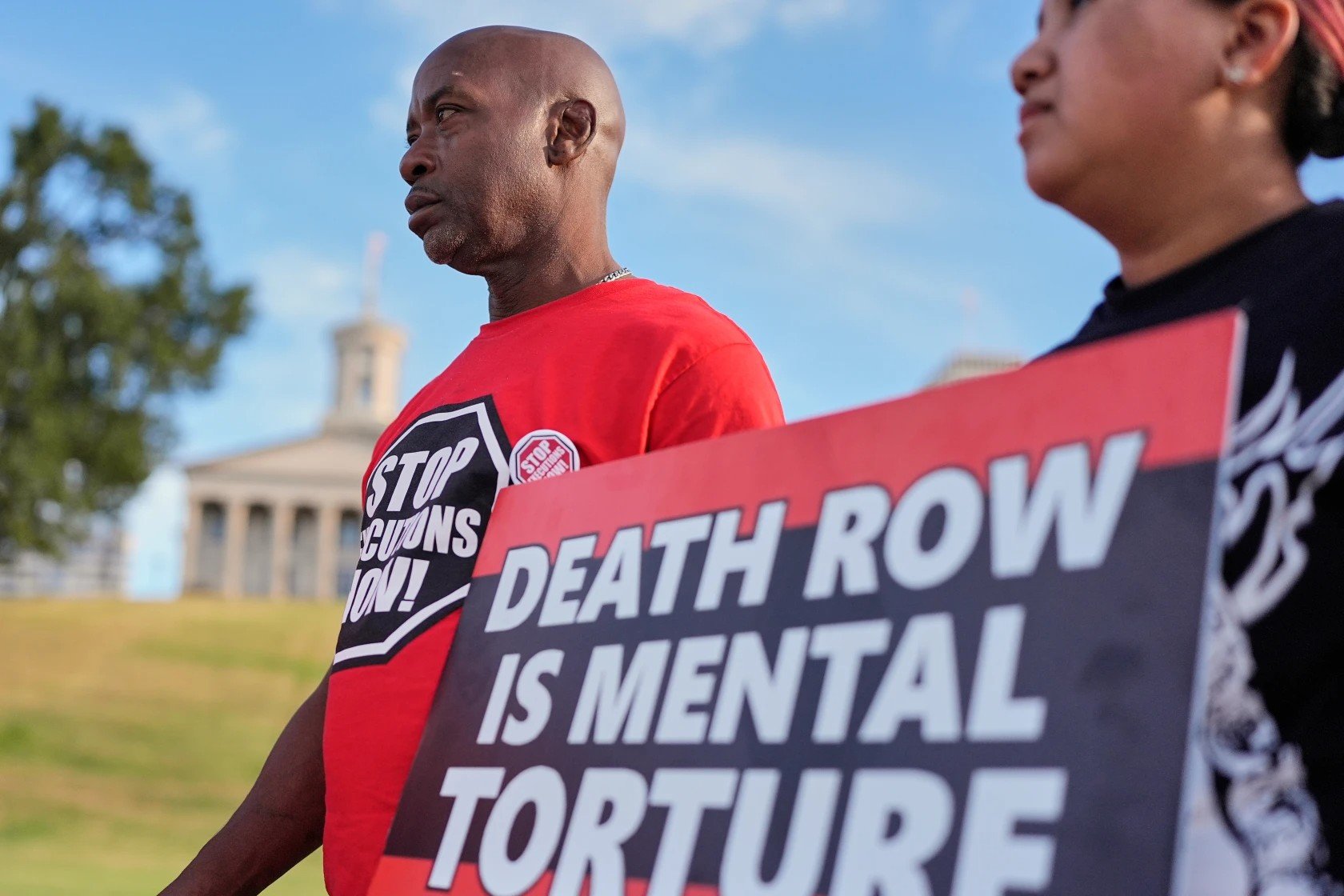
Heidi, Daniel, and David dig into the second chapter of the new papl encyclical, to look at the foundations that undergird Catholic Social Teaching. They also discuss the application of that social teaching in the context of the recent attempt to execute Christa Pike in Tennessee. In the final segment, Heidi interviews Marianne Duddy-Burke, the executive director of DignityUSA.
INTRO
SEGMENT 1 - The failed execution of Christa Pike
SEGMENT 2 - Magnifica Humanitas Chapter 2
SEGMENT 3 - Interview with Marianne Duddy-Burke
Information about Marianne Duddy-Burke
TRANSCRIPT
INTRO
===
DAULT: Hello, and welcome to the Francis Effect podcast. My name is David Dalton. I host a radio show called Things Not Seen about culture and faith, and I'm an associate professor of Christian spirituality and philosophical theology at the Institute of Pastoral Studies at Loyola University Chicago.
I'm here with my two dear friends, Heidi Schlumpf and Dan Horan. Heidi is senior correspondent at Commonweal Magazine. She is also an award-winning journalist and part-time faculty member at Loyola University Chicago. Dan is professor of philosophy, religious studies, and theology at St. Mary's College in Notre Dame, Indiana.
He's also a regular columnist at National Catholic Reporter. Every couple of weeks, we get together to discuss news and events through a lens of our shared Catholic faith. Dan and Heidi, welcome to you both. Heidi, how have you been?
SCHLUMPF: Well we are now into busy season, but I'm loving it. Last week, I got to make a trip back to my alma mater, to Notre Dame, where at least two-thirds of the Francis Effect got to get together. So Dan and I had a quick drink together. But I was there to attend parts of the Delta conference, the Delta AI Summit with the Center for Ethics at Notre Dame, which was very good, and I also made a visit to the new head of the McGrath Center and checked in with some other friends while I was there.
Had lunch with Rene Larue, a good longtime friend, and stayed with some friends of mine who live in South Bend. So it was a great trip, work/pleasure, and now I'm getting ready to do this-- another one. I'll be-- We're recording early, so I can get on a plane to head to New York for the Commonweal dinner, which is-- will be over by the time this drops, but I'm very excited.
It's my first Commonweal dinner honoring Father Jenkins from the University of Notre Dame. And also, you know, for a series of meetings and to visit some friends in New York, so I'm looking forward to that. And then in the midst of all this, Commonweal is launching a new product, a weekly newsletter from me that I have to give a little plug to here.
So if you don't get enough of me from my regular stories, from my appearances on the Commonweal podcast, from this podcast, I'll be doing a Monday afternoon newsletter with just some kinda insidery, more personal views on the news and commentary going on in the church and the world. So um, we'll include a link hopefully of that in the show notes.
It's going to be called The First Word. So so busy, busy, busy, but all good things, and same for you, Dan. It was so great to see you last week.
HORAN: It was great to see you too. Yeah it's nice when friends come to town and as we like to joke, especially in the theology world many roads lead to through South Bend, you know, to and through. So good to see you. Heidi is heading east to New York. I yesterday headed west. I'm actually recording from Phoenix, Arizona, well actually technically Scottsdale, where I'm staying at the Franciscan Renewal Center.
It's a really beautiful, amazing retreat and conference center. If people are familiar with Phoenix, you have a view from the property of Camelback Mountain. It's really gorgeous here if you like the desert. But I'm here for several events all centered around the 800th anniversary of the death of St.
Francis of Assisi, which at the time you hear this episode drop on Thursday, October 8th, will have already passed. But it takes place on October 3rd. So it was October 3rd, 1226, that St. Francis of Assisi died. His feast day is this Sunday, October 4th. And so one of the major events I'm here for is to lead a retreat on Franciscan spirituality for the, those gathered here.
So I'm excited about that. I'm up very early, so if my voice sounds more kind of froggy and groggy than usual, that's that's my fault. I'm on Pacific Time as my colleagues here are on Central Time, and so, I got the short straw in the draw. But like Heidi it's a busy time of year, all very good things.
We're kinda hurtling from the academic perspective into midterm break, which I, as much as my students, am looking forward to. Always nice to have a little bit of a breather in the middle of a long semester. And . somebody else who knows a lot about what it's like to be hurtling toward midterm break is David Dahl.
And so how is your semester? How is your life going?
DAULT: Yeah. So we are also on midterm or fall break at Loyola, and I'm grateful for that. You two are traveling. I'm staying put. My partner is traveling and doing work for her organization, Faith in Place, which is a faith-focused environmental organization that works in Wisconsin, Illinois, and Indiana, and this is a busy season for her because part of what they do is they try and make sure that environmental justice is on the ballot for midterms in those three states.
And so she is working hard in all three of those areas to coordinate campaigns. But because of that, she's traveling a lot, That's a wonderful joy for me to get some, some focus time with the kids as well.
So, I'm here, and I'm doing my best to relax. I have gotten word that a new book will be under contract soon. It's called Materialism: A Critical Primer, and so I'm looking forward to writing that over the next year, and I am excited and delighted to have a chance to be with the two of you virtually, but my goodness, I wish I could've been there with you in South Bend.
And anytime that two of us get together but the third isn't there, I know that there's this feeling of like, "I'm missing out," but I'm so glad that you two had a good time together, and I'm looking forward to the chance to be in your physical presence again very soon. Speaking of things that are coming up, let's talk about what's happening here on the show today.
So, there's a lot of news, as you know, and it was hard to pick which story we were gonna talk about this week. But we're gonna be talking about the failed execution in Tennessee that was attempted with Christa Gail Pike, and we'll be getting into that. In our second segment, we'll be continuing our deep dive into
the recent papal encyclical, Magnifica Humanitas. We'll be digging into chapter two here. And then in our third segment, and I'm really looking forward to this, Heidi is interviewing Maryanne Duddy Burke of Dignity USA. She's the executive director of Dignity USA. So all that is coming up here on The Francis Effect.
We'll be back in a moment. Please stay with us.
SEGMENT 1
===
Listeners, we recorded this segment on the morning of Friday, October 2nd, and a lot may have happened between when we recorded it and when you're hearing it. So please be aware that some of the details of our analysis might have shifted in that interim.
Also, we want to make sure, because this segment is gonna be dealing with some pretty graphic violence, that you do what you need to do to take care of yourself and other listeners who may be with you. If you need to skip ahead, we will be back with our second segment about 20 minutes into the program.
So, please care for yourself, and with that, we will get into the segment
HORAN: Welcome back to The Francis Effect. I'm Dan Horan, and I'm here with Heidi Schlumpf and David Dahl. Every couple of weeks, we get together to discuss a variety of topics from a perspective informed by our Catholic faith. In nineteen ninety-five, Christa Gail Pike was convicted of first-degree murder for her part in the torture and killing of Colleen Slemmer.
Pike was eighteen at the time, and Slemmer was nineteen, and they were coworkers. Pike admitted to luring Slemmer into a building, cutting her throat, beating her, throwing asphalt at her head, and taking a piece of her skull as a souvenir after the killing. According to NBC News, Pike told police that she, quote, "Wasn't even thinking," unquote, when she assaulted Slemmer and that the main motivation for the crime was jealousy.
It later came to light that Christa Pike had experienced horrific abuse and neglect in her childhood and that she suffered from bipolar disorder. A jury convicted Pike of first-degree murder, and she was sentenced to death in nineteen ninety-six. Since that time, she was one of two women on death row in Tennessee.
Pike is now fifty years old and was scheduled to be put to death in Tennessee on Wednesday, September thirtieth. That evening, she was given two injections of pentobarbital, a potent sedative that slows down the central nervous system, and it was expected that these injections would put Pike into cardiac arrest.
But for reasons that are still not entirely clear, Pike did not die. According to PBS News, Pike, who was alive and snoring after officials administered both doses of pentobarbital, was taken to a hospital.
Her lawyer said Thursday at a news conference that she is in critical condition and receiving life-saving care, but they do not know her prognosis. One of Pike's attorneys, Randy Pivey, said, quote, "The state of Tennessee has shown us again that they are not capable of carrying out an execution consistent with basic human dignity.
Last night was not just inefficient, it was cruel, and it was torturous." Unquote.
Tennessee's Republican governor, Bill Lee, said that the incident was, quote, "deeply disturbing," unquote, and has halted executions for the remainder of the year. He has also ordered a third-party review of Tennessee's lethal injection protocols. Pope John Paul II limited the acceptable use of the death penalty to rare or practically non-existent cases in his 1995 encyclical, Evangelium Vitae, noting that modern state incarceration systems offer sufficient protection.
In 2018, Pope Francis revised paragraph 2267 of the Catechism of the Catholic Church, officially declaring capital punishment to be an attack on human dignity and inadmissible in all cases. He reaffirmed this stance in his 2020 encyclical, Fratelli Tutti. These papal prohibitions on the death penalty have remained controversial here in the United States, which is one of only 53 countries in the world that still executes its citizens.
David, every part of this story seems horrific. Help us to get started thinking about this.
DAULT: Well, first and foremost, I want to start with where your topper here ended, and that is the evolving situation of Catholic teaching on this. And I wanna talk about the contentiousness in America about the prohibition of the death penalty that has been, in my eyes, fairly clear since two thousand eighteen.
Here in America, we still live in a society where folks believe that violence can solve problems, that violence is redemptive. And so that is true both for the perpetrator in this case, who, for reasons that we can only begin to imagine, thought that because of jealousy, she could solve the problem through violence, but also the state saying, "Well, now we will make recompense for this horrible crime by doing violence to this person."
And there are a lot of Catholics who, here in America, are still rabidly pro-death penalty. And to give just one example, I went onto the Catholic Answers website and just looked at the issue and what they say about it, and the writer there says, quote, "The death penalty has always been and always will be upheld as a legitimate and potentially just punishment in Catholic tradition as well as in scripture.
This teaching cannot change," unquote. And so even in spite of what St. Pope John Paul II said in Evangelium Vitae and what what Pope Francis said in twenty eighteen and in Fratelli, Fratelli Tutti we have this sort of dissension around the idea of whether or not we can use this as a means to fix things.
And I do not in any way want to detract from the horrible crime that she committed. It was, by all accounts just monstrous. Nevertheless, she is a human being, and that monstrous crime does not erase her human dignity. And what happened in Tennessee in the death chamber was, by all accounts, a form of torture, and she is still in a condition that as we're taping this a couple of days after that, w-we don't know what the damage to her body has been.
And so all of that is part of the mix here.
HORAN: Well, what you're naming there, David, is important on two levels. One is a, a civil kind of constitutional level, which means what transpired there in the execution chamber in that department of corrections is unconstitutional. It's cruel and unusual. It's against the law. So that's first and foremost from a civil perspective.
But, you know, it's really infuriating, quite honestly, that you have these internet trolls, like Catholic Answers folks, and these people who have ideologically-driven, partisan, non-theologically grounded perspectives you know, going around masquerading as a resource for people who are sincere about their faith and looking for, quote, unquote, "answers" to questions about what they believe.
No one should ever consult Catholic Answers. That is a terrible website from a theological and an ethical perspective, and this is you know, case exhibit A. What that statement that you read from the website indicates is a public dissent from Church teaching, magisterial teaching, both in the form of the catechetical teaching, right?
So the Catechism is an instruction guide for catechumens, for people learning the basics of the faith. And so if you want Catholic answers, it's not a theological treatise, it's not the sum of magisterial teaching, but it's a start. Go to the Catechism, and the Catechism is clear: the death penalty is inadmissible.
And then Fratelli Tutti is an encyclical letter. It is an exercise of the Holy Father's universal ordinary magisterium. So I'm a little bit worked up about this because I'm tired of online pontiffs trolling around as if they have pallium and miter and are sitting ex cathedra on their keyboards claiming that they know what they're talking about.
But I just wanna highlight, you know, something that's really disturbing in a case that is, as you rightly say, David, incredibly disturbing, and that is first, the paradox of what the state of Tennessee is un- is unfolding here before us because it isn't just torture, the excruciating pain and the near-death experience that was imposed on this woman in Tennessee last week.
We also have the fact that she is being given, by all public reports, quote, unquote, "life-saving care or treatment." The irony of the state trying to deploy medicine to kill a human being is now forced to resuscitate this person, which is... I can't think of another thing more torturous, right? More unconstitutional, more unethical.
And you know what? You know how you avoid botched executions? You don't attempt to execute people, period. I mean, it is as plain as day. The, the governor of Tennessee should be impeached. I swear to God, the Supreme Court needs to rule on this and make this illegal. I'm very animated about this, so I'm gonna shut up and pass the literal microphone over to Heidi.
SCHLUMPF: Well, I am, would be animated except I'm so stunned. Like you said, this story is just horrific on so many levels, and I'm so glad that the topper started with the horrificness of the crime itself. And just this whole botched, quote, unquote procedure also was, I think, very difficult for the family of the victim in that they were there and they, you know, have reportedly said that they wanted it to go forward.
And now they have not received the justice they are, were hoping to receive through this. There's a debate about whether that would re-really bring about any peace for them. What's interesting to me are some of the other details. So for example, she received the death penalty because she was a year older than her co-conspirator who helped commit the murder.
So just the randomness of one year's age difference is the difference between life and death. So that person man got life imprisonment, whereas she gets the death penalty. You know, there was a stay of her execution on that day, and then the s- the Supreme Court ruled and it went forward. And th- one of the statements that I read from our Catholic Mobilizing Network, which is this great Catholic organization that works to end the death penalty, pointed out that if w- she were sentenced today, she would not get the death penalty because the law has changed about the age of, that you can be sentenced to that.
So again, a randomness of having committed her crime decades ago versus today. And just all of this, like you said, Dan, could be taken care of is f- if we're not executing people. We wouldn't have to worry about how it's applied unevenly to people based on where you live, your race and these sorts of things.
And I will just remind I made the mistake of going online too and seeing the internet trolls just giddy about this. Very sad and very clear there's lack of respect for dignity of life. But just a reminder that the church teaching continues under Leo. It wasn't an official teaching when he provided the video message where I was at DePaul with Sister Helen Prejean in town in Chicago, where he affirmed that the church teaches that the ch- death penalty is inadmissible, and that to be pro-life, as the governor claims he is, he's not a Catholic, but you must be against the death penalty as well as abortion.
The only good I'm seeing coming out of this is apparently Governor Lee has, you know, suspended executions for the rest of the year because they need to investigate what happened here. This is not the first botched ex- execution in Tennessee or other places either. It is the whole thing is such a mess and so very sad.
DAULT: Well, I wanna pick up exactly there, Heidi, on why it is that these executions are being botched in this way. And the history of this is fascinating because we have moved away from firing squads, which was an early way to kill people. We have moved away from public hangings, which was an early way to kill people.
We moved to the death chamber model with an electric chair, and then that has become an inadmissible way to kill people in the United States in most states. And so we have moved to lethal injection under the auspices that it was a more humane or more dignified way to end a human life.
And when it was originally imposed, the lethal injection was a person was given something that basically narcotized them, knocked them out, and then they were given a kind of one-two punch of drugs that stop their heart and stop their brain function. But what has happened since that was the regime is that a lot of the companies that provide these chemicals, which are mostly European, and most of Europe has eliminated the death penalty, they no longer will provide those drugs for the purposes of ending a human life, which means that now the states here in the United States have begun to gruesomely improvise on this front.
And what we're seeing in Tennessee is the result of yet another gruesome improvisation. We think this will kill them, but we don't really know, and we think the dosage is high enough, but we don't really know. And so in this particular case, we have now, unfortunately, grisly experimental proof that their improvisation was not lethal, it was torturous
HORAN: on that note, David, there are a couple things that really struck me as additionally horrific in the analysis of what unfolded. One was a quote in The Washington Post from a physician who's an anesthesiologist who said that, in effect, the experience physically that this woman Ms.
Pike, would've had was as if you injected bleach into somebody's skin tissue. The burning, the, yeah, the pain and the fact that she was quasi-unconscious but clearly alert enough to suffer in such a tremendous way. I think you've raised something that also struck me as deeply absurd, paradoxical, ironic, disturbing, all of the above, which is it's the pharmaceutical companies themselves, not known to be paragons of moral reasoning and ethics, that are saying, "This is where we draw a line.
You cannot use our products, our medicine, to kill a human being." And this leads me to, you know, again, from the Catholic perspective, which is plain as day, as we've said numerous times despite online agitators claiming the contrary, is the absurdity of trying to find a quote-unquote, "humane way to murder somebody."
And I'm using that term murder deliberately, and I feel empowered to do so because of the great work and advocacy and analysis of somebody like Sister Helen Prejean, who also uses that term. And she says, "What else do you call it when a defenseless human being is executed?" When you tie somebody down, it's not like Christine Pike could fight back.
She's strapped to a table. These prisoners are under tremendous restriction, right? Their whole lives are restricted, and oftentimes in death row they're in es- essentially solitary confinement with maybe an hour a day of being outside their cells. This is not somebody who is an enemy combatant or somebody who is fighting back for their lives.
I'm not advocating that should be the case. That would sound something more like maybe the Roman Colosseum, right? Where you're fighting the lions off. That's a form of execution. I just am so disturbed by the fact that this language of the State of Tennessee talking about humanely murdering people.
I just can't get over that, to be honest with you, and I think that anybody who identifies as Christian, and especially those who identify as Catholic, this is a no-brainer because the teaching is clear. But if you identify as somebody who is a follower of Christ, who says that there's no greater love than to lay down your life for another, who is called to forgive and love your enemies I don't understand how you could- listen to or even utter the words, "A humane way to murder another human being," and take seriously your claim about your own faith.
I think, Heidi, to your point about this governor who is not Roman Catholic, but is clearly identifies as a Christian, I mean, the hypocrisy is rank and it's deeply upsetting
SCHLUMPF: I mean, one thing that did hearten me was to see that, of course, the Catholic bishops of Tennessee had called for her execution to be halted before this happened and in the aftermath, they, like her attorneys, I believe, are calling for her sentence to be commuted at this point. So, you know, good to see that the Catholic bishops in that state are stepping up.
I mean, too often the criticism is that the bishops only care about one issue. Sometimes when they do speak out on issues like this, it doesn't get as much attention. But it, you know, it's clear that our church leaders have been trying to move the United States in the other direction, and for a while, under certain, you know, federal laws, we were moving away from the death penalty.
Certainly under the Trump administration, that's moving the wrong direction. The other thing that Helen Prejean pointed out is that we essentially live in two countries, and it's still basically the Mason-Dixon line that divides us, where the death penalty is in the South and not so much in the North.
And again, just the randomness of how it's applied contributes to what is already you know, an evil and immoral thing.
DAULT: I just wanna sit for a moment with the fact that this is a very complex issue, and that certainly there is at least one family, possibly two, that has been profoundly impacted by the facts of this case. I make that qualifier because it's unclear whether Krista Gail Pike's family was capable of caring for her or for her life and her livelihood from the reports that I've been reading.
Nevertheless, there are a lot of people who will ask the question, "Well, in a situation like this, what is to be done?" And I wanna come back to this idea that somehow violence is going to be a curative here. And when the church says that you cannot use this lethal force as a means to solve a problem, it's doing so in the same context that it says you can't use an abortion to solve a problem.
And this happens in the primary document for all of this, Evangelium Vitae. And we- if we look at paragraph 12, Evangelium Vitae 12 talks about how we are so quick to say a person is inconvenient to us, inconvenient to our comfort, inconvenient to our safety, and the... I'm paraphrasing, but basically the language is, our instinct at that moment is to make that person disappear.
And so execution is a way of making a human being disappear, just as abortion is a way of making a human being disappear. W- it's not legitimate in the case of abortion, and it's not legitimate in the case of execution according to church teaching. And the consistency of this, which we inherit from the Chicago archbishop, the late Cardinal Bernardin is I think one of the gems of Catholic teaching, that we're actually not hypocrites on this case, but rather that Catholic teaching, when it is properly understood, is historically aligned with the idea that every human life is dignified and precious, regardless of their circumstances and regardless of their actions.
And so we need in some way to find language to affirm that. I'm glad that the bishops have been affirming that. I wish that the rank and file online and otherwise would also understand the vital importance that once you broach the line, once you break the line on the execution of an adult, there is no moral ground that you can draw to say, "And we and we can't do it to unborn children as well."
So this, I think, is a place where church teaching is attempting to be not only consistent, but humane, and affirming the dignity of every person, even the least of these among us.
HORAN: And to state the obvious, I mean, the, the church makes clear that there are consequences, right? There's moral culpability for actions. So nobody is advocating for Pike to just sort of be released even after these many years in which he's been incarcerated and serving a prison sentence. And but that's a distinction between freedom and life.
I mean, freedom is a restriction. It is, it imposed, incarceration is imposed, imprisonment is imposed for the safety of the community. That's clear in church, in the church's teaching and its documents, including Evangelium vitae, as you've been saying, David. But I think it might be a good place to end on a podcast that looks at these sorts of things from a Catholic and Christian perspective by going back to sacred scripture itself.
And here I'm thinking of Matthew 5:38, in which Jesus says, "You have heard it was said, an eye for an eye and a tooth for a tooth. But I say to you, do not resist an evildoer. "But if anyone strikes you on the right cheek, turn the other also. And if anyone wants to sue you and take your coat, give your cloak as well. And if anyone forces you to go one mile, go also the second mile. Give to everyone who begs from you, and do not refuse anyone who wants to borrow from you."
DAULT: Well, listeners, I imagine that you also are sitting with the complexities of this case, and so we invite you to think with us. If you have thoughts and you'd like to share them, we certainly would love to hear them on Facebook or on Instagram. But for now, we are gonna turn from this case, and we're going to go into a papal encyclical in our next segment, which actually deals with several of the issues that we have been talking about in their context here.
So that's coming up in just a moment. We're gonna take a quick break. This is The Francis Effect. Please stay with us.
SEGMENT 2
===
DAULT: Welcome back to The Francis Effect. I'm David Dalton. I'm here with Heidi Schlumpf and Dan Horan. Every couple of weeks, we get together to discuss a variety of topics from a perspective informed by our Catholic faith. Earlier this year, Pope Leo XIV published the first encyclical letter of his pontificate, "Magnifica Humanitas," or "Magnificent Humanity," is focused on what the document's full title describes as "safeguarding the human person in an age of artificial intelligence."
Given the significance of this new encyclical, the public interest in its contents and implications, and the timeliness of its subject matter, we here at The Francis Effect podcast are doing something a little different this season and dedicating a portion of each episode to unpacking and discussing this church document.
As we continue to explore this document, we invite listeners to read these sections and follow along with our discussion. We also welcome your engagement on social media. Feel free to share your own thoughts and questions about the encyclical on our Facebook and Instagram pages. This week's segment focuses on chapter two, which are paragraphs forty-six through eighty-nine.
These paragraphs focus on what Pope Leo calls the, quote, "foundations and principles," unquote, of Catholic social doctrine. Whereas the first chapter situated this encyclical letter within the context of the history of Catholic social doctrine, or CST, this chapter takes a step back and provides a general foundation for what CST is, while also providing a brief overview of the key subject areas.
Many listeners will recognize some of these themes, such as universal dignity of all human persons, the principle of the common good, the universal destination of goods, subsidiarity, and solidarity. In this way, Pope Leo offers a nice, brief, and direct summary of the key elements in Catholic social teaching in order to apply these principles to the pressing questions arising from artificial intelligence and related technological developments in the rest of the text.
One of the most interesting parts in this chapter appears at the end in a subsection called "An Examine for the Church." Strikingly, Leo takes a pause to turn these principles back on the Church itself, rather than merely positioning the Church as the adjudicator of ethics for external institutions and persons.
He writes, quote, "I would like to touch on a point that is particularly close to my heart. Social doctrine is not merely a message addressed to society. It is also an examination of conscience for the Church, a home and school of communion that is always called to ensure that the principles outlined in this chapter are applied, especially within its own structures.
In the ecclesial context, the common good takes the form of a synodal approach for mission at the service of the kingdom." Unquote. Now, Dan, there is a lot in this chapter. Help us get started. What's in chapter two, and what are your initial thoughts?
HORAN: Well, my initial thoughts this morning is that th- this is a wonderful overview that this chapter alone could be excised and used in classroom settings, in adult faith formation, that sort of thing. And I bet it has and I bet it will. So, if there's anything that I can recommend it's take a look at chapter two and it'll give you a good kind of primer on what Catholic social doctrine or Catholic social teaching is.
I was really struck in addition to the passages that you shared already, David, the opening line of this chapter is really quite something. It's brief. I'm gonna read it here in paragraph 46. Pope Leo writes, "The social doctrine of the church is a living reality in dialogue with history, cultures and sciences.
At the same time, it enshrines a core set of unchanging truths." Then he goes on then to say that this is-- b- for this reason issues, subject matter like the emergence of artificial intelligence and other contemporary timely topics are of relevance to the Catholic community, and that the church has something to say in response.
What he's doing here, and this builds on what we discussed in the last episode with chapter one, is he's building on the insight of Gaudium et spes, which says that we are called as Christians to interpret what the g- document calls the signs of the times in the light of the gospel, and so that's what we see here.
One other passage I just wanna highlight because it's deeply relevant to what we were talking about in the previous segment, which is the fundamental dignity of the human person. And in paragraph 53, Pope Leo begins, "The fundamental dignity of each person therefore is neither acquired nor earned, nor does it need to be justified."
And so I think, you know, this is applied and he's going to apply in later chapters these principles, this foundational thinking to the question of artificial intelligence and a technocratic paradigm, as Pope Francis would call it. But these sorts of statements that are the kind of kernel, that are that smallest circle in the concentric circles of Catholic social teaching applies to so many aspects of our life.
So whether we're talking about the death penalty or whether we're talking about artificial intelligence, whether we're talking about international trade policy or nuclear policy or what have you these principles apply. So I think right off the bat, I think that's-- that makes this chapter especially interesting and worthwhile.
SCHLUMPF: So I can tell you as a teacher, I have used Magnifica– Humanitas chapter two in my teaching. It's one of the changes I made to my course this year in addition to adding a section on AI where we'll look at the other portions of the document. But right at in the front when I was kind of laying the foundational principles, I had the students read, in class chapter two and divided them up in groups and had them each pick had them each group pick one of the principles that he discusses in this chapter and had them present it to the rest of the class.
What I like is that the-- I mean, it's a great succinct summary of Catholic social teaching. What I like, though, is that the principles that he chooses to highlight are somewhat different than the principles that the U.S. Conference of Catholic Bishops uses. I think they list seven key principles on their website.
And I always have to impress upon my students that there's no, like, definitive, you know, document that says these are the principles of Catholic social teaching and there's this number only. So for example subsidiarity is not on the U.S. Bishops list integral human development. And my personal favorite, universal destination of goods, which is always one of the more surprising parts of Catholic social teaching that I think often people are not aware that the Church teaches that the Earth's wealth is for everyone even-- and needs to be distributed so that people at least have basic necessities.
And
HORAN: can I just say, Heidi, that doesn't surprise me because you work for a publication whose name comes from that, right? The common wheel, the common good. So I have to give a shout-out there to your day job.
SCHLUMPF: Yes. So, I mean, it w- it's-- together, these two lists, I think br- m-make a good overview of the, the major principles of Catholic socia- social teaching. So I do find that it is helpful, and my guess is that as p- you know, adult education, parishes, and other schools do study it, that this chapter two will be an important part.
I too commend people to read it.
DAULT: So I'm gonna be the lone dissenter here, and I'm gonna raise criticisms of this chapter because I think this chapter repeats a couple of category errors that the church is rather infamous for and those of us that think with the church sometimes fall into. I, I really liked chapter one, which we discussed last week, and I think its overview is really good in terms of teaching.
But the two category errors that I want to lift out here have to do with the appeal to human rights and the appeal to solidarity, and I think that they are misplaced here. And let me explain why. So human dignity is multiplicative. When I am diminishing your human dignity, I am simultaneously diminishing my human dignity, and the only way that I can increase my human dignity is if I increase the dignity of those around me.
So it's a, a relational piece that is so important to understand in terms of our interconnectedness, our integral ecology, if you will. So when we talk about the basis of Catholic social teaching in dignity, I'm right there. The problem with using the rights language that is here is that rights are competitive, and when one person's rights are increased, oftentimes another person's rights are decreased.
And so when there are statements here like human rights are inviolable, that is actually not something that is played out in its practical effect when we see rights being balanced against each other in, for example, legislation or in the, in courts of law And so the competitive, the competitiveness of rights here I still think that human rights are important to talk about, but I think that there's a nuance that is missing here in the document that I want to lift up.
The second piece, and I think more importantly, is, and this is something that happens with a lot of Catholic thinkers, and I'm trying to to think in a different direction with this, solidarity is presented as a principle rather than a material goal. And we understand the language here when the encyclical says that we oftentimes hear, and I'm trying to find the paragraph here that we...
Okay, in paragraph 74, "In many areas, we are already experiencing a kind of de facto solidarity for our lives are intertwined, digital networks, et cetera." But solidarity is understanding that when you are saying the system doesn't work for me, there are people within the system who will help and solve that problem and make your life better and bring you back into community and flourishing.
That's subsidiarity. Solidarity is a result of material subsidiarity. When people actually see that the system will respond to their cries for help, they feel solidarity with the system and they feel solid-solidarity with each other. When the system fails them, as our institutions, secular and religious so often have, solidarity is destroyed.
So we can't start with solidarity. Solidarity has to be the material goal to which we are moving. Otherwise, we are basically presenting a fantasy, a utopian world, rather than a world that will actually be changed and according to the Gospel. So those are my two main critiques of this particular chapter.
HORAN: David, I'll see your critiques and rebo- re- respond with a critique. I think in general, I ... Your, your critique about the lack of the material dimension of solidarity, I think is actually spot on, and this is where wisdom from particularly the Global South, I'm thinking of Latin American liberation theologians, the work of Gustavo Gutiérrez, and Leonardo Boff, among others.
And I think Pope Francis had a deeper sense of this because of his cultural context and his his upbringing and formation, both as a, a minister in the church but a- also as somebody who is formed in, in that context of Latin America. So I want to affirm that. I think that's a valid critique, and I think we see that even actually in the last sentence in paragraph 73, right before the passage that you shared in which we have this beautifully described...
You used the language of utopian, and I do see the solidarity that you're describing arising from a much more materialist Marxist sort of perspective, which I don't inherently object to. But let's just see how this plays out. At the end of 73, Leo says, "Solidarity is expressed when each person, both individually and collectively, takes part in the life of the community by staying informed, engaging with others, making their voice heard, and contributing to public decisions and choices, while also assuming real responsibility so that the common good is achieved through shared decision-making."
Okay, for sure, right? And this is this is a, a great vision, but what is the the so what? What is the outcome of this? And I hear you raising that as, I think, I would argue a valid critique. The human rights conversation, I have mixed feelings about. I'm just gonna go on record here in saying that I have myself publicly in academic settings critiqued human rights language.
In fact, I gave a lecture right before the whole world closed in February of 2020 in Montana at Carroll College, a Catholic college. I was giving a, a lecture basically confronting anthropocentrism and this human rights language does appear oftentimes competitive, not only within the human community, but the human and the more than human world as well, right?
So that we have rights that therefore take away from or overlook or exclude the intrinsic rights or the intrinsic dignity, as Laudato si' would say, of non-human creatures, right, other aspects of creation. So I- I'm kind of with you in as provocative as it can be to say that you're, quote-unquote, "against human rights," that certainly gets people's attention.
But I do think that the Christian tradition, m- you know, there's a meeting point. I think you're right to say that rights can be competitive and I think in most political, modern political theory, that's true. I think of, like, Rawlsian or Habermasian sort of notions of social contract and how difficult it is to kind of hash out what does it mean to be a modern society where we respect the rights and dignity of all people I, I do think though that if we go back to the Gospels, the rights language that we might associate with the sayings of Jesus does not actually introduce this kind of zero-sum game or competition.
And so, you know, I think there's room there to say, well, are we talking f- are we singing from the same hymnal, right? Are we using the same lexicon here? Are we... Or are we using human rights, is this language being used kind of equivocally? I think it is actually in this case, but I think you've made a, a, a good argument for thinking through this a little bit more substantively.
SCHLUMPF: I have a critique of my own which is separate, but let me just respond that human rights language from the church also makes me a little bit nervous because I know it enters the political realm, and then like you said, there can be a lack of distinction between the way the church uses that language and some political groups do. And I'm not sure what to think about your critique of solidarity. I'm gonna have to think about that, except to point out that often my students have a hard time understanding a difference between solidarity and common good because they both seem, you know, focused on the broader welfare than the individual.
And so is one more of, you know, a feeling versus an action. I don't know. That might be worth exploring in depth i- in another conversation. But my critique references back to the topper where you were talking about that part at the end w- that was the examen for the church. When Magnificat came out, that was my first reaction, and I wrote a piece for Commonweal about it saying, you know, this is an amazing document, and it deserves the widest reading and consideration.
And my concern was, will it get it? Because so many people have tuned out to what the church has to say about things. And I raised specifically that the church is not credible on the issue of gender. However, you know, since then, and it's only been a couple months the church does seem to have more credibility than it had a year or two ago because it's speaking out on issues like AI, like immigration enforcement, and, but it's a p- it's something to constantly be balancing, the need to be prophetic and to put these statements out there and ask for these considerations, especially in light of it seems like we're discussing AI every week with this encyclical and every or every other week, and there's just so much more news e- in even every two weeks on AI.
So for example, the news just recently about the religious leaders meeting with Anthropic and wanting them to... You know, the news that's been being released about how we need to acknowledge AI as a sentient, you know, being or something. So this is needed. At the same time, the church's credibility, while growing, is still somewhat problematic in our culture, and I wish it had more weight.
HORAN: really glad, Heidi, that you brought up that last section of this chapter because it is both striking in that maybe to call back to David's point about some of your critiques, that there's a lot of talk and not a lot of walk here. And maybe in time we'll see how this plays out. I do like the fact that Leo goes out of his way at the end of this kind of foundational chapter, laying the groundwork for principles in Catholic social teaching to say like, "Well, this applies actually to us internally, Ad intra Ecclesia, as well as it does to the rest of the world."
And it's also interesting that it's in the context of this last section of an ecclesial examen, as he puts it, a self-reflection as church, that he ties this most closely to synodality. But here's another area in which I have a lot of questions still, right? There's a lot of synodality bandwagoning that's been going on in the last three to four years.
People are very quick to talk about, to write about to celebrate synodality, and I love synodality. Certainly going back to the early church and this idea of, again, subsidiarity of doctrinal reflection, of looking at concerns of the sensus fidelium, having true respect for that sensus fidei of every baptized person and community.
But then it gets watered down, right? We saw this in the second session of the Synod on Synodality, where, quote-unquote, hot button issues were tabled and s- and sent to committee, right? And some of those reports still haven't been fully fleshed out and presented. And so the, the talk is beautiful in a way.
The talk is interesting in a way. For instance, the first sentence in paragraph 89, the last chapter... Or, I'm sorry, the last paragraph of this chapter, Leo says, "Living out justice in the church means purifying ecclesial relationships and structures from distortions that give rise to inequality." Here I'm thinking of your comment, Heidi, right?
There's probably no greater inequality in the Catholic Church than gender inequality between men and women, right? The-- He goes on, "The lack of transparency and abuse of power. In this regard, listening to the victims of spiritual, economic, institutional, sexual, and power-based abuse, as well as abuses of conscience, is an integral part of a journey toward justice, which includes acknowledging the harm done, just reparation, and taking steps to prevent it from happening again.
Every power is at the service of communion and mission." That's beautiful and that's true, and it's where we, I hope as a community, aspire to live out. But we need to see, you know, the walk walking and not just the talk talking. And Heidi, you brought up you know, women in the Church. Again, I go back to the Synod on Synodality.
How many times, how many commissions have we seen around reintroducing women to the diaconate? Or, you know, we've seen other kind of leadership bureaucratic positions given to women in the Vatican, but these are sort of exceptions that prove the rule of this inequality that seems to be acknowledged here.
But does it actually play out in practice? We'll see, and I think the people of God have a right to read this and, you know, to take seriously this examen ad intra and to raise these questions of the Church and its leaders and its members.
DAULT: I really appreciate that you all gave me space to voice my dissent, I guess, my concerns, and I love the fact that it was met with echoes of your own concerns and the-- clearly there are nuances here. But the one piece that I wanna circle back to that you raised, Heidi, is when we're talking about AI and we're talking about AI in a regime of rights, my concern, which is complementary to all the concerns that you have raised in the past few minutes, both of you, is that we will very quickly rush to assert rights for an artificial intelligence so-called, while we will ignore the call of Laudato si' to think about the rights and right relationships with the created world, trees, animals, non-human creatures, and we will rush to give this technological creature, which is of our making rights and deferences far sooner than we will consider rights and deferences to the creatures of God's making.
And that, I think, is something that we should all be moving very slowly with. That is something that in the overall sweep of Magnifica Humanitas I'm very glad to see, the kind of let's slow down and think through this. And I think part of my concern with this particular chapter is that in a couple cases, I see it moving too quickly, and I would love for it to-- I'd love for each of these subsections to have its own encyclical really, because we're very overdue for a really robust development of subsidiarity, a really robust development of the universal destination of goods.
They get touched on and they get talked about, but they don't often get fully developed, and so they get misused a lot of times in Catholic discourse. But I'm so grateful for this discussion. And with that listeners, we are going to step away from this particular chapter.
Again, we would love to hear your thoughts if you wanna share that with us on social media, either on Facebook or on our Instagram pages. Please let us know how you are reading these chapters and this document. But for now, we're going to step away from Magnifica Humanitas. In our next segment, we're gonna be picking up with Heidi's interview with Mary Ann Duddy Burke of Dignity USA.
That's happening in just a moment. We're gonna take a brief pause. You're listening to The Francis Effect. Please stay with us.
SEGMENT 3
===
SCHLUMPF: Welcome back to The Francis Effect. I'm Heidi Schlumpf with today's guest, Maryanne Duddy Burke, who recently announced that she is retiring after 40 years of leadership in Dignity USA, an organization that works for justice, equality, and full inclusion of LGBTQIA-plus Catholics in church and society.
Duddy Burke has served as executive director of Dignity USA since 2007. She also was the first woman elected as the organization's president, serving in that position from ni- 1993 to 1997. She is a married lesbian with adopted children, one of whom is trans, and she met her partner at a Dignity Mass.
Originally from New Jersey, she studied at Wellesley College in Boston and at the Jesuit Weston Theological Seminary, where she earned a Master of Divinity degree. In addition to her work with Dignity, Duddy Burke has worked in the non-profit and consulting world. So Maryanne, congratulations on your impending retirement, and welcome to The Francis Effect
DUDDY-BURKE: Thank you so much for having me, Heidi. It's great to be in conversation with you
SCHLUMPF: Well, I know our listeners are gonna enjoy hearing your reflections too. You have steered Dignity USA through some critical moments for LGBTQ Catholics over the past decades, and I know I, as a journalist, have often relied on you as a source and an interviewee for many articles over the years. So first, could you talk about some of your major accomplishments or some of the positive moments that you've witnessed or been a part of over these past four decades?
DUDDY-BURKE: Oh, there are so many. I think one of the most significant moments in Dignity USA's history that I was able to be part of was our 1987 c-convention in Miami, which happened, you know, about eight months after the 1986 Vatican letter on the pastoral care of homosexual persons had come out, and that had started a wave of expulsions of Dignity communities from Catholic space.
And people may not know how closely tied Dignity was with many Catholic dioceses and parishes and religious communities in the '70s and early '80s. But at that conference in '87 our community decided it was time to stop kind of playing games with what it was that we truly believed, and we added to our statement of s- position and purpose our belief that same-sex intimate relationships could be loving, life-giving, and affirming.
You know, language taken right out of Vatican II documents. And taking that stance and deciding that we had to be v-really honest about who we are and what we believed and not equivocate, not give conditional ascent to our personhood, and to live as we knew God had blessed us to be, was such a pivotal moment for our community.
And the folks who were on the front line of that, you know, many who knew that this meant that their chapters could no longer hide and it was gonna mean expulsion. Other folks who meant that this would mean challenges with their family, you know, who were, you know, "Okay, but let's just be quiet about it," you know?
And it was a moment that has really directed the course of everything that has come afterwards. 'Cause we were fully in the light now, and we were willing to let our own light just shine forth.
SCHLUMPF: Yeah. Well, I thought you were gonna say the time you met the Pope. 'Cause that was a big one too, wasn't it?
DUDDY-BURKE: It certainly was a big moment, and it was such an honor to represent queer Catholics from around the world because I really was there in my position as a co-chair of the Global Network of Rainbow Catholics, but it was very clear to me that Pope Francis knew that I was also the executive director of Dignity, and that he knew that I was a married lesbian Catholic.
That he knew that I was parents of adopted kids. You know, all these things that are not consistent with church teaching. But the reaction that I got when pictures of that meeting started going out globally, it was amazing. You know, just the stories from people who said what hope that it gave them to see my colleagues from the global network and I sitting there and in conversation and in embrace, you know, and holding hands and giving the Pope gifts and talking to them about the issues that were important to our community.
It really impacted so many people, and they really felt represented in that moment. So it was a tremendous honor to have that moment
SCHLUMPF: Well, as you said, there were so many positive and me-memories over the years, but I'm struck by the one that you chose that 1987 conference. That's something that came out of one of the more challenging or not so positive moments, that letter. But when you think back over the decades, what are some of the more challenging experiences that you remember?
DUDDY-BURKE: Again, there are many. I think obviously the worst experiences for me was during the worst of the AIDS epidemic, and losing so many wonderful friends, mostly men. Watching so many people live in such terrible fear for so long, and seeing every social and religious institution, whether medical or governmental or church-based, fail so many people and disregard their humanity because it was impacting folks who were already marginalized.
You know, gay men, immigrants, Black people, poor people, you know, just was awful. You know, sitting with families as they learned their son was gay and was dying, and then sometimes having funeral parlors or parishes refuse funeral services for these people, and these small communities that we ran having to kind of step up over and over again to bury people that was devastating.
And I always wonder what so many lives would have become had people been able to have a fullness of years and been treated with more dignity by those who are supposed to serve.
SCHLUMPF: Well, I'm so grateful that your communities were there for those, for many of those people who were shunned by other parts of the culture, including our church
DUDDY-BURKE: Yeah, there were so many folks who gave so much during that time. You know, you know, often going from a funeral to take care of somebody else who was sick, and then going to a rally to try and get better services and wake up, you know, our government or our hospitals or the research community. People worked 24/7 in those days to, to get us through a very dark time I'll also say that for me personally, one of the really dark time, and the only time I felt like I wasn't sure I could really stay in the church anymore, was in the early days of this clerical sex abuse crisis erupting across the world in the early 2000s.
And seeing immediately so many church leaders turn to scapegoating gay men, and having so little care for the survivors and for the families of those who didn't survive that. And totally, you know, we-- when the US Bishops Conference met in Dallas for the first time after, you know, the, the Boston revelations came out, and we tried to offer a mass of reconciliation, and no bishop would talk to us.
We had to go to non-denominational space to hold a mass for survivors and families and some of the advocates who were there advocating. Again, the fact that the church's instinct was to protect itself and to try and throw our community under the bus again was another devastating time. And you know, we've never recovered from that.
I think any of us in the church has made some small steps, but still has failed
To act in any Christian way to a large extent
SCHLUMPF: Well, b- both the AIDS crisis and the sex abuse crisis, I know there were also female victims in these experiences too, but predominantly were affecting men. And one observation that I've heard about Catholic LGBTQ spaces is that they tend to be predominantly male. So I always, that's why I always like to go to you as a source because you're a LGBTQ woman.
What has been your experience with this? Do you think we need more female voices in LGBTQ spaces? You often talk about the intersection of multiple discrimination.
DUDDY-BURKE: Ab- absolutely. And it's been true that for most of the time I've been doing this work, I am often the only female in the room, in the discussion, and sometimes I'm left out of those discussions 'cause I don't fit into the boys club. So you know, it's taken a long time to build up credibility. But, you know, I think people have to realize that the LGBTQIA+ community represents humans of every variety, you know?
And all of our voices and all of our bodies need to be in the spaces that are determining what our work is and what our communities look like and how we move forward together. So yes, we need more female voices, we need trans voices in greater numbers, we need people who are Black and brown and multiracial, and folks from all kinds of ethnic val- backgrounds, and folks who are migrants, and folks who are wealthy, and folks who are just trying to get by every day, and folks, you know, with all kinds of different abilities, you know?
The more diverse our movement is, the better we are. And it takes patience and it takes a lot of listening to broaden the movement. But the joy that you get when you can have deep encounters with somebody who's really different from you, and the way it can shape what you see as possibilities for everybody, I think is incredibly hopeful
SCHLUMPF: Well, and I would, you know, just the reflection of my own personal view is that there has been more diversity over the, the course of the last decades. And I know that one of the reasons you gave for your retirement, well, aside from you just deserve it after all these years, is that you believe the activism needs a new generation of leadership.
So how do you think younger LGBTQ Catholics think about the church, or how are they going to take up this movement? What are the issues and challenges that you think fo- face this, really this current generation that you would like to see be more in leadership?
DUDDY-BURKE: Yeah. I mean, younger LGBTQ+ people grew up where they had role models, where they had visibility. You know, for many folks my age and older, you know, we were a dark secret in the world and in the church. And it's great that many of our young members and young leaders, you know, grew up knowing that there were possibilities for people like them.
They had role models even in their families which is great. Many of them also had great experiences in the church. You know, if they went to a Catholic school, there were supportive people. There might have even been, you know, a support program for them or stickers on doors, you know, to say that the teachers were safe space.
They have been in a LGBTQ-friendly parish or accepting or seen, you know, queer families in their faith communities. I think all of that is to the good. Clearly there are, you know, new pressures, particularly g- against trans and non-binary people that folks who grew up thinking of our movement as around gay, lesbian, and bi people, you know, are may- maybe not as well-equipped to handle.
So that's important. The way people communicate and the timeliness of communication is really different. And I was really struck when we did a retreat with some of our young leaders about two years ago now, when we asked them what the vision for dignity should be moving forward. And their response was, "We need to work for a world and a church where no young person grows up with religious trauma or social exclusion."
You know, and it just gave me goosebumps. You know, that's such an important goal, and it's such an expansive goal, And I believe that they're gonna be the ones to be able to lead us to that promised land.
SCHLUMPF: Yeah I find myself optimistic about the next generation of Catholic leaders as well. How hopeful are you about some of the official church leaders, whether not only the bishops here in the United States, but our new US-born pope, Pope Leo?
DUDDY-BURKE: Well, I certainly feel like the LGBTQIA+ community has a lot of work to do here in the US. We have largely been shut out of the synodal process to the extent that it's happened here in the US in many ways. And parents of queer folks have been told to leave meetings or that their input would not be heard.
So we've been fighting really hard to give all of us voices in the synod process, and mostly have had to do that at the global level and through the Vatican. I believe that the kind of symbolism that Pope Francis and Pope Leo have put forward about inviting LGBTQ people into significant global church events has been really important.
You know, to be seen with us sends a message. There is still a lot of work to be done at that level, and Catholic doctrine is still incredibly discriminatory, and it sets the tone for things like, can our lives and our loves be criminalized in places around the world? Can we access the same kind of health services that other people need to preserve our lives and our health?
Will we have job security if we work for Catholic institutions? You know, will we get social services that understand the composition of our families and how our lives move forward? You know, can we be housed in facilities according to our genders? You know, there's a lot of work still to be done, and I hope that our church leaders continue to respond to the calls of the people who are really leading the church on this issues.
SCHLUMPF: Well, is there something that you wish Catholic leaders or other Catholic, straight Catholics who want to be allies knew about their LGBTQ brothers and sisters? Or what could you say that we could do to be better allies and to help?
DUDDY-BURKE: You know, my experience has been that Catholics really get it to a large part. You know, I think back to the kinds of calls that I would get 20 or 25 years ago from parents who were really struggling with, "How do I love my gay or lesbian kid and stay faithful to church teaching?" You know, it was such a hard decision for them, you know, to try and reconcile those things, and I understand why the church teaching makes it impossible to do both of those things well.
Now the calls that I'm getting are from parents saying, "I've got a five-year-old that I think is probably transgender. Are they gonna be safe in a Catholic school, or should I be looking elsewhere?" You know, people really understand that you need to lead with love and that our faith, our Christian faith in following Christ calls us to abundant life.
And if someone needs to be able to grow into who they are and live as who they are, to have that abundant life. So I think that it's really important for Catholics to keep speaking up out of the values of our faith on behalf of queer people, on behalf of immigrants, on behalf of so many people who are marginalized and oppressed in this world and to speak from their faith when they're in the political arena.
You know, advocate for trans healthcare as a Catholic. You know, we need to keep combating the narrative that religion in general, and Catholicism in particular, is anti-queer, because we're not. Some of the officials who speak for the church do have tremendous anti-LGBTQ+ rhetoric. But the people of the church, we are standing together, and that just gives me so much hope for the future
SCHLUMPF: Well, that's great advice to lead with love and to continue to speak up. You know, on behalf of the folks at the Francis Effect and from me personally, I wanna thank you for all the work that you've done all these years. You know, you've done the leading with love and the speaking up, and please, don't go away.
Enjoy your retirement, but I know you're not gonna disappear in terms of continuing to speak up on this issue for people in our church. So thank you so much for all that you've done, Mary Ann.
DUDDY-BURKE: And thank you for your work. You've always been a strong partner in the work and a wonderful journalist, and it's really important to have folks who are willing to take risks in the work that they do, especially in these times. So thank you
SCHLUMPF: Yes. Yes, of course. Well, we're so grateful that you came onto our show to share with our listeners how your past decades of work in this area have been with Dignity USA. You've been listening to Maryanne Duddy Burke, longtime leader and executive director of Dignity USA. Thank you so much for joining us, Maryanne. And listeners, join us soon for the next episode of the Francis Effect.